

Bulk Janitorial Supply Buying Guide for Commercial Facilities
Running out of paper towels on a Friday, or pulling the wrong liner size for the third week in a row, means your supply chain is reactive. That's fixable, and it usually comes down to three things: knowing what to buy in bulk, how much to keep on hand, and getting every location running the same way.
This guide helps facility managers, housekeeping supervisors, and procurement coordinators build a supply program that doesn't fall apart under real facility conditions.
Key Takeaways
- Buy in bulk: daily-use consumables with long shelf lives, including toilet paper, paper towels, can liners, disinfecting wipes, gloves, and chemical concentrates.
- Order as needed: short-shelf-life and specialty items like enzyme cleaners, seasonal amenities, and anything your team has not tested yet.
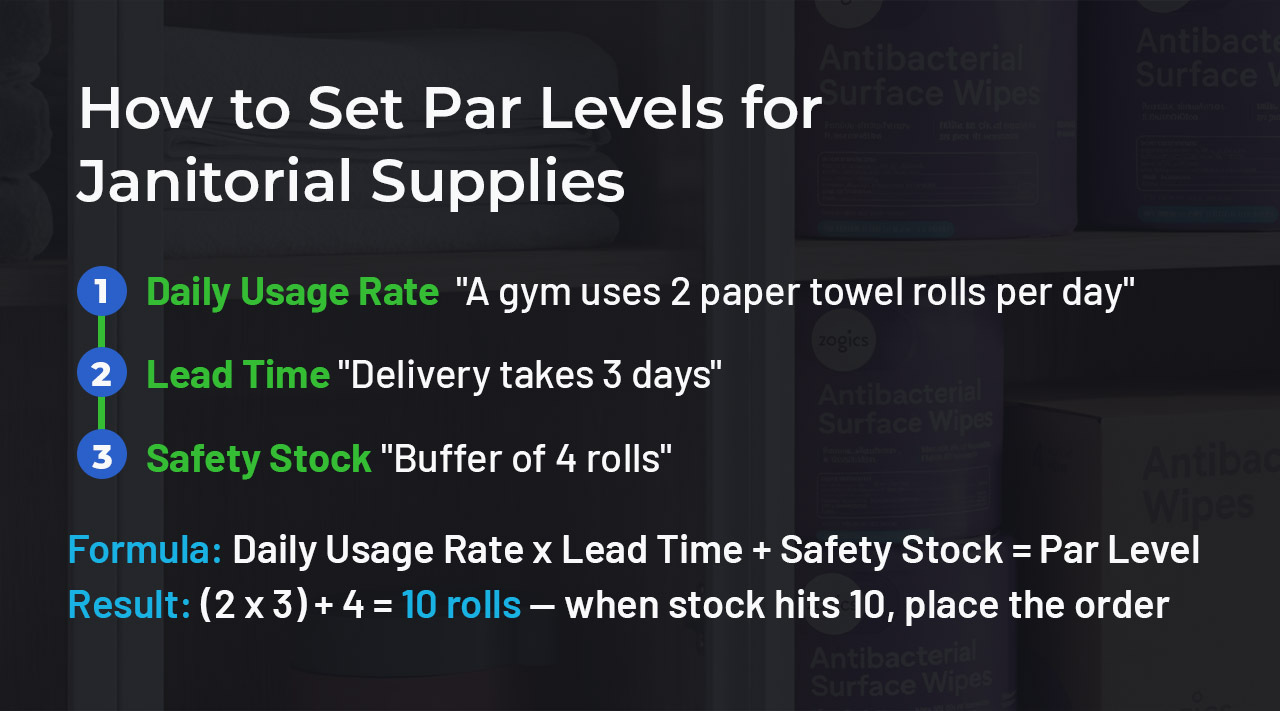
- Set par levels: reorder from a formula, not a hunch. Par Level = (Daily Usage Rate x Lead Time) + Safety Stock.
- Store on FIFO: rotate older stock to the front and keep chemicals separated from paper and consumables.
- Standardize across sites: one approved supply list per category unlocks volume pricing and consistent staff training across locations.
What are bulk janitorial supplies? Bulk janitorial supplies are commercial cleaning products purchased in case quantities or high-volume packs, typically at a lower cost per unit than retail. They include paper products, can liners, wipes, cleaning chemicals, gloves, and personal care amenities. Most commercial facilities use them to reduce per-use costs and minimize reordering frequency.
Why Bulk Buying Reduces Cost and Operational Waste
Bulk buying isn't just about unit price. It's about the full cost of staying stocked, including staff time lost to shortfalls.
Cost-Per-Use vs. Unit Price
Price per case is the wrong metric. Cost-per-use (what each paper towel, liner, or wipe costs when dispensed) is what matters. A case of 33 Gallon Can Liners (500/case) costs less per liner than smaller packs, and that gap adds up across every bin, every day. The same logic applies to 12 rolls/case of Jumbo Toilet Paper: fewer orders, lower per-roll cost, no emergency restocking.
The Hidden Labor Cost of Reactive Ordering
Three small orders a week cost more than one planned order, in staff time alone. When a custodian tracks down a supervisor because supplies ran out, that's overhead. Bulk ordering on a schedule cuts disruptions and procurement time.
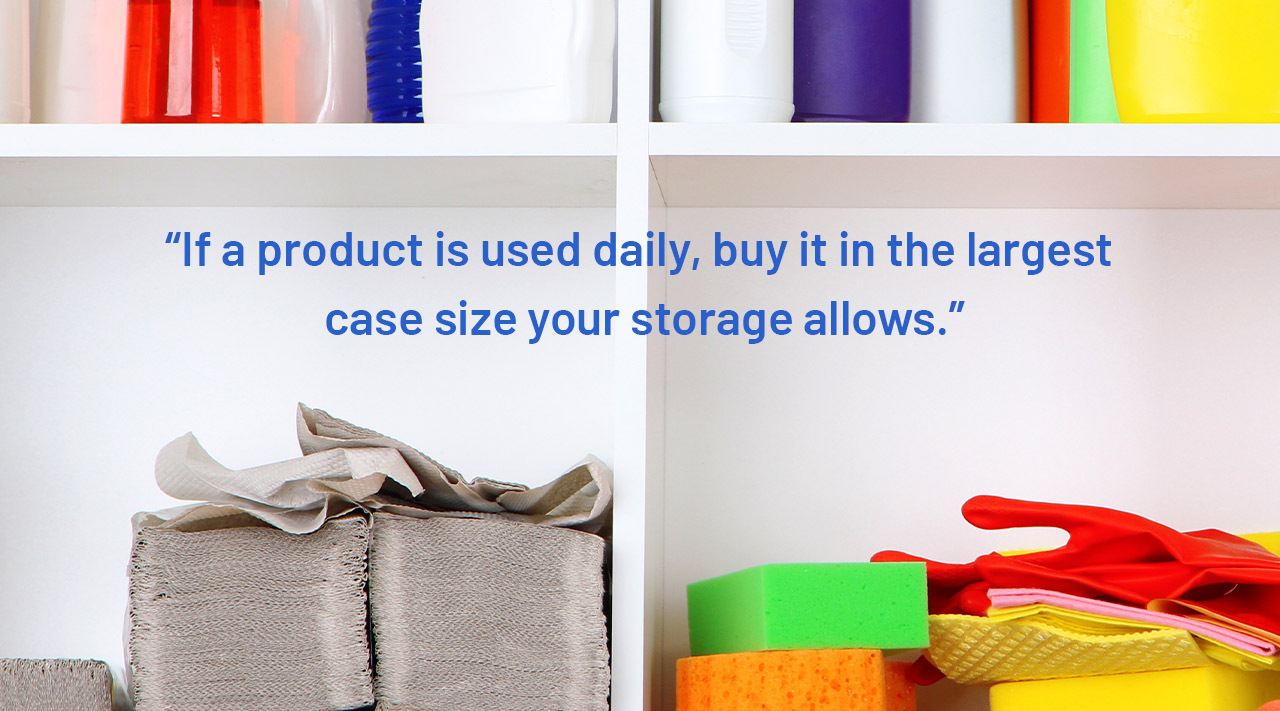
If a product is used daily, buy it in the largest case size your storage allows.
Standardization Across Locations
For multi-site operators, bulk buying fixes a problem beyond cost: inconsistent products across properties. Ad hoc ordering produces mismatched liner gauges, paper formats, and chemicals at each location. Training gaps follow, and volume pricing disappears.
One approved supply list means every property runs the same way, and buying wholesale janitorial supplies at that volume consistently unlocks better pricing than ad hoc ordering.
What to Buy in Bulk vs. What to Order as Needed
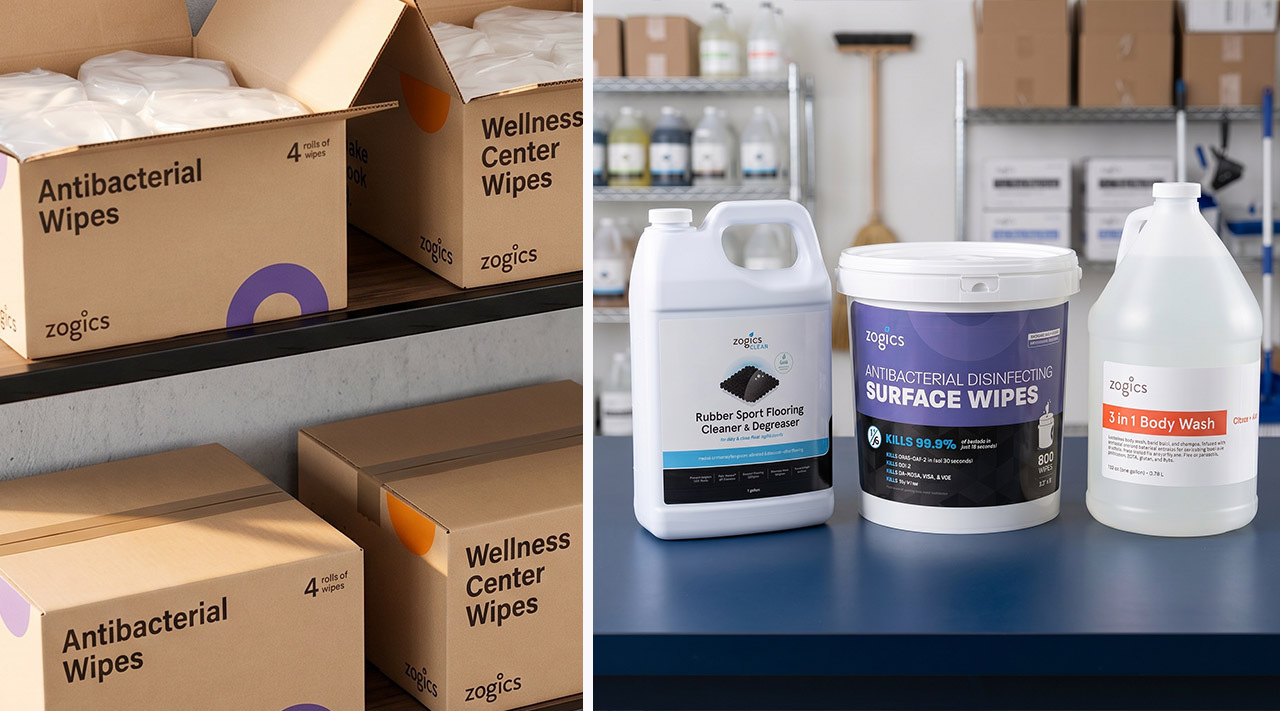
Not everything belongs in a bulk order. Knowing the difference saves space and prevents waste. The goal is to identify which bulk commercial cleaning supplies make sense at case quantities and which are better ordered as needed. The same logic applies across all categories of bulk cleaning supplies, paper, chemicals, wipes, and PPE.
Buy in Bulk: High-Consumption Consumables
These products are used daily, have long shelf lives, stable usage rates, and no compatibility risk. If you run out, operations stop.
| Category | Bulk-Friendly Products | Why |
|---|---|---|
| Paper Products | Toilet paper, paper towels, center pull towels | Daily use, long shelf life, no expiration risk |
| Can Liners | 7-10 gal, 33 gal, 55 gal liners | Stable demand, compact storage per unit |
| Disinfecting Wipes | Antibacterial, sanitizing, cleaning wipes | High-touch surface demand, roll format stores efficiently |
| Cleaning Chemicals | All-surface cleaners, floor cleaners, restroom cleaners | Concentrate formats reduce storage volume |
| Gloves | Nitrile exam gloves | Daily PPE requirement, no degradation in sealed cases |
| Hand Sanitizer | Gel or foam refills | Consistent demand, shelf life of 2-3 years. Check expiration before ordering beyond a 3-month supply |
Order as Needed: Short Shelf Life and Specialty Items
Short shelf life: Some enzyme-based cleaners and personal care products have active ingredients that degrade over time. At normal ordering volumes, this isn't an issue, but check manufacturer guidance before ordering more than a 90-day supply.
Seasonal or specialty: Odor control, floor finishes, and seasonal amenities have unpredictable usage. Order closer to need.
Untested products: Never bulk order something your team hasn't used. Run a sample case first, confirm it works on your surfaces and dispensers, then commit to volume.
Buy in bulk if it's used daily, has a 12-month-plus shelf life, and your team has already confirmed it works.
How to Set Par Levels for Janitorial Supplies
A par level is the minimum stock quantity that triggers a reorder. Below it, you order. Above it, you wait. Without par levels, ordering is reactive. With them, it's systematic.
The Par Level Formula
Three numbers drive the calculation:
- Daily usage rate: how much your facility uses per day
- Lead time: days until an order arrives
- Safety stock: a buffer for spikes or delays
Par Level = (Daily Usage Rate x Lead Time) + Safety Stock
Example: A gym uses 2 paper towel rolls per day. Delivery takes 3 days. Safety stock is 4 rolls.
Par Level = (2 x 3) + 4 = 10 rolls
When stock hits 10, place the order.
Setting the Reorder Point
The reorder point equals the par level. If your approval process adds days, fold those into your lead time.
Calculating Usage Rate
No historical data? Track manually for 2-4 weeks: count stock at the start of each week, note consumption, calculate the daily average. New facilities can start with the benchmarks below and adjust after 30-60 days.
Rough benchmarks for common items:
| Product | Benchmark Usage |
|---|---|
| Jumbo toilet paper rolls | 1-3 rolls/restroom/day (high traffic) |
| Paper towel rolls | 1-2 rolls/restroom/day |
| 33-gal can liners | 1 liner/can/day |
| Disinfecting wipes | 1 roll per zone every 3-5 days (adjust for traffic volume) |
| Nitrile gloves | 2-4 pairs/staff member/shift |
Multi-Site Par Level Aggregation
Set par levels by site first, then aggregate into a single order. This only works if every location uses the same products. If formats vary by site, consolidation fails.
See How to Build a Cleaning Training Program That Works for guidance on aligning staff on standardized supply protocols.
Organizing and Rotating Bulk Supply Storage
Bulk buying only pays off if supplies are stored correctly. Poor storage means damaged product, expired inventory, and wasted spend.
FIFO: First In, First Out
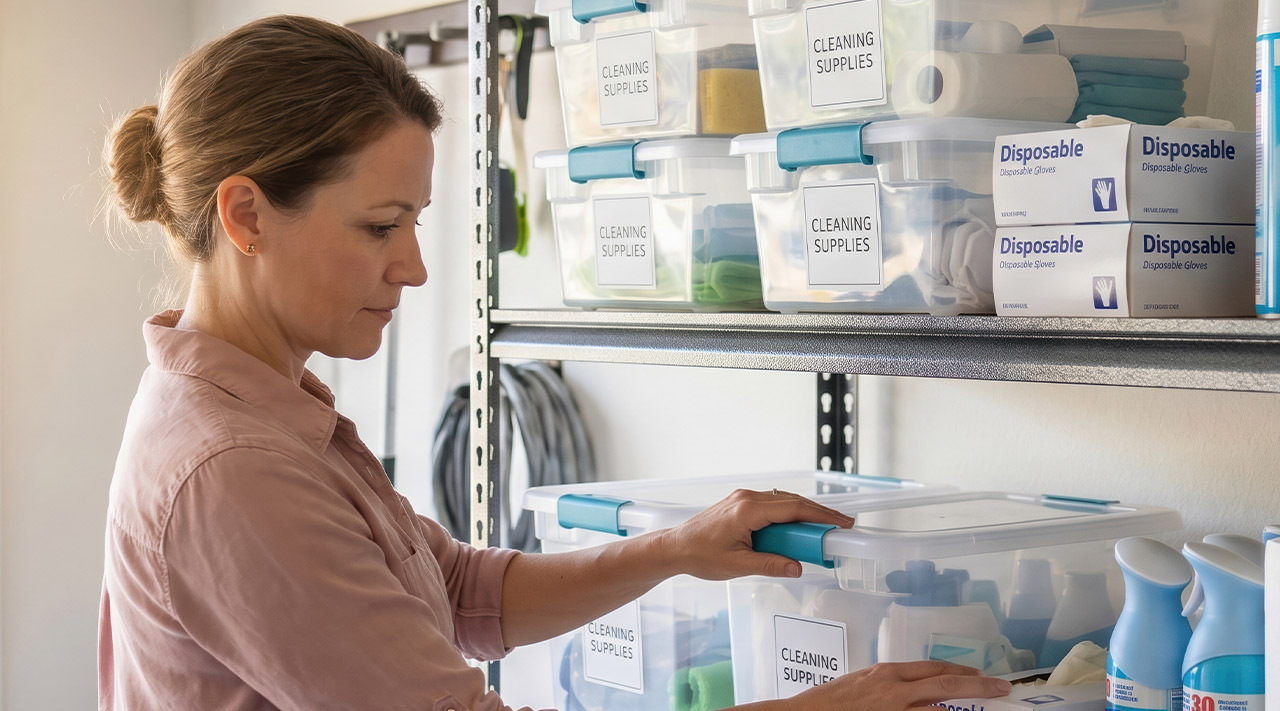
New stock goes behind existing stock. Staff pull from the front, so older inventory moves first and nothing degrades on the shelf. Label every shelf with the product name, case quantity, and par level so staff can flag low stock without a manager's walkthrough.
Separating Consumables from Chemicals
Never store cleaning chemicals alongside paper products, wipes, or personal care items. Sealed containers can off-gas, and a spill in a mixed area can ruin an entire paper stock. Keep chemicals in a dedicated, ventilated section with secondary containment.
Storage organization by zone:
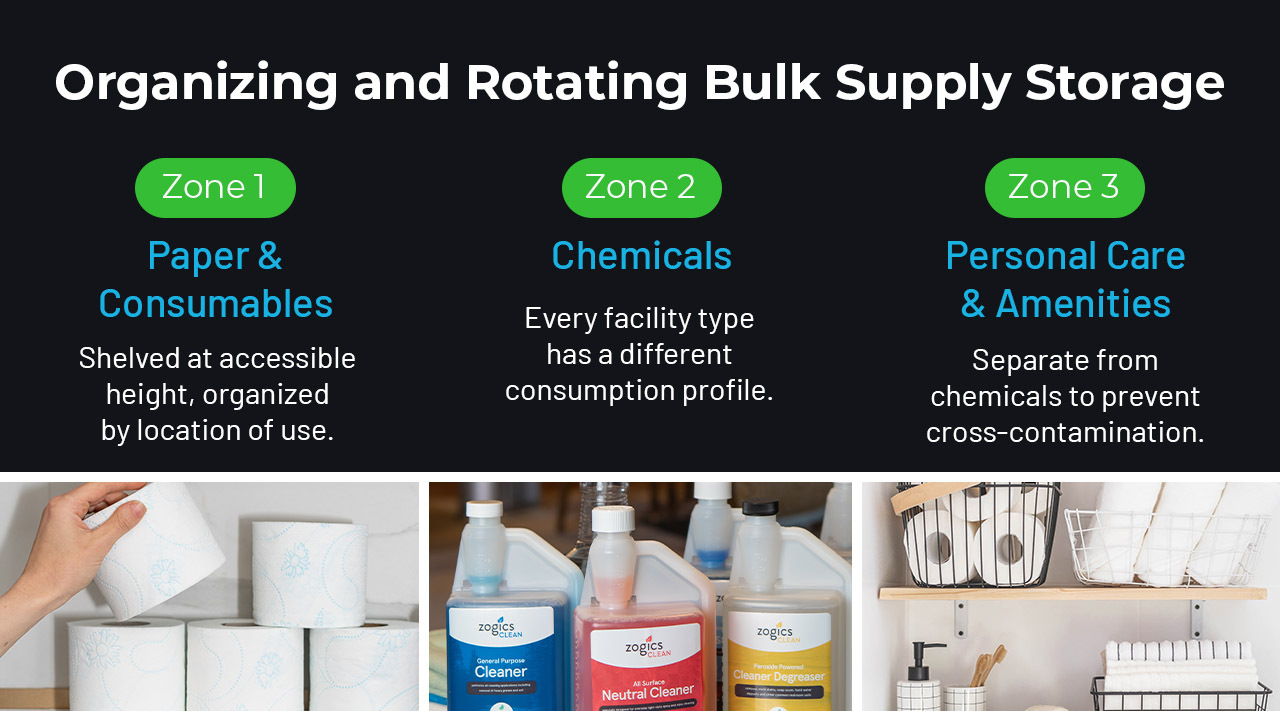
- Zone 1 (paper and consumables): Paper towels, toilet paper, can liners, wipes, gloves. Shelved at accessible height, organized by location of use (restroom, kitchen, janitorial closet).
- Zone 2 (chemicals): Floor cleaners, all-surface cleaners, restroom cleaners, degreasers. Locked or restricted access. SDS sheets posted nearby.
- Zone 3 (personal care/amenities): Shampoo, conditioner, body wash, hand sanitizer refills. Separate from chemicals to prevent cross-contamination.
Preventing Waste in Bulk Storage
Never open a new case until the previous one is empty. Half-open cases of the same product stack up fast.
For concentrates like Zogics All Surface Neutral Cleaner and Zogics General Purpose Cleaner, train staff on correct dilution ratios. Wrong ratios waste product and reduce effectiveness. See How to Properly Dilute Commercial Floor Cleaners for details.
Standardized Supply List by Facility Type
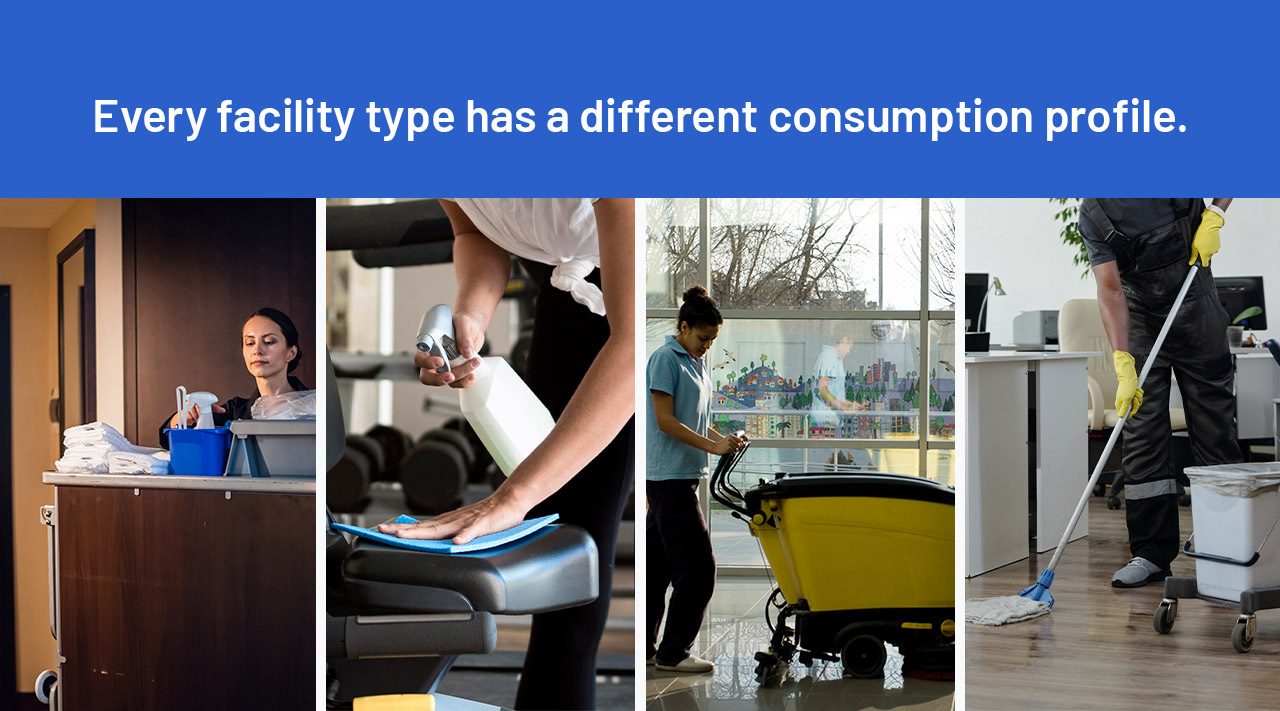
Every facility type has a different consumption profile. Use these lists as a starting point and adjust based on your par level calculations.
Hotels and Short-Term Rentals
Turnover speed is everything. Housekeeping needs supplies on the cart before the next guest arrives, so the storage room can never run short on the basics: toilet paper, paper towels, and liners. Zogics Jumbo Toilet Paper (12 rolls/case) and Zogics Paper Towels (6 rolls/case) are the two highest-volume items in most hotel supply rooms.
If you're still running single-use amenity bottles, it's worth switching. 3 Chamber Refillable Dispensers paired with the Bath & Body Care Gallon Sampler Case cuts per-room amenity cost and removes daily restocking of individual bottles from your housekeeping workflow.
For turnover cleaning, Zogics Hand & Surface Sanitizing Wipes (4 rolls/case) handle high-touch surfaces between guests quickly. Round out the cart with 33 Gallon Can Liners for guest room and hallway bins.
Gyms and Fitness Centers
Wipes are one of the highest-consumption items in any gym. Members wipe equipment after every use, dispenser stations empty fast, and an empty station gets noticed. Zogics Antibacterial Disinfecting Wipes are the standard choice for equipment stations. For lobby and locker room surfaces, Zogics Hand & Surface Sanitizing Wipes (4 rolls/case) are a practical alternative. Both reorder on a predictable schedule once you've tracked usage for a few weeks.
Locker rooms need more than surface wipes. Zogics Organic Acid Restroom Cleaner handles mineral buildup in showers and fixtures, and Zogics Enzyme Enriched Floor Cleaner & Deodorizer addresses the odor and organic load that builds up on locker room and shower floors. For cleaning staff, ProWorks GrizzlyNite Nitrile Gloves (10 boxes/case) are the practical PPE choice at this volume.
For wipe selection by equipment type and surface, see Best Wipes for Gym Equipment: Complete Guide.
Schools and Educational Facilities
Schools spread cleaning across many rooms with a small custodial crew, so the priority is consistency and volume at a manageable cost. Zogics Paper Towels (6 rolls/case) cover classrooms and restrooms, while Zogics 7-10 Gallon Can Liners (1000/case) handle desk-side bins.
For classroom surfaces, ecoPRO Plant-Based Disinfecting Wipes (4 rolls/case) are worth choosing over standard antibacterial wipes. The plant-based formula has a lower irritant profile, which matters in rooms with students who have sensitivities. Pair with Zogics General Purpose Cleaner for desks and shared surfaces.
If sensitivities are a concern across your building, see Fragrance-Free vs Scented: Build an Allergy-Safe Cleaning Program.
Corporate Offices and Property Management
Office cleaning is lower intensity than gyms or schools, but large floor plates mean you're moving through paper products and liners at scale. Zogics Center Pull Towels (6 rolls/case) work well in break rooms where controlled dispensing reduces waste, and Zogics Jumbo Toilet Paper keeps restrooms stocked across multiple floors.
For shared surfaces and conference rooms, Zogics Cleaning Wipes (4 rolls/case) are a practical choice for staff to use between meetings. Daily surface maintenance across open-plan areas is straightforward with Zogics All Surface Neutral Cleaner, which is safe on most finishes without needing separate products for different surfaces.
Liners split by bin type: 7-10 Gallon Can Liners for desk-side bins and 33 Gallon Can Liners for kitchens and common areas. For sizing guidance across bin types, see Trash Bag Guide: Sizes, Strengths & Eco-Friendly Options.
Multi-Site Operators
The challenge for multi-site operators isn't finding good products. It's getting every location to use the same ones. When each property orders independently, you end up with different liner gauges, paper formats, and chemicals at every site. Training suffers, and volume pricing disappears.
The fix is a single approved supply list, one supplier, and a fixed order schedule. Audit what each location uses and collapse the duplicates. Most multi-site operators find three or four products doing the same job. Consolidate to one per category, set par levels by site, then aggregate into a single weekly or biweekly order.
For cleaning chemicals specifically, the Zogics Clean Starter Pack (6 units/case) is a practical way to standardize across locations. It covers multi-surface cleaning in a single case, which reduces the number of individual products each site needs to stock and reorder.
5 Common Bulk Buying Mistakes to Avoid
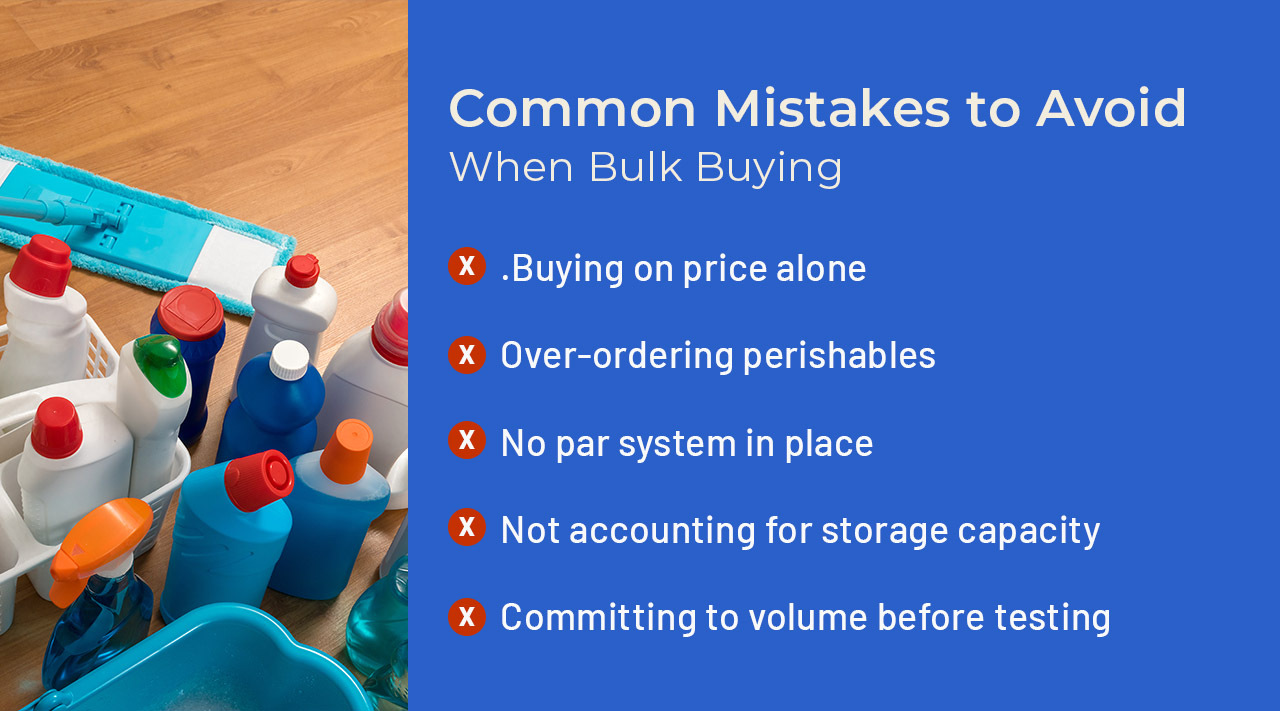
1. Buying on Price Alone
The appeal of bulk cleaning products is cost, but the lowest price per case isn't the lowest cost of ownership. A can liner that tears under normal load means double-bagging, which wipes out the savings. A paper towel that needs twice as many sheets per use costs more per dry hand than a better option. Evaluate on cost-per-use and test before committing to volume.
2. Over-Ordering Perishables
Enzyme-based cleaners, some wipe formulations, and personal care products degrade over time. Before ordering a 6-month supply of anything with an active ingredient, confirm the shelf life against your usage rate. Cap orders at a 90-day supply for any product with an active biological or chemical component.
3. No Par System in Place
Without par levels, ordering happens when someone notices the supply room is low. That means emergency orders, duplicates, and inconsistent stock. A simple spreadsheet covering your top 20 products cuts most supply disruptions.
4. Not Accounting for Storage Capacity
Measure your storage space before scaling up order quantities. Overfilling creates safety hazards, makes FIFO rotation impossible, and damages product. If storage is tight, prioritize compact, high-consumption items first: can liners, wipes, and gloves. Large paper product cases take significant space per unit.
5. Committing to Volume Before Testing
Ordering 10 cases of a product your team hasn't used yet can leave you with unusable inventory and no recourse. The right sequence: sample case, staff trial, confirm compatibility, then place the bulk order.
For facilities with sensitivities or allergy concerns, see Fragrance-Free vs Scented: Build an Allergy-Safe Cleaning Program before committing to a scented product at volume.
Stock Your Facility the Right Way
Par levels for every high-consumption item, a storage system that rotates stock correctly, and a supply list your whole team follows. Get those right, and you'll spend less per unit, less per order, and far less time managing shortfalls.
The Cleaning Station stocks bulk janitorial supplies for commercial facilities of every type. Browse commercial cleaning supplies, paper products, can liners, and disinfecting wipes to build your standardized supply list.
Frequently Asked Questions
What is a par level in janitorial supply management?
A par level is the minimum stock quantity that triggers a reorder. It's calculated using daily usage rate, supplier lead time, and a safety stock buffer: Par Level = (Daily Usage Rate x Lead Time) + Safety Stock.
How do I standardize cleaning supplies across multiple locations?
Audit current products across all locations to find duplicates. Consolidate to one approved list covering paper, liners, wipes, chemicals, and PPE. Set par levels by site, aggregate for a single bulk order on a fixed schedule, and assign one person per location for weekly stock counts.
What janitorial supplies should always be bought in bulk?
Toilet paper, paper towels, can liners, disinfecting wipes, nitrile gloves, and cleaning chemicals are commonly suitable for bulk purchasing because they are used regularly and often have predictable usage rates. Always check manufacturer shelf-life and storage guidance before ordering large quantities.
How do I calculate how much to order for a commercial facility?
Track usage for 2-4 weeks to get a daily rate per product. Multiply that rate by your supplier's lead time, then add an appropriate safety stock buffer. That's your par level. New facilities can use the benchmark rates in this guide as a starting point and adjust them after 30-60 days of actual usage data.
Is bulk buying janitorial supplies cost-effective for smaller facilities?
Yes. Single-location facilities can still benefit from case-quantity pricing on frequently used products such as paper products, liners, and wipes. Match order quantities to your actual usage and storage capacity rather than purchasing more inventory than you can reasonably store or use.
How do I prevent over-ordering when buying in bulk?
Set par levels based on actual usage, lead time, and safety stock so purchasing is tied to demand instead of guesswork. For products with expiration dates or ingredients that can lose effectiveness over time, verify the manufacturer's shelf-life guidance before determining how much inventory to keep on hand.
Recent Posts
-
 Your facility is on a regular cleaning schedule. The crew shows up, runs the machine, and the floors …Sep 24, 2026
 -
How Dirty Floor Cleaning Machines Cause Streaks and Residue in Commercial Cleaning
A floor scrubber leaving streaks or residue after cleaning is one of the most common complaints in …Sep 22, 2026 -

Why Commercial Floors Feel Sticky After Cleaning (And How to Fix It)
Sticky floors after mopping are a common complaint in commercial facilities. The floor looks clean …Sep 22, 2026