

Why Commercial Floors Feel Sticky After Cleaning (And How to Fix It)
Sticky floors after mopping are a common complaint in commercial facilities. The floor looks clean, but anyone walking across it within an hour can tell something went wrong. The cause usually traces back to one of three things: how much soil and traffic the floor handles daily, whether staff are using and diluting cleaners correctly, and whether everyone is following the same process shift to shift.
All three matter. Even the right product at the right dilution won't fix floors if the equipment is dirty or the rinse step keeps getting skipped. This post covers each cause, how to fix tacky floors, and how to prevent it across your commercial floor cleaning setup.
In this article:
- Why Floors Feel Sticky After Cleaning in Commercial Environments
- Common Causes of Sticky Floors in Facilities
- How to Fix Sticky Floors in a Commercial Setting
- Pros and Cons of Common Floor-Cleaning Methods
- How to Prevent Sticky Floors Across Your Facility
- When Sticky Floors Signal a Larger Process Issue
- Cleaning Product Pricing
- Get the Right Floor Cleaning Products for Your Facility
- Frequently Asked Questions
Why Floors Feel Sticky After Cleaning in Commercial Environments
High-Traffic Buildup Creates a Harder-to-Clean Surface
Commercial floors take on far more than residential ones. Foot traffic grinds in soil, tracked-in debris mixes with mopping solution, and detergent residue builds up over time into a tacky film that regular mopping can't fully lift.
Once that film is on the floor, a mop spreads it around instead of picking it up. Without periodic strip or deep-clean passes, the floor gets dirtier with each cleaning, not cleaner.
Improper Chemical Use Leaves a Film Behind
Using more cleaner than the label calls for is the most common reason floors stay sticky. When staff mixes at double or triple the recommended strength, whether out of habit or the belief that more product cleans better, the excess doesn't lift off the floor. It dries in place and stays there.
Research published in the Journal of Surfactants and Detergents confirms that the concentration of a cleaning solution has more impact on how well a hard floor gets cleaned than pH or product type. Too much product leaves behind a film that attracts moisture and particles from foot traffic, pulling dirt back onto the floor faster than if you'd used less to begin with.
Inconsistent Cleaning Processes Produce Inconsistent Results
In facilities with multiple staff or shifts, dilution ratios vary from person to person. One person measures carefully; another eyeballs it. One shift rinses; another skips it. The result: floors cleaned in the morning look different from floors cleaned at night, with no obvious explanation.
That's a training problem, not a product problem. Process standardization matters more here than product selection.
Common Causes of Sticky Floors in Facilities
Overuse of Cleaning Solution
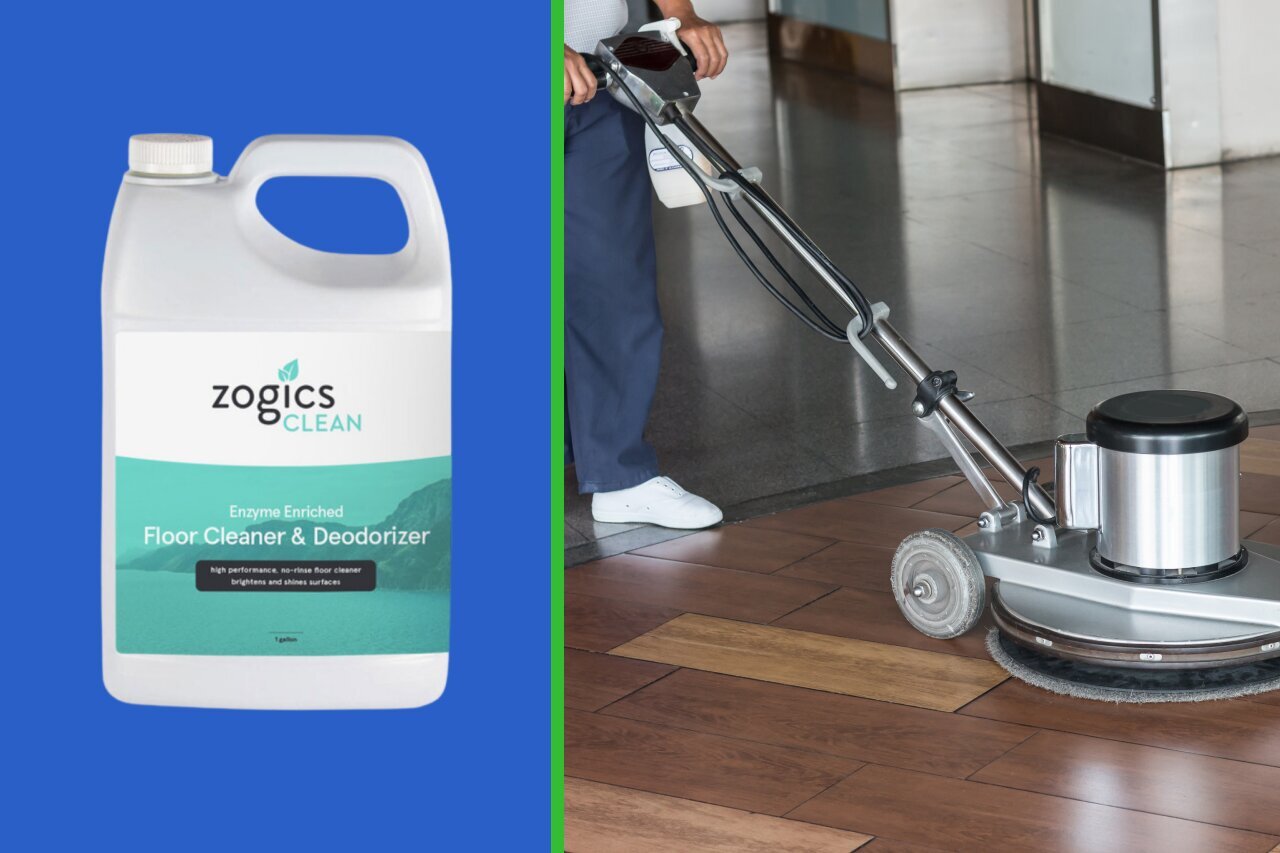
Most concentrated floor cleaners are built to work at a specific mix, often an ounce or two per gallon. Pour in more than that, and the extra product doesn't do extra cleaning. It stays on the floor, dries, and becomes the film you're trying to get rid of.
Facilities that free-pour from unmarked bottles are most likely to have this problem consistently. A measuring system at every station removes the guesswork.
Inadequate Rinsing in Machine Cleaning
Single-pass auto scrubber use (running the machine once and calling it done) frequently leads to sticky floors after cleaning, especially after cleaning with stronger solutions or in areas with heavy soil load. The machine lifts soil into the squeegee, but if the recovery tank is dirty or the solution left on the floor doesn't fully evaporate, residue remains.
A clean-water rinse pass after the cleaning pass resolves this on most surfaces. Facilities skipping this step as a time-saving measure typically spend more time re-cleaning floors that degrade faster.
Dirty Scrubber Tanks, Pads, or Mops
A machine running dirty water doesn't clean the floor; it just moves the dirt around. If the scrubber tank wasn't emptied and rinsed after the last shift, the next person mopping starts dirty. The same goes for mop heads and microfiber pads that haven't been washed between uses.
For guidance on keeping mop heads clean between uses, see How to Wash a Mop Head: Easy Steps for a Spotless Clean.
Incorrect Cleaner for Floor Type
Different floor surfaces need different chemistry. What cleans tile can leave a soap or wax residue on rubber or sealed concrete, and that residue is what causes the stickiness. Rubber gym floors are especially prone to this since they're porous and hold onto product that standard mop solutions weren't formulated to fully lift.
The Zogics Rubber Flooring Cleaner for Gyms is made for rubber surfaces. It cuts through sweat, grime, and odor without leaving the film that general cleaners deposit. For LVT and laminate, which have protective wear layers that react badly to high-alkaline or alcohol-heavy products, Bioesque Botanical Disinfectant Solution is alcohol-free and safe for those surfaces without dulling the finish or leaving film. If you're running mixed floor types across your facility, using the right product for each surface is one of the easier fixes on this list.
For a full breakdown of how residue forms and how to prevent it across your facility, see How to Prevent Residue Buildup on Commercial Floors once that pillar guide is live.
Additionally, dirty floor machines are a frequently overlooked cause of sticky floors after mopping. If the scrubber pads, solution tank, or squeegee blade are contaminated, the machine redistributes residue with every pass rather than removing it. See How Dirty Floor Machines Cause Streaks and Residue in Commercial Cleaning for a full diagnostic guide.
How to Fix Sticky Floors in a Commercial Setting
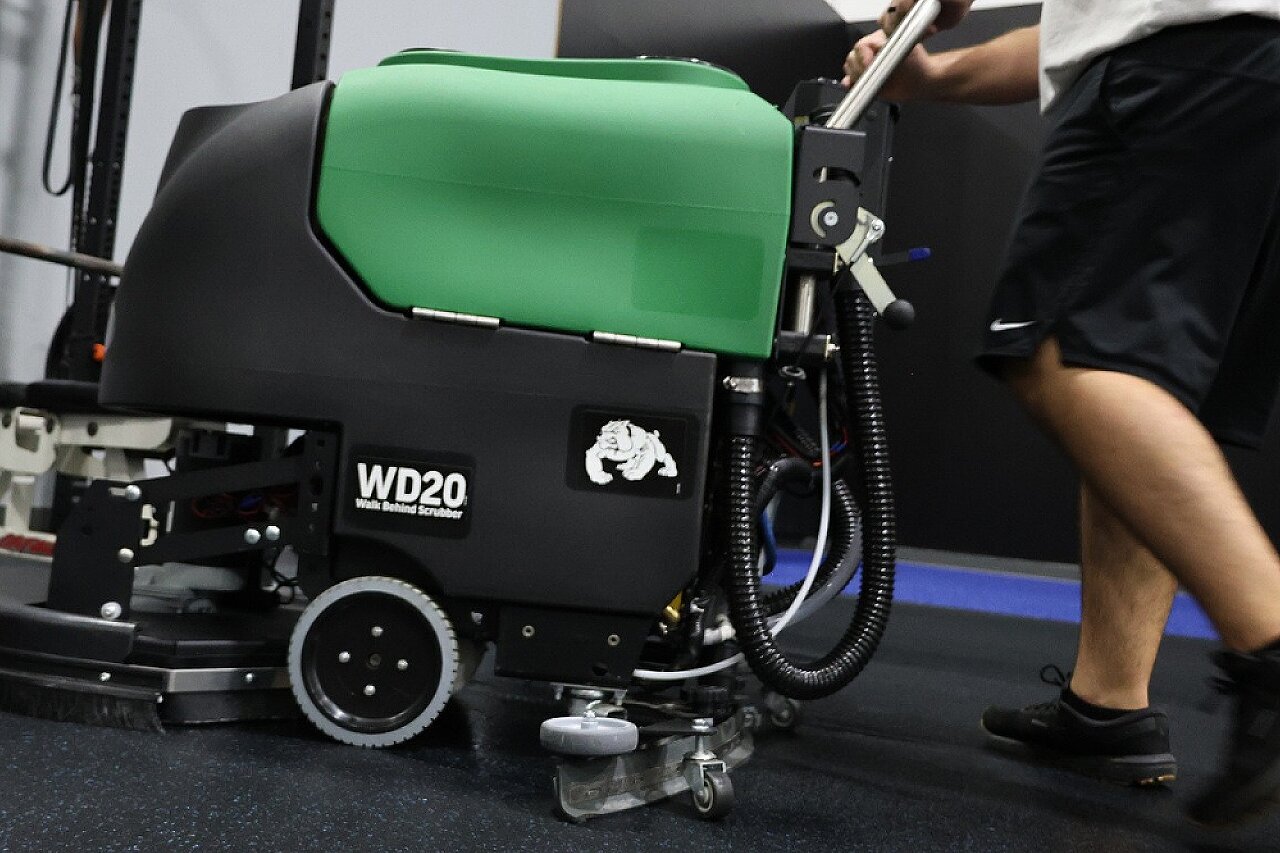
Knowing how to fix a sticky floor correctly starts with identifying which part of the process broke down.
Re-clean with Proper Dilution
The first step is re-cleaning the affected area using the correct dilution. This breaks down the residue causing stickiness instead of adding more product on top of it.
For most hard surfaces, including VCT, tile, sealed concrete, and luxury vinyl, a neutral pH cleaner at the correct dilution is the right call. Neutral formulas clean without leaving a film, which is exactly the problem you're trying to fix. For areas with heavier organic buildup, such as gym locker rooms, food service back-of-house, or high-occupancy restrooms, an enzyme-based cleaner goes further. Enzyme formulas break down grease and organic residue at the source and keep working between cleanings, and they don't require a rinse pass when diluted correctly.
The key in both cases is dilution. Using more product than the label calls for is what caused the problem in the first place. Using the right amount is what fixes it.
For step-by-step dilution guidance, see How to Properly Dilute Commercial Floor Cleaners.
Perform a Rinse Pass If Needed
If floors are still sticky after re-cleaning at the right dilution, follow with a plain water rinse. It pulls leftover product off the floor and leaves a cleaner finish than stopping after one pass.
For more on when a rinse pass is required, see Do You Need to Rinse Floors After Using a Floor Scrubber?
Clean Equipment Before Reuse
It's easy to skip under time pressure, but dirty equipment is often why sticky floors keep coming back. Before re-cleaning, flush the scrubber solution tank, rinse or replace mop heads, and inspect pads for wear or saturation. If the equipment going onto the floor is contaminated, the floor will be too.
Quick-fix checklist for floors that feel sticky after mopping:
- Check the dilution first: Measure the cleaning product according to the label instructions rather than estimating the ratio by eye.
- Replace dirty mop heads or pads: Swap out contaminated equipment before re-cleaning to prevent spreading the same dirt and residue across the floor.
- Run a clean-water rinse pass: If residue is visible or the floor feels tacky after cleaning, rinse the surface with clean water.
- Flush the scrubber tank: Empty and rinse the scrubber tank between shifts, not just between different jobs, to prevent residue buildup.
- Confirm product-to-floor compatibility: Use a cleaner that is suitable for the specific flooring material. A product that works well on tile may leave a film on rubber or LVT.
- Deep clean persistent buildup: High-traffic areas with stubborn residue may require stripping and deep cleaning before routine mopping can maintain the surface effectively.
Pros and Cons of Common Floor-Cleaning Methods
When commercial floors feel sticky after cleaning, the method matters as much as the product. Here's how the three approaches covered in this guide compare:
| Method | Pros | Cons |
|---|---|---|
| Mopping with correct dilution | Removes residue effectively; affordable; suitable for routine cleaning across most floor types | Requires accurate dilution and proper rinsing; results vary if staff measure inconsistently |
| Using a neutral floor cleaner | Helps protect floor finishes; reduces residue when used at the right concentration; safe across VCT, tile, sealed concrete, and rubber | May not remove heavy grease or embedded buildup without pre-treatment or a dedicated degreaser pass |
| Deep cleaning and rinsing | Removes embedded dirt and excess cleaning product that causes stickiness; resets the floor surface for routine maintenance | Takes more time; needs additional equipment; may temporarily limit floor access during the process |
For most commercial floors, use a properly diluted neutral cleaner and rinse thoroughly when residue or stickiness appears. Reserve deep cleaning for zones where buildup has advanced beyond what routine mopping can lift.
How to Prevent Sticky Floors Across Your Facility
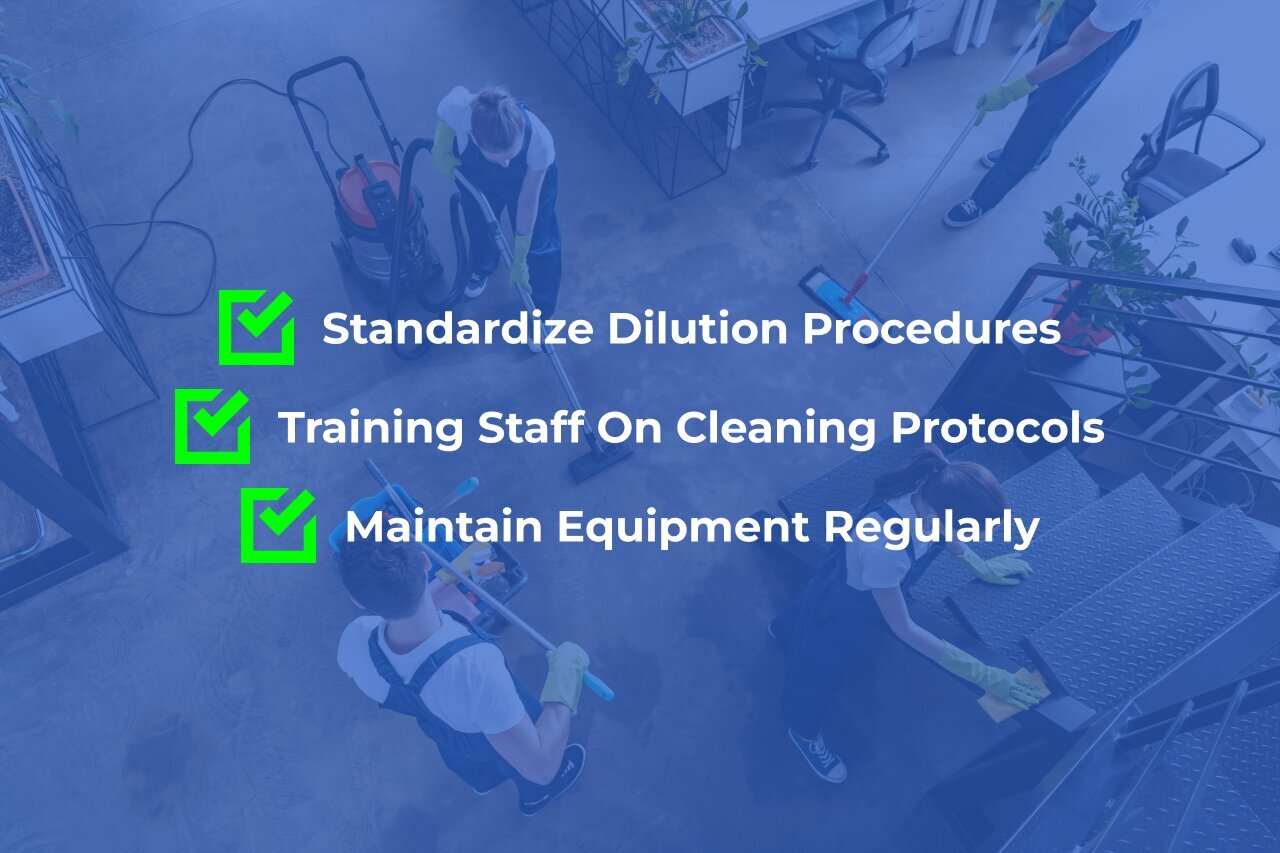
Standardize Dilution Procedures
Getting the amount of product right every time is the single most effective way to prevent sticky floors. Proportioning dispensers, pre-filled bottles with marked measurements, or labeled dosing caps mean staff aren't guessing how much to pour.
In facilities with multiple staff or locations, everyone using the same amount means floors get cleaned consistently, whoever is on shift. It also makes troubleshooting easier: if sticky floors start showing up in one area, you can check equipment and process instead of second-guessing the product.
Training Staff on Cleaning Protocols
How staff mops matters as much as what they're mopping with. Skipping the wring step, using an oversaturated mop head, or rushing through the process produces inconsistent results no matter what product they're using.
Written steps covering how much product to use, how to apply it, and when to rinse give everyone the same baseline. See How to Build a Cleaning Training Program That Works for a practical starting point.
Maintain Equipment Regularly
Worn pads deposit residue instead of lifting it. Dirty tanks redistribute soil. Mop heads past their service life smear more than they clean. Flushing solution tanks after every shift, laundering microfiber, and replacing pads on schedule reduces what the chemistry has to overcome.
For wet mop setups, keeping a clean solution separate from dirty water at the bucket level matters. A wringer bucket that mixes both means staff are reapplying contaminated water with every pass, regardless of what cleaner they started with.
Prevention checklist: stopping sticky floors before they start
- Use proportioning dispensers or pre-measured packets at every mop station
- Replace mop heads and microfiber pads on a set schedule, not just when they look worn
- Flush scrubber solution tanks and recovery tanks after every shift
- Keep a written dilution reference posted at each cleaning station
- Run a rinse pass after cleaning with concentrated or enzyme-based solutions
- Assign specific products to specific floor types and label them clearly
- Document recurring sticky-floor complaints by zone to identify equipment or process gaps
For facilities managing multiple locations, a standard supply kit at each site removes the product variation that drives inconsistent results. See our full range of commercial floor cleaning supplies to build a consistent program across your properties.
When Sticky Floors Signal a Larger Process Issue
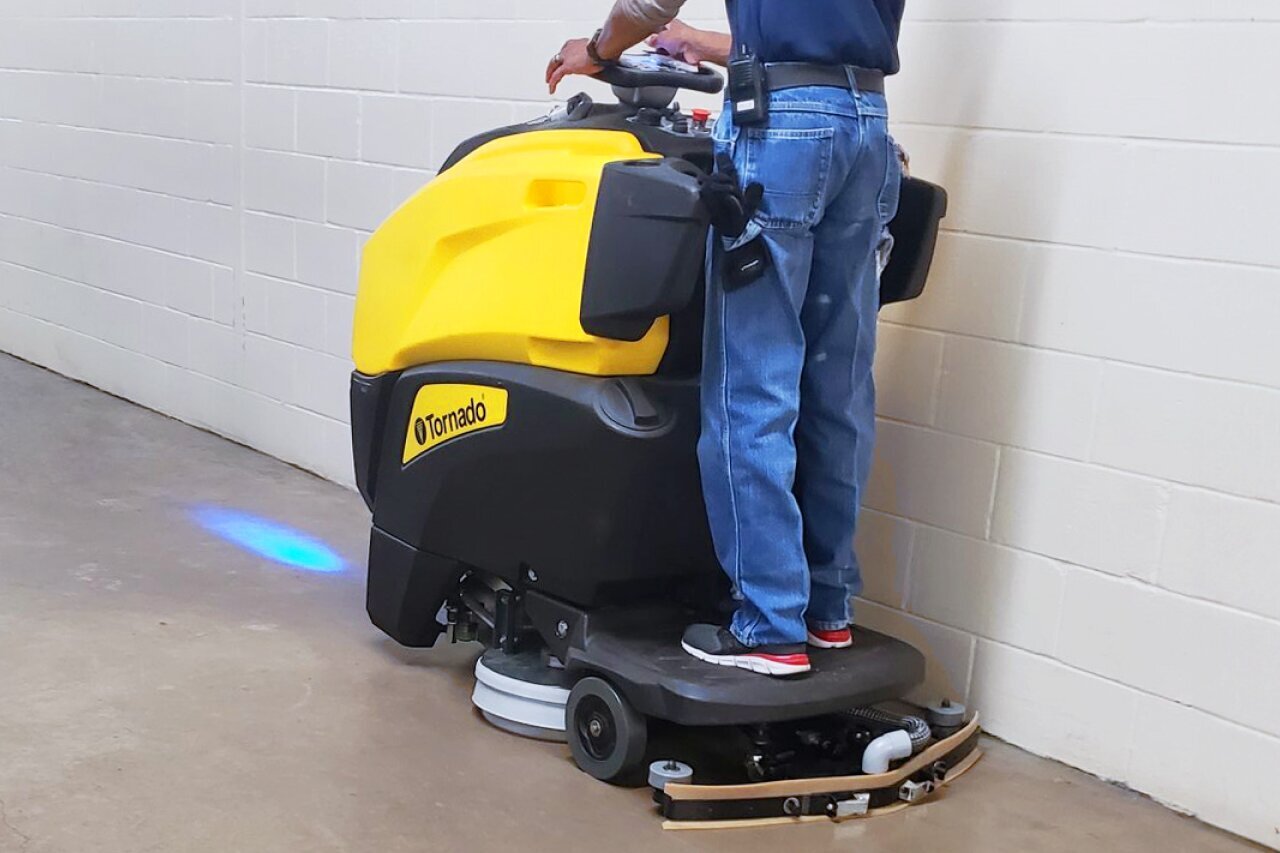
A sticky floor after one cleaning may be a chemistry, equipment, or process issue. When it keeps coming back across areas, shifts, or locations, the problem runs deeper.
Recurring Issues Across Areas
Stickiness that keeps reappearing in the same zones — locker rooms, entryways, high-traffic corridors — usually means residue has built up beyond what regular mopping can lift. At that point, a strip and deep clean is what's needed, not a different product.
Inconsistent Results Between Staff and Shifts
When one shift produces clean floors, and another doesn't, it's rarely the product causing the difference. The difference is how each person is using it: how much they're pouring, whether they're rinsing, and whether the equipment got cleaned between uses. That points at a training problem and the need for written steps, not instructions passed along verbally between shifts.
The High-Touch Surface Cleaning Checklist & Guide for Facilities has free downloadable checklists by facility type (gyms, offices, schools, healthcare, and food service), along with guidance on shift huddles and keeping cleaning consistent across staff.
Cleaning Product Pricing
The right product at the right price point makes it easier to standardize across your facility. Below are typical US price ranges for the floor cleaning products covered in this guide:
| Product or type | Typical US price | Best for |
|---|---|---|
| Neutral floor cleaner, 1 gallon | $15–$30 | Routine commercial floor cleaning |
| Enzymatic floor cleaner, 1 gallon | $25–$45 | Organic residue and odors |
| Microfiber mop pads, 3-pack | $20–$40 | Removing cleaner residue |
| Floor degreaser, 1 gallon | $20–$35 | Heavy grease buildup |
Prices are typical US retail ranges and may change. Check the linked product page for current pricing.
Get the Right Floor Cleaning Products for Your Facility
We carry commercial floor cleaning supplies for facilities of all sizes, from single-location gyms to multi-site accounts. If you're not sure where to start, contact our team directly, and we'll help you figure it out.
Frequently Asked Questions
Why Do Floors Feel Sticky After Mopping?
Floors feel sticky after mopping when excess cleaning solution dries on the surface instead of being removed. The most common cause is using too much product: concentrated cleaners leave a residue film when mixed above the recommended ratio, which attracts moisture and re-soils faster.
How do you fix sticky floors in a commercial setting?
Re-clean using the correct dilution ratio and a neutral or low-residue floor cleaner. If the stickiness persists, follow with a clean-water rinse pass. Before re-cleaning, flush the scrubber tank or replace the mop head, since dirty equipment will redistribute the residue you're trying to remove.
Do you always need to rinse commercial floors after mopping?
Not always, but it depends on the product and the soil load. Low-residue neutral cleaners used at correct dilution typically don't require rinsing on lightly soiled floors. After using stronger concentrates, enzyme cleaners, or cleaning heavily soiled areas, a clean-water rinse pass significantly reduces leftover residue and improves the final finish.
Why Do Commercial Floor Cleaners Leave Residue Buildup?
Commercial floor cleaners leave residue buildup when the solution is mixed above the recommended dilution ratio. Excess detergent can't fully evaporate or rinse away, so it dries on the surface and accumulates with each cleaning cycle. Using the correct concentration and rinsing when needed prevents buildup from forming.
What floor cleaners leave the least residue?
Neutral pH cleaners designed specifically for commercial hard floors leave the least residue when used at the correct dilution. For most hard surface types, the Zogics Neutral Cleaner is a low-residue option that works across VCT, tile, and sealed concrete. For rubber flooring common in gyms and locker rooms, the Zogics Rubber Flooring Cleaner for Gyms is formulated to avoid the film buildup that general cleaners leave on porous rubber surfaces. Avoid heavily fragranced or wax-containing formulas on floors that aren't designed for them.
How do sticky floors affect safety in high-traffic facilities?
Two ways. Residue film catches shoe soles, especially when floors transition from dry to slightly damp. And floors that re-soil faster get cleaned more often, which means more time spent wet. In hotels, fitness centers, and schools with continuous foot traffic, that cycle compounds. Correct dilution and rinsing reduce both the residue and the slip risk.
How to Stop Sticky Floors After Mopping?
Stop sticky floors after mopping by measuring cleaning solution precisely at the label's dilution ratio, rinsing with clean water when needed, and replacing mop heads or pads before they become saturated with residue. Consistent dilution and clean equipment are the two most reliable fixes.
Why Do Commercial Floors Stay Dirty with Regular Mops?
Regular mops stay dirty because string and sponge mop heads absorb soil and cleaning solution together, then redistribute that contaminated water across the floor with each pass. Switching to microfiber pads, which trap particles rather than spreading them, and changing solution frequently reduces this problem significantly.
Recent Posts
-
 Your facility is on a regular cleaning schedule. The crew shows up, runs the machine, and the floors …Sep 24, 2026
 -
How Dirty Floor Cleaning Machines Cause Streaks and Residue in Commercial Cleaning
A floor scrubber leaving streaks or residue after cleaning is one of the most common complaints in …Sep 22, 2026 -

Why Commercial Floors Feel Sticky After Cleaning (And How to Fix It)
Sticky floors after mopping are a common complaint in commercial facilities. The floor looks clean …Sep 22, 2026