
What is Required on an Outdoor Waste Receptacle: A Comprehensive Guide
Outdoor waste receptacles are essential for maintaining cleanliness, promoting public health, and supporting efficient waste management in public spaces. Whether placing trash bins in a park, along a busy street, or near a restaurant, understanding these receptacles' key features and requirements can help with effectiveness. This guide covers everything you need to know, from durability and design considerations to health and safety standards, environmental compliance, and placement best practices.
In this guide
- Design and Construction Standards for Outdoor Waste Receptacles
- Size and Capacity: Choosing the Right Bin for Your Space
- Health and Safety Standards for Outdoor Waste Receptacles
- Environmental Compliance and Recycling in Outdoor Waste Receptacles
- Accessibility and Placement Considerations
- Aesthetics of Outdoor Waste Receptacles: Design Tips for Public Spaces
- Regular Maintenance and Servicing
- Pros and Cons of Outdoor Waste Receptacle Materials
- Outdoor Waste Receptacle Features and Price Ranges
- Key Elements of an Effective Outdoor Waste Receptacle
Key Takeaways
- Durable Materials: Stainless steel, aluminum, and heavy-duty plastics are ideal for outdoor settings due to their ability to withstand harsh weather conditions and resist vandalism.
- Secure Lids and Effective Containment: Proper lids help maintain cleanliness, prevent pests, and ensure safe disposal, contributing to public health.
- Accessibility and Size: Trash bins should be appropriately sized for their location and accessible for all, including those with disabilities.
- Environmental Compliance: Incorporating recycling bins and following compliance with local regulations helps improve segregation and reduce environmental impact.
Design and Construction Standards for Outdoor Waste Receptacles
Outdoor trash cans serve more than just the function of holding trash. They are crucial in maintaining cleanliness and hygiene in public areas. The design of these containers must meet a variety of needs, including durability, safety, ease of use, and environmental responsibility.
Materials for Outdoor Waste Receptacles
When selecting materials for outdoor trash receptacles, durability is key. These bins must withstand a range of environmental factors, from extreme weather conditions to heavy usage. Some of the best materials include:
- Stainless Steel: Known for its corrosion resistance, stainless steel is perfect for environments where receptacles will be exposed to harsh weather.
- Aluminum: Lightweight and resistant to rust, aluminum is another excellent option for outdoor bins.
- High-Density Polyethylene (HDPE): A tough, weather-resistant plastic that resists cracking and fading, making it ideal for outdoor use.
- Recycled Plastic: A sustainable choice, recycled plastic bins are durable and resistant to weathering, helping reduce environmental impact.
These materials provide the durability needed to endure outdoor elements without degrading over time, minimizing maintenance efforts and replacement costs.
Weather Resistance
The material you select should resist corrosion, cracking, and fading. Stainless steel often has a powder-coated finish to enhance its durability against rain, snow, and temperature fluctuations. UV-resistant plastics like HDPE provide excellent protection against sun exposure, ensuring that bins maintain their integrity for years.
Key Materials for Weather Resistance
| Material | Weather Resistance | Best Use |
|---|---|---|
| Stainless Steel | Highly corrosion-resistant and strong | General outdoor use, high-traffic areas |
| Aluminum | Lightweight, rust-resistant | Coastal areas, parks |
| HDPE Plastic | Resists cracking and warping under UV | Sunny climates, low-maintenance facilities |
Liner Compatibility and Mounting
Two factors that often get overlooked during the buying process:
Liner compatibility matters more than most buyers expect. A receptacle with an irregular interior profile or an oversized opening can cause standard liners to slip, bunch, or fail at the seams. Look for receptacles with a consistent interior diameter and a lip or ring that secures the liner in place. For most commercial outdoor trash cans, 33- to 45-gallon liners are the most common fit — but always verify against the manufacturer's spec sheet before ordering in bulk.
Mounting and anchoring is equally important, particularly in high-wind locations, high-traffic pedestrian areas, or anywhere vandalism is a concern. Options include:
- Surface-mounted bases: Bolted directly to concrete or pavement. Most secure option for permanent installations.
- In-ground anchor posts: Common for parks and streetscapes; the post sets into a concrete footing.
- Weighted bases: Used where drilling isn't possible. Heavy enough to resist tipping but movable for cleaning.
- Wall-mounted brackets: Suitable for building entrances or tight spaces where floor space is limited.
Note: Local building or zoning codes may dictate anchoring requirements for receptacles in public right-of-ways. Check with your municipality before installing permanent fixtures on public property.
Size and Capacity: Choosing the Right Bin for Your Space
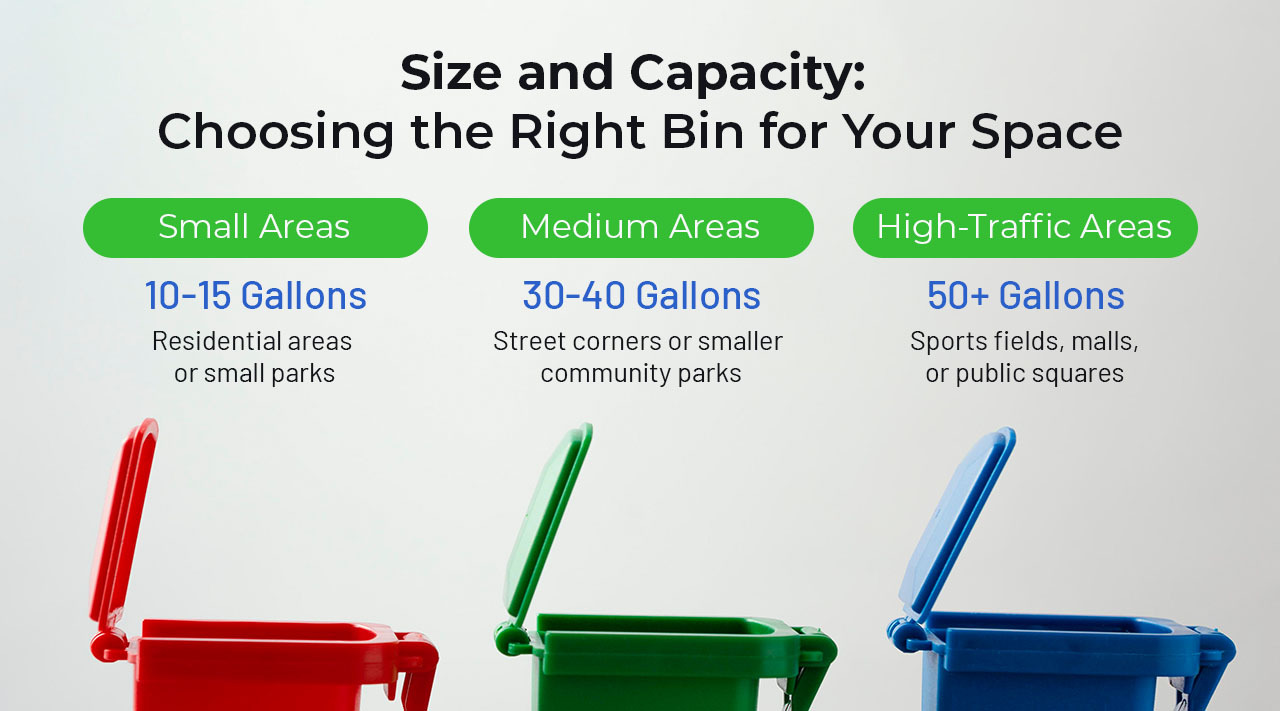
Choosing the right trash can size and capacity for your outdoor space is crucial. The size should reflect the amount of traffic in the area. Larger bins are necessary in high-traffic areas, while smaller ones may suffice for less frequently visited spaces.
- Small Areas (10–15 Gallons): Ideal for low-traffic locations like residential areas or small parks.
- Medium Areas (30–40 Gallons): Suitable for spaces with moderate foot traffic, such as street corners or smaller community parks.
- High-Traffic Areas (50+ Gallons): Required for busy locations like sports fields, malls, or public squares.
To prevent overflowing trash, odor issues, and constant emptying, it is important to select a receptacle size that matches the volume of waste.
Space and Placement Considerations
The physical space in which your waste receptacle will be placed is crucial. Not only should the bin fit the location, but it should also accommodate pedestrian traffic without obstructing walkways or creating safety hazards.
- Space Constraints: Ensure that the waste bin doesn't impede foot traffic. Adequate space around the bin is necessary for easy access and emptying.
- Emptying Frequency: Larger bins will need less frequent emptying, but consider logistics like accessibility for waste collection vehicles.
By selecting the appropriate size and ensuring it fits well within the designated space, you can maintain cleanliness without the risk of overflow or litter around the bin.
Capacity Planning for High-Use Facilities
For facilities that generate predictable waste volumes like stadiums, food courts, transit hubs, or event venues — capacity planning is worth doing before you buy. A few practical benchmarks:
- A busy outdoor food-service area can fill a 32-gallon receptacle in under two hours during peak service.
- Parks with weekend programming often need 50–65 gallon bins at key gathering points, with collections scheduled every 4–6 hours.
- Street-facing receptacles near restaurants or cafes typically see higher fill rates than those near office building entrances.
The goal is to avoid overflow without over-servicing: Choosing a bin that's slightly larger than your average daily volume — and pairing it with a reliable collection schedule — is almost always more cost-effective than frequent liner changes on an undersized receptacle.
Health and Safety Standards for Outdoor Waste Receptacles
To comply with public health and safety, outdoor waste receptacles must adhere to health and safety standards. These standards guarantee that the bins are safe for public use and effectively contain garbage.
Lid and Cover Requirements
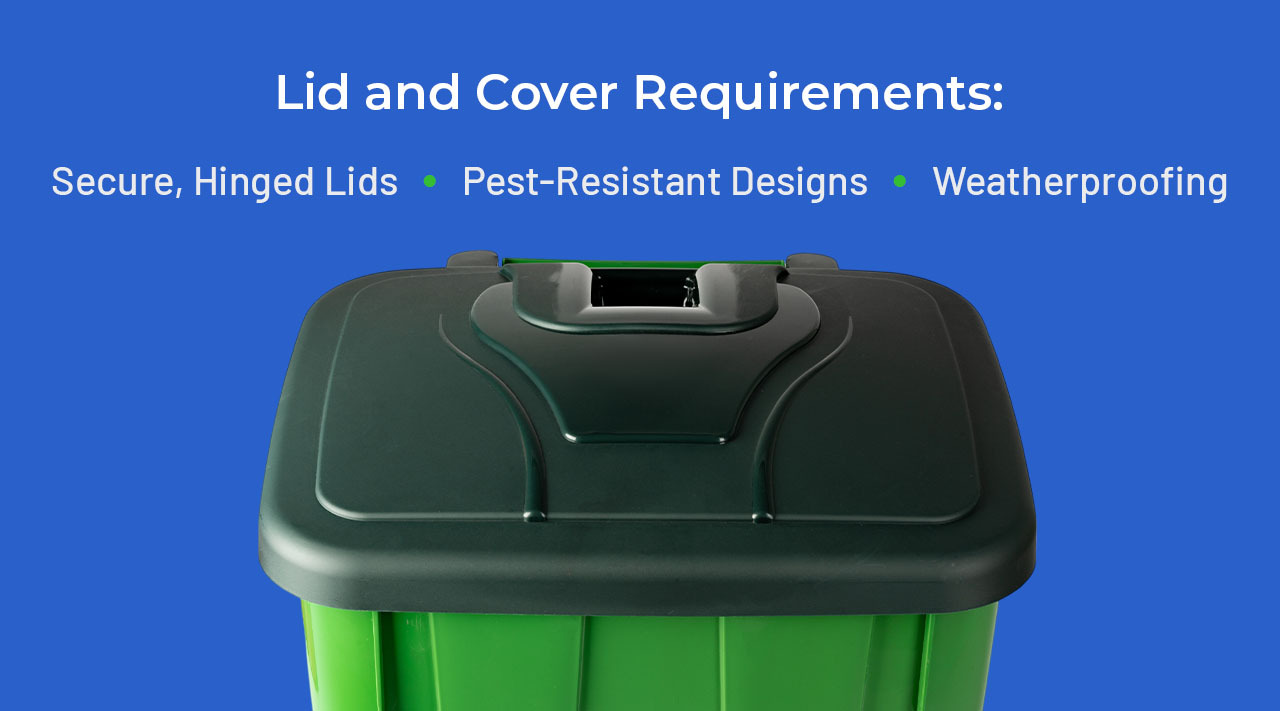
Lids and covers are vital components for outdoor bins. They help contain the trash, prevent odors, and deter pests from accessing trash. Here are some considerations:
- Secure, Hinged Lids: These are particularly effective at preventing spillage and ensuring trash is contained even in windy conditions. Hinged lids also allow for easy access while maintaining a secure closure.
- Pest-Resistant Designs: Lids should be designed to keep animals and insects out, preventing contamination and maintaining cleanliness in the surrounding area.
- Weatherproofing: The lid's design should prevent rain and snow from entering the container, as this helps stop the contents from being exposed to the elements or escaping into the surrounding environment.
A well-designed lid enhances the functionality of the trash can, keeping the area around the bin clean and hygienic.
Waste Containment and Hygiene
Waste containment is key to reducing litter, controlling odors, and preventing the spread of bacteria. The receptacle should be:
- Seamless and Leak-Proof: No seams should allow for leakage of liquid waste or bacteria.
- Odor Control: Features like odor-absorbing liners or charcoal filters can help reduce unpleasant smells around the receptacle.
What Outdoor Garbage Containers Must Be Equipped With
A properly specified outdoor garbage container goes beyond a basic opening and a liner. For commercial and public-space use, receptacles should be equipped with:
- A secure lid or cover that closes completely and resists wind uplift. Dome-top and canopy-style lids are particularly effective at shedding rain and preventing pests from accessing the interior.
- A liner retention system is either a ring, a lip, or an inner frame is to keep the bag in place during use and removal.
- Drainage provisions for open-top designs, or a fully sealed base for closed-lid models, to prevent standing water accumulation.
- A corrosion-resistant finish on all metal components, typically achieved through powder coating or galvanizing.
- Clearly visible labeling indicating the type of waste accepted, particularly where separate waste streams (general waste, recycling, compost) are in use.
Regulatory note: Many municipalities and health codes require that outdoor food-service waste receptacles have tight-fitting lids and be stored on a cleanable surface. Requirements vary by jurisdiction — always verify with your local health department or sanitation authority.
Environmental Compliance and Recycling in Outdoor Waste Receptacles
As environmental sustainability becomes a growing concern, offering recycling bins and complying with local regulations is increasingly important. The U.S. Environmental Protection Agency provides guidance on waste reduction and recycling best practices that inform how public-space receptacles should be configured.
Recycling Compatibility
Effective trash separation is essential for reducing landfill waste and promoting recycling. Outdoor bins should have marked compartments for different recyclable materials such as paper, plastics, and metals.
Proper signage and labeling help guide users to dispose of garbage correctly and contribute to more effective recycling efforts.
Color-Coded Bins: Standardized colors help users identify recycling streams quickly.
- Blue: Plastic
- Green: Paper
- Yellow: Metal
- Red: Glass

Pairing general waste receptacles with a dedicated commercial recycling bin at the same location is one of the most effective ways to improve diversion rates in public spaces. When receptacles are co-located and clearly labeled, users are significantly more likely to sort correctly.
Composting Support
Composting bins are an important addition to waste management systems, particularly in areas where food waste is prevalent. These receptacles should be clearly labeled to encourage users to dispose of organic materials, helping reduce landfill trash and support sustainability. These bins should include features such as:
- Sealed Lids: To prevent odor and keep pests away.
- Compatible with Compostable Bags: Ensure that the bin can handle compostable bags to make the process easier for users.
Local Recycling Regulations
Recycling requirements for commercial properties vary significantly by state and municipality. Some jurisdictions mandate separate recycling streams for multi-family housing, food-service operations, and commercial facilities. Before finalizing your receptacle configuration, check with your local sanitation authority or solid-waste management office to confirm which materials must be diverted and whether signage or labeling is required by code.
Tip: The EPA's Sustainable Materials Management resources offer a useful starting point for understanding federal recycling guidance, but local requirements will govern what's actually required at your facility.
Accessibility and Placement Considerations

Outdoor waste receptacles must be accessible to all, including those with disabilities.
Americans with Disabilities Act (ADA) Compliance
The placement of your waste receptacle should comply with ADA Standards for Accessible Design, published by the U.S. Department of Justice. This includes ensuring:
- Reach Range: The opening of the bin should be between 15 and 48 inches off the ground to accommodate individuals using wheelchairs or other mobility aids.
- Clear Pathways: Ensure at least 36 inches of clearance around the receptacle for easy access.
Important: The ADA reach-range requirements (15–48 inches) and the 36-inch clear-floor-space requirement are drawn from the 2010 ADA Standards for Accessible Design. These apply to facilities covered under the ADA. If your receptacles are located in a public right-of-way, additional requirements under the Public Rights-of-Way Accessibility Guidelines (PROWAG) may apply. Consult your local authority having jurisdiction (AHJ) to confirm which standards govern your specific installation.
Strategic Placement for Easy Use
- Placement: Place receptacles in high-traffic areas such as building entrances, near food courts, or at bus stops for visibility and to encourage use.
- Secure Installation: Receptacles should be securely installed, especially in windy areas, to prevent them from being tipped over or stolen. Permanent installations are recommended for high-traffic areas.
- Signage: Clear signage helps guide users to the proper disposal areas. Labels should indicate what types of trash belong in each receptacle, promoting proper segregation.
How the Outdoor Refuse Area Should Be Constructed
Beyond the receptacle itself, the surrounding refuse area matters for both compliance and practical maintenance. A well-constructed outdoor refuse area typically includes:
- A cleanable surface: Concrete pads are the standard for enclosures that house dumpsters or multiple receptacles. The surface should be graded to drain away from the containers to prevent standing water and bacterial buildup.
- Enclosure or screening: Many local zoning codes require that outdoor refuse areas visible from the street or neighboring properties be screened with fencing, masonry walls, or landscaping. Check your local ordinance for specific requirements.
- Adequate access clearance: The area should accommodate your waste hauler's truck and equipment. Most commercial haulers require a minimum approach clearance — confirm with your hauler before constructing a permanent enclosure.
- Lighting: Refuse areas used after dark should be adequately lit for both safety and to deter illegal dumping.
Note: Construction requirements for outdoor refuse enclosures are typically governed by local zoning, building, or health codes rather than a single federal standard. Always confirm requirements with your local authority before building or expanding an enclosure.
Aesthetics of Outdoor Waste Receptacles: Design Tips for Public Spaces
When selecting outdoor waste receptacles, aesthetics are just as important as functionality. A well-designed trash bin can enhance the visual appeal of public spaces, making them not only cleaner but also more inviting. Whether you're placing bins in parks, streets, or near businesses, consider how the design, color, and placement of waste receptacles contribute to the overall environment.
Design and Shape: Matching the Environment
Outdoor trash cans come in a variety of designs, ranging from traditional round bins to sleek, modern models. Choose a shape that complements the surrounding area's style. For urban spaces, contemporary designs with clean lines and geometric shapes work well, while natural environments like parks may benefit from more organic, rustic designs that blend with greenery.
Tip: Consider the architectural style of the location to determine the best design. A modern cityscape may call for minimalist bins, while a park could benefit from more earthy, natural-looking bins.
Color and Finish: Enhancing Visual Appeal
The color and finish of outdoor waste receptacles play a significant role in how they fit into their surroundings. Neutral colors like black, gray, and beige are versatile and blend well in most environments. However, brighter colors can be used to attract attention in high-traffic areas or to align with branding, especially in commercial or tourist-centric spaces.
Tip: Opt for powder-coated metal finishes for a sleek, durable look that also helps prevent rust. Alternatively, matte finishes or textured plastic can give bins a modern or rustic touch depending on the location.
Customization: Personalize for Your Space
For a more tailored approach, many manufacturers offer customizable outdoor waste receptacles. This can include choosing specific colors, materials, or branding elements that align with the identity of the business, organization, or public space. Customization can be particularly beneficial for creating a cohesive look in places like shopping districts, recreational areas, or historical sites.
Tip: Customizable bins with logos or specific color schemes can strengthen brand identity and improve overall aesthetic cohesion.
Blending with Landscape: Creating Harmony
Waste receptacles should blend with the natural or architectural elements of the surrounding area. Choosing bins made from materials that resonate with the local environment helps create a harmonious look. In coastal areas, stainless steel or aluminum bins work well, as they are rust-resistant and have a sleek, modern finish that matches the setting. In historical or cultural landmarks, a more traditional or vintage-style bin may be appropriate to maintain the integrity of the space.
Tip: Consider local culture and environmental factors when choosing a design. Materials like recycled plastic can provide an eco-friendly, sustainable option that complements green spaces.
Encouraging Proper Use: Aesthetic Appeal Meets Functionality
The aesthetic design of waste receptacles not only enhances the beauty of a space but also encourages people to use the bins properly. Visually appealing bins that blend with the surroundings are more likely to be used by the public, helping maintain cleanliness and reducing litter.
Tip: Place aesthetically pleasing, well-designed bins in high-traffic areas to encourage proper disposal and create a more inviting environment for visitors.
Regular Maintenance and Servicing
Maintaining trash bins is essential to keep them functioning properly and prevent them from becoming unsanitary. Regular cleaning, repairs, and efficient collection help prolong the life of the receptacles and keep public spaces clean.
Cleaning Procedures
Regular cleaning of the trash cans keeps them sanitary and odor-free. Consider using environmentally friendly cleaners like mild detergents or natural vinegar to neutralize odors and remove dirt buildup.
For outdoor receptacles in high-traffic areas, a weekly interior wash-down is a reasonable baseline. Areas near food service or with heavy summer use may need more frequent attention. When cleaning:
- Remove the liner and any loose debris before washing.
- Use a hose or pressure washer to rinse the interior thoroughly.
- Apply a diluted disinfectant cleaner and scrub the interior walls and lid.
- Allow the bin to dry completely before inserting a new liner — moisture trapped under a liner accelerates odor and bacterial growth.
Efficient Waste Collection
Proper trash collection schedules are essential to avoid overflow and keep public spaces clean. Accessible bins make it easier for maintenance crews to collect trash and replace liners efficiently. Pairing the right trash can liners with each receptacle — matched to the bin's interior dimensions and the expected waste type — reduces liner failures and speeds up changeovers.
Odor Control
Incorporating odor-control strategies, such as using odor-absorbing sachets or charcoal filters, helps maintain a pleasant environment around the receptacles. For receptacles near food-service areas or in warm climates, consider liners with built-in odor-neutralizing properties, and schedule collection before bins reach capacity rather than waiting for overflow.
Pros and Cons of Outdoor Waste Receptacle Materials
Every material has tradeoffs. The right choice depends on where the receptacle will live, how much abuse it will take, and how often your team can service it. Here's a practical breakdown:
Aluminum
- Pros: Lightweight and easy to reposition; naturally rust-resistant without requiring a protective coating; good choice for coastal or humid environments.
- Cons: Can dent under heavy impact; in salt-air environments, untreated aluminum may develop surface oxidation over time; generally less vandal-resistant than steel.
Steel
- Pros: Very durable and difficult to damage or move; powder-coated steel holds up well in most climates; heavy gauge options offer strong vandal resistance.
- Cons: Uncoated or scratched steel can rust, particularly in wet or coastal conditions; heavier weight makes repositioning more labor-intensive; periodic inspection and touch-up of the finish is needed to prevent corrosion.
Plastic (HDPE and Recycled Plastic)
- Pros: Affordable upfront; lightweight and easy to clean; won't rust or corrode; recycled-content options support sustainability goals.
- Cons: Can fade, crack, or become brittle after prolonged UV exposure; lower vandal resistance than metal; may warp in extreme heat; not ideal for high-traffic urban areas where durability is a priority.
Concrete
- Pros: Extremely heavy and stable — very difficult to tip, move, or vandalize; long service life with minimal maintenance; works well in high-traffic public spaces like transit plazas and parks.
- Cons: Difficult and costly to move once installed; can crack during freeze-thaw cycles in cold climates; higher initial cost and installation complexity; limited design flexibility.
Wood
- Pros: Visually attractive for parks, resort properties, and public spaces where a natural aesthetic is a priority; can be designed to blend seamlessly with landscaping.
- Cons: Requires regular sealing and maintenance to prevent rot, warping, and splintering; not suitable for high-moisture environments without significant upkeep; lower durability than metal or concrete over the long term.
Bottom line: For most commercial and municipal installations, powder-coated steel or HDPE plastic offers the best balance of durability, maintenance requirements, and cost. Reserve concrete for permanent high-traffic installations, aluminum for coastal settings, and wood for low-traffic aesthetic environments where maintenance resources are available.
Outdoor Waste Receptacle Features and Price Ranges
Use this table as a starting point when comparing receptacle types for your facility. Prices reflect typical market ranges as of 2026 and will vary based on capacity, finish, and optional features.
| Receptacle Type | Best For | Key Features | Typical Price Range |
|---|---|---|---|
| Plastic outdoor trash can | Light commercial use | Weather-resistant, lightweight, lid options | $50–$200 |
| Metal waste receptacle | Parks and sidewalks | Durable steel, anchored base, corrosion resistance | $250–$900 |
| Decorative outdoor receptacle | Entrances and public spaces | Architectural finish, liner, optional ashtray | $500–$1,500+ |
| High-capacity commercial bin | High-traffic facilities | Large capacity, heavy-duty construction, lockable lid | $800–$2,500+ |
Buying note: Price varies significantly based on capacity, material grade, lid style, mounting requirements, and optional features such as ashtrays, recycling openings, or security locks. A 20-gallon plastic bin with a basic dome lid sits at the low end; a 90-gallon powder-coated steel receptacle with a canopy top, surface-mount base plate, and lockable liner ring sits at the high end. Always factor in the cost of compatible liners and any hardware required for your mounting method when budgeting.
Browse our full selection of commercial trash receptacles to find the right fit for your space and budget.
Key Elements of an Effective Outdoor Waste Receptacle

Choosing the right outdoor waste receptacle involves balancing durability, functionality, and environmental responsibility. By selecting durable materials, incorporating secure lids, and considering the accessibility and placement of the bin, you ensure that the waste receptacle will meet both public health standards and community expectations. Additionally, prioritizing sustainability with recycling and composting features will help support your environmental goals and encourage responsible waste disposal.
With the right planning and attention to detail, your outdoor waste receptacle will serve the community for years to come, promoting cleanliness, health, and sustainability in public spaces.
Sources and References
- U.S. Department of Justice: ADA Standards for Accessible Design provides reach-range requirements, clear-floor-space dimensions, and accessibility guidance for publicly accessible facilities.
- U.S. Environmental Protection Agency: Recycling and Waste Reduction Guidance provides federal guidance on recycling best practices and sustainable materials management.
- U.S. Environmental Protection Agency: Sustainable Materials Management provides resources on reducing waste at the source and improving recycling and composting rates.
- U.S. Access Board: Public Rights-of-Way Accessibility Guidelines (PROWAG) outlines accessibility requirements for receptacles and other elements installed in public rights-of-way.
- Local municipality or county sanitation/zoning authority: Requirements for outdoor waste-receptacle placement, enclosure construction, lid specifications, and solid-waste ordinances vary by jurisdiction. Readers should verify applicable requirements with their local authority having jurisdiction (AHJ).
- Manufacturer technical data sheets: These provide material specifications, weather-resistance ratings, capacity, and mounting hardware requirements for the specific receptacle models discussed. Always consult the manufacturer's published specification sheet before finalizing a purchase.
Frequently Asked Questions
What is required on an outdoor waste receptacle?
Outdoor waste receptacles should be durable, leak-resistant, weather-resistant, and designed to discourage pests. A secure, close-fitting lid is commonly recommended, while specific requirements for labeling, accessibility, materials, or openings may vary by facility type and local regulations.
Why must outdoor waste receptacles be cleaned regularly?
Outdoor waste receptacles should be cleaned regularly to control odors, remove residue, discourage insects and rodents, and maintain sanitary conditions. Routine cleaning also helps prevent buildup that can damage the receptacle and reduce its useful service life.
What materials are best for outdoor waste receptacles?
Stainless steel, aluminum, HDPE, and other heavy-duty plastics can be suitable for outdoor waste receptacles because they offer durability and weather resistance. The best material depends on the receptacle’s location, waste type, maintenance needs, and intended service life.
Why are secure lids important for waste receptacles?
Secure, close-fitting lids help prevent pests from accessing waste, reduce spills, contain odors, and keep surrounding areas cleaner. For certain outdoor receptacles, particularly those handling food-related waste, tight-fitting lids, doors, or covers may also be required by applicable regulations.
How should outdoor waste receptacles be placed?
Outdoor waste receptacles should be positioned where they are convenient and visible to users, such as near entrances, food-service areas, or busy walkways. Placement should also allow safe access for users, cleaning personnel, and waste collection services.
What are the benefits of using recycling bins?
Recycling bins help collect recyclable materials separately from general waste, making sorting and recovery easier. They can support waste-diversion efforts and reduce contamination when clearly labeled and used according to the materials accepted by the local recycling program.
How do you ensure the accessibility of outdoor waste receptacles?
Outdoor waste receptacles should be located along accessible routes and positioned so their relevant operable parts are within applicable ADA reach ranges when the standards apply. Specific accessibility requirements depend on the facility, receptacle design, and applicable regulations.
Recent Posts
-
 Your facility is on a regular cleaning schedule. The crew shows up, runs the machine, and the floors …Sep 24, 2026
 -

How Dirty Floor Cleaning Machines Cause Streaks and Residue in Commercial Cleaning
A floor scrubber leaving streaks or residue after cleaning is one of the most common complaints in …Sep 22, 2026 -

Why Commercial Floors Feel Sticky After Cleaning (And How to Fix It)
Sticky floors after mopping are a common complaint in commercial facilities. The floor looks clean …Sep 22, 2026