
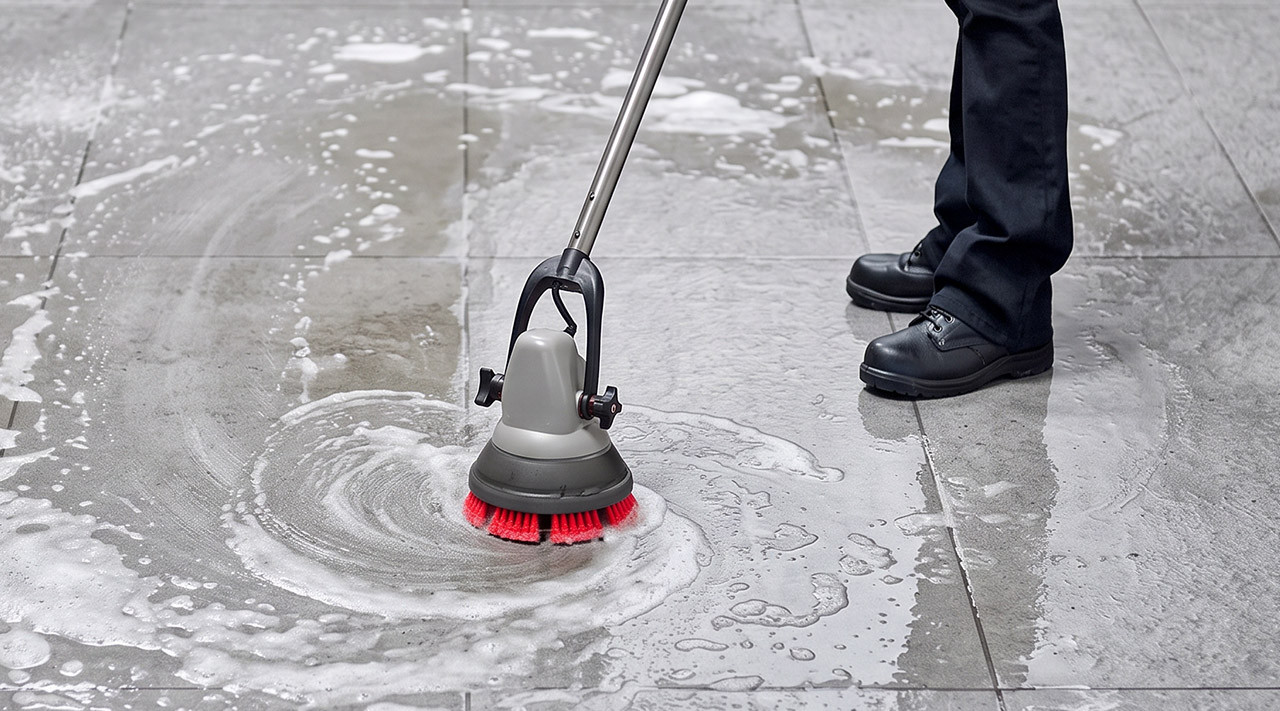
How Dirty Floor Cleaning Machines Cause Streaks and Residue in Commercial Cleaning
A floor scrubber leaving streaks or residue after cleaning is one of the most common complaints in commercial facilities. The instinct is to blame the chemical. Sometimes that's right. More often, the problem is the machine applying it.
What causes floor machines to leave streaks and residue? Streaks form when a machine deposits more than it recovers: solution, loosened soil, or chemical film that dries on the surface instead of being picked up. The most common sources are solution tanks with dried cleaner buildup, recovery tanks that haven't been rinsed, worn or saturated pads, and clogged squeegees that can't make full contact with the floor.
This post covers how floor cleaning machines become contaminated, the warning signs to watch for, and the maintenance practices that prevent it from repeating.
In This Article
- How Floor Machines Become Contaminated in Daily Use
- Signs Your Floor Machine Is Causing Streaks or Residue
- How Dirty Equipment Impacts Commercial Floor Cleaning
- Step-by-Step Floor Machine Cleaning Procedure
- Recommended Maintenance Schedule
- Troubleshooting: Common Streak and Residue Problems
- How to Clean and Maintain Floor Cleaning Equipment
- Preventing Residue Issues through Proper Equipment Maintenance
- Clean Floor Machines: Benefits and Risks
- Floor Machine and Accessory Pricing
- Get the Right Accessories and Supplies for Your Floor Machines
- Frequently Asked Questions
How Floor Machines Become Contaminated in Daily Use
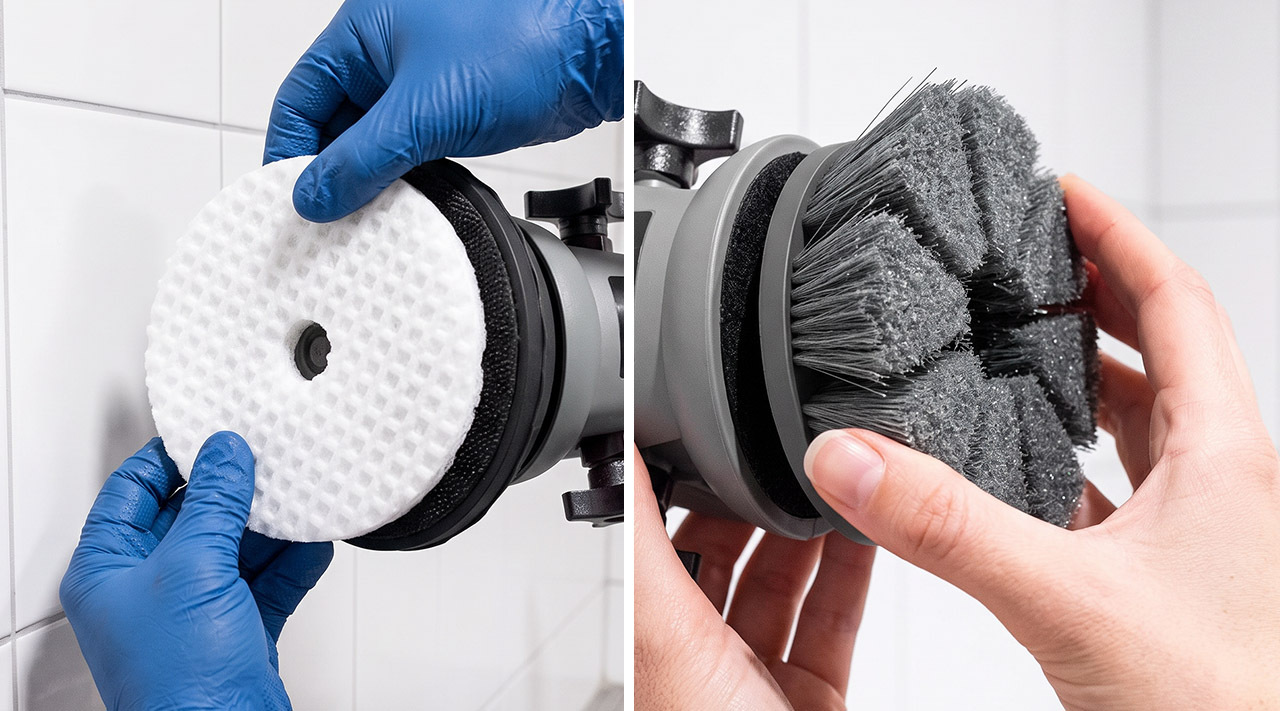
A commercial floor scrubber picks up soil, cleaning solution, and debris every time it runs. Without regular cleaning, that buildup accumulates inside the machine and goes back onto the floor on the next pass.
Residue Buildup in Solution Tanks
Many facilities refill solution tanks without rinsing them first. Leftover cleaner dries inside and contaminates the fresh solution before it reaches the floor.
This is one of the most overlooked causes of streaking. Even a small amount of dried chemical residue can alter the pH of fresh solution, reduce its effectiveness, or leave a film that dries on the surface after the machine passes.
Dirty Recovery Tanks
Recovery tanks collect dirty water pulled off the floor. Emptying isn't enough. Residue left inside creates odors, bacterial growth, and contamination that carries into the next cycle. In gyms, schools, and hotels with high soil volume, recovery tanks need a full rinse daily.
According to the ISSA, improper equipment maintenance is among the leading causes of inconsistent cleaning results in commercial facilities — and recovery tanks are one of the most frequently skipped steps at end of shift.
Worn or Contaminated Pads and Brushes
Pads and brushes are often the last thing checked when troubleshooting floor appearance, but they're frequently the cause. A pad with embedded soil puts that soil back on the floor with every pass. Worn pads also clean unevenly, producing results that look like a product problem.
Inspecting and replacing floor scrubber pads and scrub brushes should be part of a scheduled maintenance routine, not a reaction to visible problems. The MotorScrubber range carries pads and brushes for different surface types and soil levels, compatible with both the M3M and JET3.
For facilities setting up from scratch, the M3 Floor Scrubber Bundle includes the machine, melamine pad, flagged tip brush, and battery in one order. Using worn or wrong-fit accessories compounds the problem regardless of how well the machine itself is maintained.
Cross-Contamination Between Cleaning Jobs
Running the same machine through multiple areas without cleaning it between zones spreads residue across the facility. Grease tracked through a kitchen follows the scrubber into a hallway or classroom if pads and tanks aren't cleaned before moving on.
This is especially common in facilities where one machine handles multiple floor types. A pad used on a greasy kitchen floor will deposit that grease film on a VCT hallway floor — and the result will look like a chemical problem, not an equipment one.
Signs Your Floor Machine Is Causing Streaks or Residue
Floor appearance usually tells you something is wrong before anyone thinks to check the equipment.
Watch for these warning signs:
- Visible streaking on the floor immediately after cleaning
- Hazy or uneven finish visible under overhead lighting
- Residue returns shortly after cleaning, even when the cleaner and dilution haven't changed
- Floors feel sticky despite correct dilution. If this is a recurring issue, see Why Commercial Floors Feel Sticky After Cleaning (And How to Fix It) for a full breakdown
- Different staff or shifts produce noticeably different results using the same machine
- Soil appears to spread across the floor instead of lifting off it
The cleaners you use matter as much as how you maintain the machine. Low-residue formulas like the Zogics All Surface Neutral Cleaner reduce buildup in tanks and on pads between cleanings. For areas with heavier organic soil, the Zogics Enzyme Enriched Floor Cleaner & Deodorizer breaks down grease at the source. On rubber gym floors, the Zogics Rubber Floor Cleaner & Degreaser is formulated specifically for that surface.
Any one of these warning signs points to the equipment before it points to the product. If the chemical and dilution haven't changed but the results have, the machine is usually where the investigation should start.
How Dirty Equipment Impacts Commercial Floor Cleaning
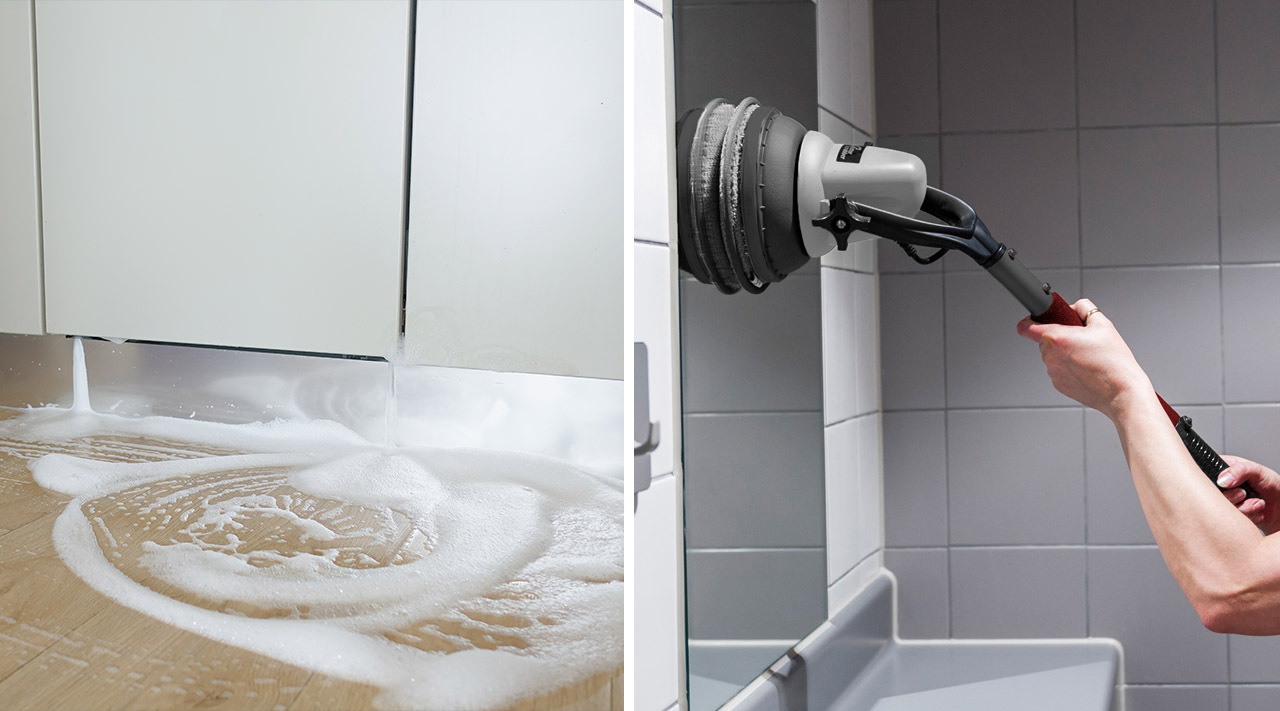
A dirty floor machine doesn't just clean poorly. It actively works against the cleaning process.
Spreads Residue Instead of Removing It
When pads, brushes, tanks, or squeegees contain residue, the machine moves contamination around instead of pulling it off the floor. Staff can run multiple passes over the same area without realizing they're making the problem worse, not better.
Reduces Cleaning Effectiveness
Contaminated equipment prevents cleaning solutions from working as intended. Pads clogged with buildup can't scrub effectively. Dirty brushes lose contact with the floor surface. Blocked recovery systems leave more solution on the floor than they pick up. More labor, worse results, no clear reason why.
Creates Inconsistent Results Across the Facility
In larger facilities, the inconsistency is recognizable. One hallway looks clean; another is hazy. One shift finishes without complaints; the next gets called back. When results vary across areas or cycles, check equipment before changing products or procedures.
The real cost is hidden. Extra passes mean more labor hours, more chemical use, and more wear on floor finishes. A dirty machine doesn't just fail to clean — it creates rework that compounds over every shift.
Step-by-Step Floor Machine Cleaning Procedure
A consistent end-of-shift cleaning routine is what separates facilities with reliable floors from those chasing recurring streak problems. Here's a practical procedure that applies to most walk-behind and compact commercial floor scrubbers.
After Every Use
Step 1: Empty and rinse the recovery tank: Drain all dirty water immediately after use. Rinse the tank with clean water, agitate if needed to loosen buildup, and drain again. Leave the tank open to air dry. Never store a machine with standing water in the recovery tank.
Step 2: Flush the solution tank: If you're switching products or ending the shift, drain any remaining solution and flush the tank with clean water. Run a small amount of clean water through the solution delivery system to clear the lines.
Step 3: Remove, rinse, and inspect pads and brushes: Remove pads and brushes after every use. Rinse under running water to remove embedded soil and chemical residue. Inspect for wear, fraying, or embedded debris. Set aside to dry before storage. Never put a wet pad back in the supply room or store it on the machine.
Step 4: Wipe down the squeegee blade: Remove the squeegee, wipe the blade clean with a damp cloth, and inspect for nicks, deformation, or buildup along the edge. A damaged squeegee blade is one of the most direct causes of streaking. Replacement squeegee blades are inexpensive compared to the labor cost of re-cleaning streaked floors.
Step 5: Clear debris from filters and vacuum pathways: Check and clear any debris from the vacuum intake and filters. Blocked pathways reduce suction and leave more solution on the floor.
Step 6: Wipe down the machine exterior: A quick wipe of the machine body, wheels, and handle removes cross-contamination risk and lets you spot developing issues — cracks, loose fittings, leaks — before they become failures.
Key takeaway: The full end-of-shift procedure takes 10 to 15 minutes. Skipping it costs far more in re-cleaning labor and chemical waste than it saves.
Recommended Maintenance Schedule
Consistent results require consistent maintenance. The table below covers the minimum maintenance cadence for most industrial floor cleaning machines in commercial use. High-soil or high-volume environments may need more frequent attention on some tasks.
| Task | Daily | Weekly | Monthly |
|---|---|---|---|
| Empty and rinse recovery tank | Yes | - | - |
| Flush solution tank | Yes | - | - |
| Remove, rinse, and dry pads/brushes | Yes | - | - |
| Wipe squeegee blade and inspect for damage | Yes | - | - |
| Clear debris from vacuum intake | Yes | - | - |
| Deep-clean recovery tank (with brush or tank cleaner) | - | Yes | - |
| Inspect and clean solution delivery lines | - | Yes | - |
| Check squeegee blade for nicks, deformation, and wear | - | Yes | - |
| Inspect brush/pad mounting hardware | - | Yes | - |
| Clean machine exterior, wheels, and undercarriage | - | Yes | - |
| Deep-clean filters per manufacturer specs | - | - | Yes |
| Inspect drive belts, motor brushes, and seals | - | - | Yes |
| Review pad and brush wear; replace if needed | - | - | Yes |
| Log maintenance activity and note any developing issues | - | - | Yes |
Note: Always follow the manufacturer's maintenance schedule for the specific machine. The intervals above are general guidelines. Some models — especially high-use industrial floor scrubbers in warehouses or large facilities — may require weekly deep-cleaning of filters and more frequent squeegee inspections.
Troubleshooting: Common Streak and Residue Problems
When floors aren't coming out clean, use this table to match the symptom to the most likely equipment cause and fix.
| Problem | Most Likely Cause | Fix |
|---|---|---|
| Streaks immediately after cleaning | Worn or clogged squeegee blade | Inspect and replace squeegee blade; check blade tension |
| Hazy finish under overhead lighting | Chemical residue from dirty solution tank | Flush and rinse solution tank; verify dilution ratio |
| Residue returns within hours of cleaning | Contaminated recovery tank spreading soil | Deep-clean recovery tank; rinse between zones |
| Floors sticky after cleaning | Over-application of solution; clogged recovery | Reduce solution flow; clean recovery tank and vacuum pathway |
| Uneven clean across the floor | Worn or unevenly saturated pad | Replace pad; verify pad is centered and seated correctly |
| Soil spreading rather than lifting | Pad embedded with old soil | Remove, rinse, and inspect pad; replace if embedded debris won't release |
| Different results between shifts | Machine not cleaned between uses | Standardize end-of-shift cleaning steps; assign responsibility |
| Machine leaving water trails | Squeegee not making full contact | Inspect squeegee for deformation; check blade pressure setting |
| Odor from machine during use | Bacteria in recovery tank | Deep-clean recovery tank with a diluted disinfectant solution; leave open to dry |
If the problem persists after addressing the equipment, verify the cleaning product dilution ratio, confirm the product is appropriate for the floor type, and check whether the floor finish itself needs stripping and reapplication. For a surface-type guide, see Commercial Grade Floor Cleaners.
How to Clean and Maintain Floor Cleaning Equipment
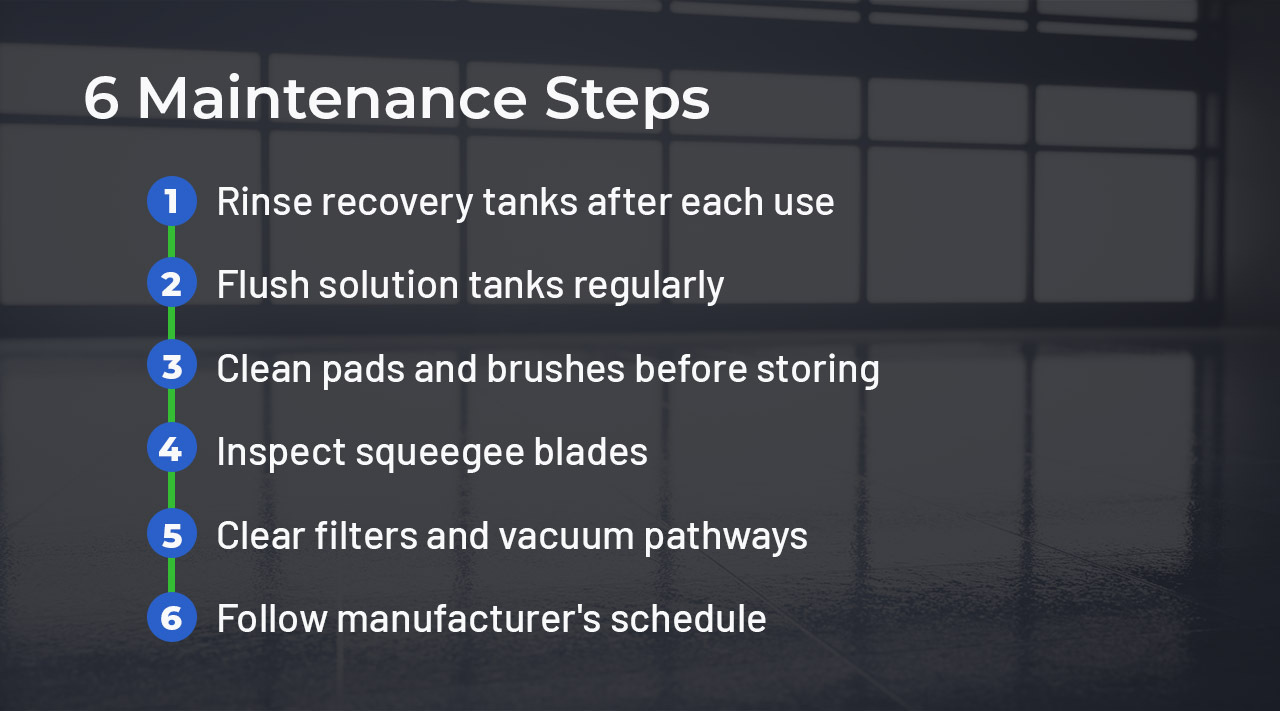
Floor cleaning machine maintenance doesn't need to be complicated. What breaks down is consistency.
- Empty and rinse recovery tanks after each use
- Flush solution tanks regularly and before switching products
- Clean pads and brushes before storing equipment. Never put a contaminated pad back in the supply room
- Inspect squeegee blades for wear, buildup, and deformation
- Remove debris from filters and vacuum pathways
- Follow the manufacturer's maintenance schedule for the specific machine
For a complete framework covering what to clean, how often, and how to build the habit into shift routines, see Maintaining Your Commercial Floor Cleaning Machine: Essential Care Tips.
Preventing Residue Issues through Proper Equipment Maintenance
Most residue problems from dirty equipment don't start as a single failure. Floor scrubber maintenance slips gradually: a tank skipped at the end of shift, a pad used past its service life, a squeegee no one checked.
The facilities with the most consistent floors treat equipment care the same way they treat any other cleaning process: written steps, assigned responsibility, and regular checks. Without that discipline, results vary by shift and operator, not by floor condition.
That means standardized end-of-shift cleaning steps, a scheduled pad and brush replacement cycle, and staff who understand why machine condition affects floor results. For a practical framework on building those habits into a team, see How to Build a Cleaning Training Program That Works.
Clean Floor Machines: Benefits and Risks
Benefits of Keeping Floor Machines Clean
Consistent machine maintenance isn't just good practice — it directly affects floor quality, labor efficiency, and equipment lifespan.
- Produces streak-free, more consistent floors across shifts and operators, not just on good days
- Reduces time spent re-cleaning problem areas — fewer callbacks, fewer extra passes, less wasted chemical
- Helps pads, brushes, squeegees, and tanks last longer by preventing the abrasive buildup that accelerates wear
- Protects floor finishes from dirt and chemical buildup that can dull, scratch, or degrade the surface over time
- Reduces cross-contamination risk between zones, especially in facilities with food service, healthcare, or fitness areas
Browse commercial floor care supplies to find pads, brushes, and replacement accessories that keep your machines running correctly.
What Happens When Maintenance Is Neglected
The costs of skipped maintenance are real, but they show up gradually — which is why the habit is easy to let slide.
- Dirty pads and recovery tanks can spread residue instead of removing it, turning a cleaning pass into a contamination pass
- Operators may need extra passes, increasing labor time and chemical use without improving results
- Abrasive debris embedded in pads can scratch or dull finished floors, creating damage that requires stripping and refinishing
- Clogged components reduce machine performance and create repair costs that far exceed the time it would have taken to maintain the machine properly
- Inconsistent results across shifts make it harder to identify the real cause of floor problems, leading to product changes that don't fix the underlying equipment issue
Floor Machine and Accessory Pricing
The right machine for your facility depends on floor type, area size, and how much detail work your team handles. Below are verified current prices from The Cleaning Station for a range of commercial floor scrubbers and accessories.
| Product | Price | Best For |
|---|---|---|
| MotorScrubber M3 Bundle | $772.20 (sale, reg. $1,024.00) | Compact industrial floor scrubber for tight spaces, restrooms, grout lines, and detail work |
| Namco Floorwash 5000 Multi-Surface Floor Scrubber | $1,610.75 (sale, reg. $1,895.00) | Best commercial walk-behind floor scrubber for mid-size facilities; covers up to 5,380 sq ft/hr |
| Bissell BGUS1500B Cordless Battery Floor Scrubber & Dryer | $2,499.95 | Best commercial floor scrubber machine for cord-free operation in gyms, schools, and hotels; cleans and dries in one pass |
| Flagged Tip Brush for MotorScrubber | $57.50 | Replacement brush for detail and grout cleaning |
| Melamine Pad for MotorScrubber | $47.95 | Replacement pads for marble, terrazzo, and hardwood surfaces |
Prices vary by brand, size, and features. See current product pricing for details. For a full range of bulk commercial cleaning supplies and wholesale cleaning supplies for your facility, browse the floor machines collection.
Best commercial floor scrubber for concrete: The Namco Floorwash 5000 handles concrete, epoxy-coated, and sealed hard floors with its 780 RPM counter-rotating brushes and 5,380 sq ft/hr coverage rate. For tighter areas and grout lines on concrete, pair it with the MotorScrubber M3 for detail work.
Get the Right Accessories and Supplies for Your Floor Machines
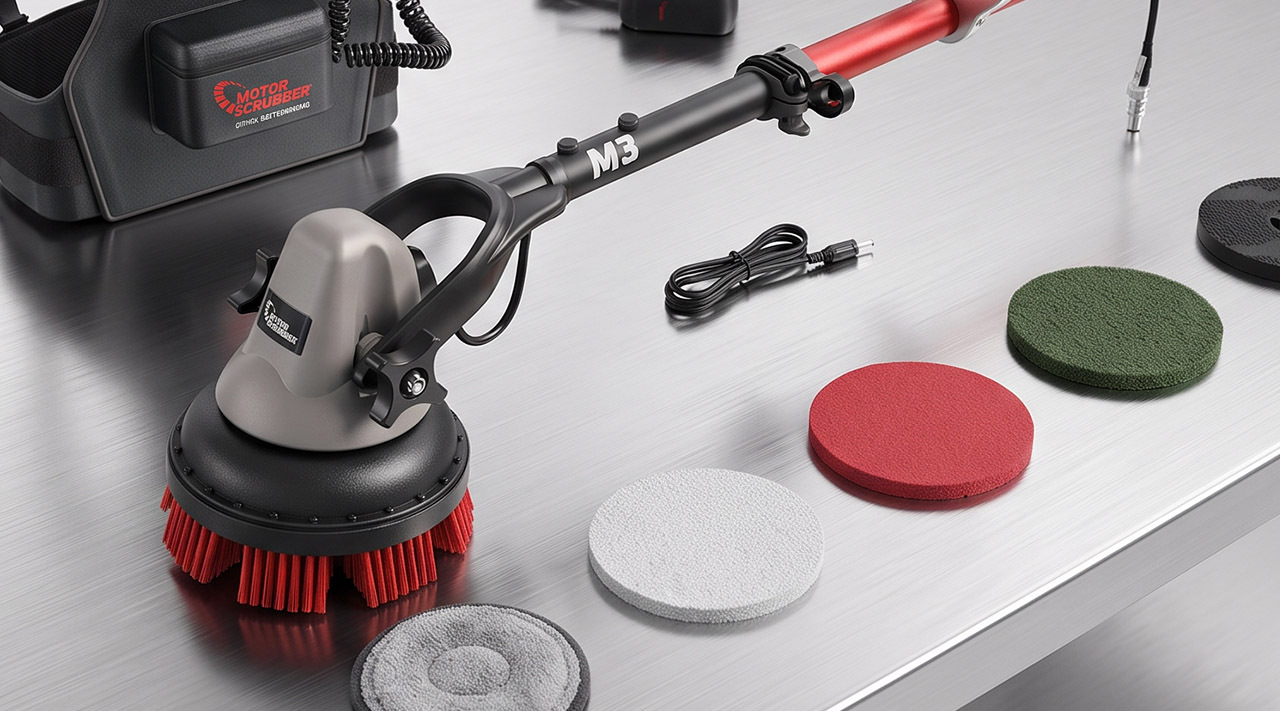
The Cleaning Station carries floor scrubber pads, brushes, replacement accessories, and cleaning chemicals for commercial facilities of all sizes. Browse commercial floor care supplies or contact our team directly for help matching the right accessories to your equipment and floor types.
Frequently Asked Questions
How often should you clean a floor scrubber?
Clean recovery tanks, solution tanks, pads, brushes, and squeegees after each use. In high-traffic environments, recovery tanks may need to be rinsed multiple times per shift. Follow the manufacturer's maintenance schedule for less frequent tasks such as cleaning filters and inspecting squeegee blades.
Can dirty equipment cause floor streaks?
Yes. Contaminated pads, dirty tanks, and worn squeegees are among the most common causes of streaks after floor cleaning. When the machine leaves residue on the floor instead of picking it up, the result may be streaking and haze that looks like a chemical problem but will not be fixed by changing the cleaning product alone.
What parts of a floor machine need cleaning most often?
Recovery tanks and solution tanks need attention after every use. Inspect pads and brushes before each use and replace them on a regular schedule. Squeegee blades and filters should be inspected periodically for wear, buildup, and blockages. Recovery tanks and pads are often overlooked, even though they are among the most direct sources of recontamination.
What is the best commercial floor scrubber machine overall?
The best commercial floor scrubber machine depends on facility size and cord preference. The Bissell BGUS1500B is the top cordless option for gyms, schools, and hotels — it scrubs and dries in one pass at 3,200 sq ft/hr. For mid-size facilities needing maximum coverage, the Namco Floorwash 5000 covers 5,380 sq ft/hr with a corded design.
What is the best commercial walk-behind floor scrubber?
The Namco Floorwash 5000 is widely used as a best commercial walk-behind floor scrubber for facilities needing efficient daily cleaning across mixed hard-floor and low-pile carpet surfaces. Its 14-inch cleaning path, dual counter-rotating brushes, and 35-foot power cord make it practical for schools, gyms, retail spaces, and hospitality corridors.
Why do floors streak after scrubbing?
Streaks after scrubbing usually indicate one of three equipment issues: a worn or nicked squeegee blade that can't make full contact with the floor, a contaminated solution tank depositing residue with the cleaning solution, or a saturated pad pushing soil around instead of lifting it. Check all three before adjusting your cleaning product or dilution.
How often should squeegee blades be replaced?
Inspect squeegee blades weekly and replace them when you see nicks, deformation, or uneven wear. In high-use environments, blades may need replacement every 30 to 60 days. A damaged blade is one of the most direct causes of water trails and streaking and is inexpensive to replace compared to the labor cost of re-cleaning affected areas.
How do you remove chemical residue from a commercial floor?
Start by running a clean-water pass with a well-maintained machine to dilute and lift the residue. If the residue is heavy, use a low-foaming neutral cleaner at correct dilution, followed by a clean rinse pass. Check that the solution tank is clean and the pad is fresh before each pass. Persistent residue often traces back to over-concentration of the cleaning product or a contaminated recovery tank spreading residue rather than removing it.
How do I choose the right pad for my floor scrubber?
Match pad aggressiveness to your floor type and soil level. Melamine pads work on marble, terrazzo, and hardwood. Green scrubbing pads handle routine scrubbing on tile, vinyl, and rubber. White buffing pads are for light cleaning and polishing. Using a pad that's too aggressive for the surface can scratch finishes; using one that's too soft won't lift heavy soil.
What is the difference between a floor scrubber and a floor cleaner machine?
A floor scrubber uses rotating brushes or pads to agitate and lift soil, combined with a recovery system to pick up dirty water. A floor cleaner machine is a broader term that can include scrubbers, polishers, and burnishers. For streak-free results in commercial facilities, a scrubber with a squeegee and recovery tank is the most effective option for daily wet-floor maintenance.
Recent Posts
-
 Your facility is on a regular cleaning schedule. The crew shows up, runs the machine, and the floors …Sep 24, 2026
 -
How Dirty Floor Cleaning Machines Cause Streaks and Residue in Commercial Cleaning
A floor scrubber leaving streaks or residue after cleaning is one of the most common complaints in …Sep 22, 2026 -

Why Commercial Floors Feel Sticky After Cleaning (And How to Fix It)
Sticky floors after mopping are a common complaint in commercial facilities. The floor looks clean …Sep 22, 2026