
![Best Industrial Strength Drain Unblocker for Stubborn Clogs [Reviewed & Tested]](https://cdn11.bigcommerce.com/s-kb6p5yc2tf/images/stencil/1280x711/uploaded_images/feb25-tcs-industrial-strength-drain-unblocker-feature.jpg "Best Industrial Strength Drain Unblocker for Stubborn Clogs [Reviewed & Tested]")
Best Industrial Strength Drain Unblocker for Stubborn Clogs [Reviewed & Tested]
A blocked commercial drain can quickly become more than a minor maintenance issue. Slow drainage, standing water, unpleasant odors, and recurring backups can disrupt kitchens, restrooms, offices, and other busy facilities.
The right industrial strength drain unblocker can help address certain types of buildup, but the best product depends on what is causing the blockage and whether you are dealing with an active clog or trying to prevent future buildup.
Commercial drain cleaners are available in different formulations, including chemical and bio-enzymatic options. Because some drain cleaners contain highly corrosive ingredients, product selection and safe handling are just as important as cleaning performance.
Key Takeaways
- The best industrial drain unblocker depends on the type and severity of the blockage.
- Chemical drain openers can provide a fast solution for certain stubborn clogs, but they require careful handling.
- Bio-enzymatic drain maintainers are better suited to ongoing maintenance and organic buildup prevention than emergency clog removal.
- Never mix drain cleaners or combine them with other cleaning chemicals unless the product label specifically allows it.
- Always follow the manufacturer's instructions, PPE requirements, and compatibility information.
- A recurring or completely blocked drain may require mechanical cleaning or professional plumbing service rather than repeated chemical treatment.
What Is an Industrial Strength Drain Unblocker?
An industrial strength drain unblocker is a commercial-grade product designed for demanding drainage environments. These products are generally intended for facilities that experience heavier use than a typical household drain.
Commercial kitchens, restaurants, restrooms, hotels, schools, offices, and other high-traffic facilities can experience buildup from grease, oils, food residue, hair, soap residue, and other organic material.
Different drain cleaners work in different ways. Some use strong acidic or alkaline chemicals, while others use enzymes or bacteria to break down organic material over time. The choice should be based on the type of blockage, the plumbing system, and the manufacturer's instructions.
The term "industrial strength" does not automatically mean that a product is the best choice for every clog. A highly corrosive cleaner may not be appropriate for every plumbing system or situation.
Industrial Drain Cleaner vs. Drain Maintainer
One of the most important distinctions is between a drain opener and a drain maintainer.
Drain Openers
Drain openers are intended to address an existing blockage. Depending on the formulation, they may work against materials such as grease, hair, oils, and other organic buildup.
These products are generally used when drainage has already slowed or stopped.
Drain Maintainers
Drain maintainers are designed for ongoing care rather than immediate emergency unclogging.
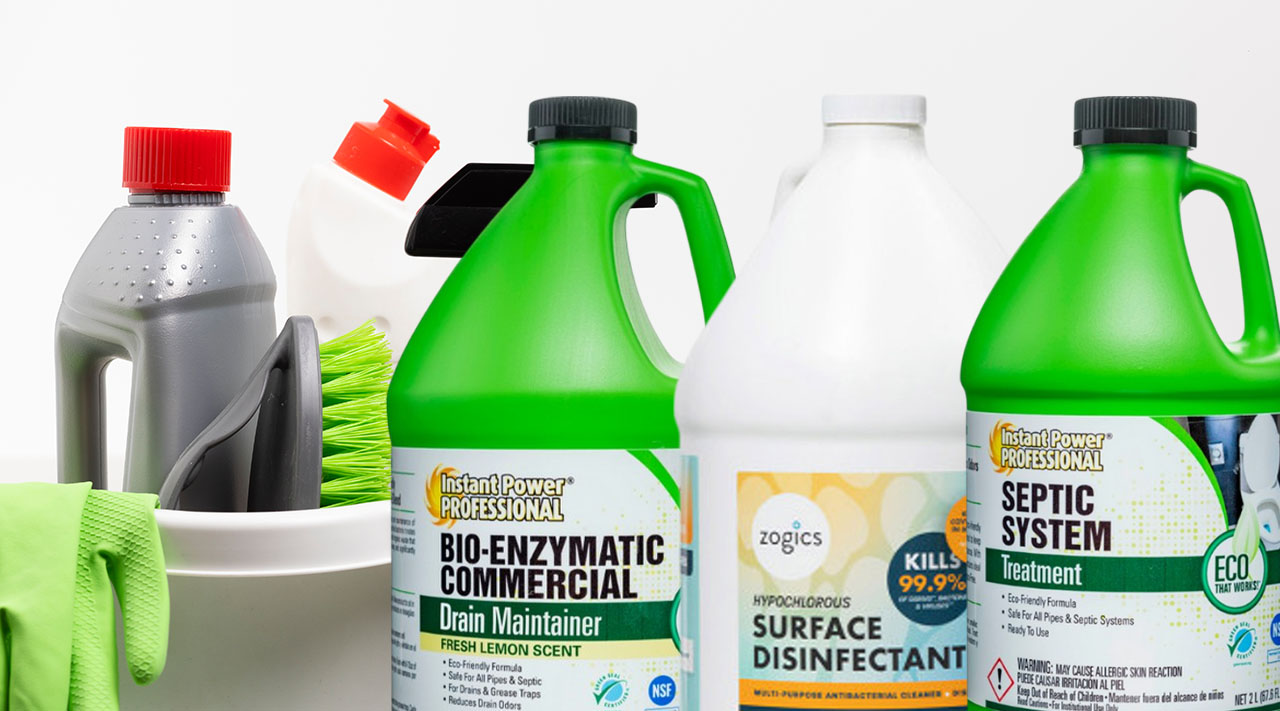
For example, the Bio-Enzymatic Commercial Drain Maintainer available from The Cleaning Station is designed to break down fats, oils, grease, and organic waste while helping maintain drain and grease-trap performance.
This makes a drain maintainer more appropriate for preventive maintenance programs where recurring organic buildup is the concern.
What Causes Stubborn Commercial Drain Clogs?
Before choosing a drain cleaner, identify the likely source of the blockage.
Grease and Fats
Commercial kitchens frequently deal with grease, oils, and food residue entering drainage systems. Over time, these materials can accumulate and restrict water flow.
A product designed for grease and organic buildup may be more appropriate than a general-purpose drain cleaner.
Hair and Soap Residue
Restrooms, locker rooms, gyms, and hotels can experience recurring clogs caused by hair, soap residue, and other organic material.
In these environments, regular drain maintenance can help reduce buildup before it becomes a major blockage.
Food and Organic Waste
Food particles and organic residue can contribute to drainage problems in food-service environments. Preventive cleaning and proper waste disposal are important parts of commercial drain maintenance.
Foreign Objects
Not every blockage is caused by material that a chemical cleaner can dissolve. Paper products, packaging, solid objects, and structural problems may require mechanical removal or professional plumbing service.
3 Types of Industrial Strength Drain Cleaners to Consider
Rather than ranking one chemical as the "strongest," consider the type of product and the job it is designed to perform.
1. Heavy-Duty Chemical Drain Openers
Heavy-duty chemical drain openers are designed for situations where an existing blockage needs to be addressed.
Some formulations use highly alkaline or acidic ingredients. Because these products can be corrosive, they should only be used according to the manufacturer's label instructions.
Best suited for:
- Certain stubborn organic clogs
- Commercial maintenance applications
- Situations where the product label specifically identifies the blockage type
Important: Always verify that the product is compatible with the plumbing system before use.
2. Bio-Enzymatic Drain Maintainers
Bio-enzymatic products use enzymes and/or bacteria to break down organic material gradually.
They are generally better suited to preventive maintenance than severe, immediate blockages.
The Cleaning Station's Bio-Enzymatic Commercial Drain Maintainer is marketed for commercial locations such as restaurant kitchens and busy restrooms and is designed to break down fats, oils, grease, and organic waste.
Best suited for:
- Routine drain maintenance
- Organic buildup
- Grease-related maintenance
- Odor and buildup management
- Commercial kitchens and restrooms
3. Mechanical Drain-Cleaning Methods
Chemical cleaners are not always the right answer.
For physical obstructions, recurring blockages, or drains that remain completely blocked, mechanical methods such as plungers, drain snakes, augers, or professional drain-cleaning equipment may be more appropriate.
If a blockage repeatedly returns after cleaning, the underlying problem may be deeper in the plumbing system.
How to Choose the Best Industrial Drain Unblocker
Use these factors when comparing commercial drain cleaners.
1. Identify the Type of Clog
Determine whether the problem is likely to involve grease, hair, soap residue, food waste, organic buildup, or a physical obstruction.
A product designed for one type of buildup may not be effective against another.
2. Consider the Plumbing System
Check the product label for information about compatible pipes, drains, septic systems, and other plumbing components.
Never assume that a strong cleaner is automatically safe for every plumbing installation.
3. Decide Between Emergency Cleaning and Maintenance
If the drain is already blocked, you may need a product specifically intended for clog removal.
If the drain is flowing but regularly develops buildup, a commercial drain maintainer may be a better option for a preventive maintenance routine.
4. Check the Product Label
Always review:
- Intended applications
- Compatible plumbing materials
- Required PPE
- Ventilation requirements
- Application instructions
- Contact or dwell time
- Storage instructions
- Disposal requirements
- Warnings and restrictions

Safety Precautions for Industrial Drain Cleaners
Safety should be a priority whenever strong drain-cleaning chemicals are used.
Some drain cleaners contain highly concentrated corrosive chemicals that can cause serious burns or tissue damage if they come into contact with skin, eyes, or the mouth.
Never Mix Drain Cleaners
Do not mix different drain cleaners or combine a drain opener with another cleaning chemical unless the manufacturer specifically instructs you to do so.
Mixing cleaning products can produce dangerous chemical reactions or fumes.
Wear Appropriate PPE
Follow the product label's PPE requirements. Depending on the product, this may include chemical-resistant gloves, eye protection, and protective clothing.
Maintain Ventilation
Use strong chemical cleaners only in the conditions specified by the manufacturer and maintain appropriate ventilation.
Store Products Correctly
Keep drain cleaners in their original containers with labels intact. Store them securely away from children, unauthorized users, food, and incompatible chemicals.
Do Not Use More Than Recommended
Using extra products does not necessarily make a drain cleaner more effective. Always use the amount and procedure specified on the product label.
Should You Use Hot Water With a Drain Cleaner?
Do not automatically add hot water after using a chemical drain cleaner.
Some products may have specific rinsing instructions, while others may not. Adding water or another chemical at the wrong stage can create splashing, heat, or hazardous reactions.
Always follow the specific product label rather than applying a general hot-water rule.
Are Industrial Drain Cleaners Safe for Septic Systems?
There is no universal answer.
Some products may be specifically labeled as suitable for septic systems, while others may not be appropriate. Chemical drain cleaners can also affect the biological balance of septic systems depending on the product and amount used.
If the property uses a septic system, check the product label and manufacturer guidance before use.
For ongoing organic buildup, a product specifically designed and labeled for septic or biological drain maintenance may be a better option.
How Effective Are Industrial Drain Cleaners?
Performance depends heavily on the cause of the blockage.
A cleaner that performs well against hair may not work equally well against grease. Likewise, a product designed for organic buildup may not resolve a physical obstruction.
This is why product comparisons should focus on:
| Factor | Why It Matters |
|---|---|
| Clog type | Determines whether the formula is appropriate |
| Active formulation | Influences how the product works |
| Pipe compatibility | Helps prevent damage to plumbing |
| Application method | Affects safety and performance |
| Maintenance use | Determines whether it is suitable for prevention |
| Facility type | Different environments create different buildup |
| Safety requirements | Strong products may require additional PPE |
Avoid choosing a product simply because it is described as the "strongest." The right formulation for the blockage is more important than maximum chemical strength.
Best Drain Unblocker for Commercial Kitchens
Commercial kitchens commonly deal with grease, fats, oils, and food residue.
For an existing blockage, choose a commercial drain opener specifically labeled for the type of buildup involved and compatible with the plumbing system.
For ongoing maintenance, a bio-enzymatic drain maintainer may be more appropriate because it is designed to work on organic buildup over time.
The Cleaning Station's Bio-Enzymatic Commercial Drain Maintainer is specifically marketed for restaurant kitchens, grease traps, and busy restrooms.

Best Drain Cleaner for Commercial Restrooms
Commercial restrooms can experience buildup from hair, soap residue, and organic material.
A suitable drain-cleaning program should combine:
- Regular drain inspection
- Routine cleaning
- Proper waste disposal
- Appropriate drain maintenance products
- Prompt attention to slow drainage
If multiple fixtures begin draining slowly at the same time, the problem may be larger than an individual drain clog and should be assessed by a qualified professional.
How to Prevent Stubborn Drain Clogs
The best drain problem is often the one you prevent.
Schedule Regular Maintenance
Do not wait until a drain stops flowing. Establish a maintenance schedule based on facility usage and the type of material entering the drainage system.
Control Grease and Food Waste
Commercial kitchens should use appropriate grease-management practices and prevent food waste from entering drains.
Monitor Slow Drainage
A slow drain can be an early warning sign of buildup. Addressing the problem early may prevent a complete blockage.
Use Drain Maintainers Where Appropriate
A suitable bio-enzymatic drain maintainer can be incorporated into a preventive maintenance program when the product is appropriate for the application.
Train Cleaning Staff
Staff should know which products can be used together, which products require PPE, and when a plumbing problem needs to be escalated.
When Should You Call a Professional Plumber?
A chemical drain cleaner is not a substitute for professional plumbing diagnosis.
Contact a qualified plumber when:
- The drain remains blocked after following the product instructions.
- The same drain repeatedly becomes clogged.
- Multiple drains are backing up.
- Wastewater is backing up into the facility.
- There is a suspected broken or collapsed pipe.
- A foreign object is causing the obstruction.
- You are unsure what caused the blockage.
- Chemical treatment has already been attempted and the drain remains blocked.
Repeatedly adding drain cleaner to a persistent blockage can increase risk without solving the underlying problem.
What Is the Strongest Drain Unblocker?
There is no single "strongest" drain unblocker that is best for every commercial clog.
A heavy-duty chemical drain opener may be appropriate for certain existing blockages, while a bio-enzymatic drain maintainer may be better for ongoing organic buildup and preventive maintenance.
The better question is:
Which drain cleaner is best for the type of blockage I have?
For grease and organic buildup, choose a product designed for that application. For recurring maintenance, consider a commercial drain maintainer. For physical or persistent blockages, mechanical cleaning or professional plumbing service may be the better solution.
Pros and Cons of Industrial Strength Drain Unblockers
Pros
- Designed for demanding commercial applications
- Can address certain stubborn organic blockages
- Multiple formulations are available
- Can support commercial drain maintenance programs
- Some products are designed specifically for grease and organic buildup
Cons
- Some formulations are highly corrosive
- Incorrect use can cause serious injury
- Not every product is compatible with every plumbing system
- Chemical cleaners may not resolve physical obstructions
- Repeated use may not address the underlying plumbing problem
- Additional PPE and safety procedures may be required
Industrial Drain Cleaner vs. Bio-Enzymatic Drain Maintainer
| Feature | Industrial Drain Cleaner | Bio-Enzymatic Drain Maintainer |
|---|---|---|
| Primary purpose | Address certain existing clogs | Ongoing drain maintenance |
| Typical use | Reactive | Preventive |
| Organic buildup | Depends on formulation | Designed for organic material |
| Grease maintenance | Depends on formulation | Suitable for ongoing grease and organic buildup |
| Speed | Product-dependent | Designed for gradual maintenance |
| Safety considerations | Can involve corrosive chemicals | Follow product-specific label requirements |
| Best for | Specific clog-removal applications | Regular commercial drain care |
Shop Commercial Drain Cleaning Products
The Cleaning Station offers commercial cleaning products and drain-maintenance solutions for facilities that need reliable cleaning supplies.
For ongoing commercial drain care, consider products designed specifically for grease, fats, oils, and organic buildup. For active blockages, always select a drain opener based on the clog type and product compatibility.
Explore commercial drain cleaning products from The Cleaning Station to find a solution suited to your facility's maintenance requirements.
Frequently Asked Questions
What is the strongest industrial strength drain unblocker?
There is no single strongest product that is suitable for every clog. The best industrial drain unblocker depends on the blockage material, plumbing system, and whether you need immediate clog removal or ongoing maintenance.
What is the best drain cleaner for a commercial kitchen?
For an existing blockage, choose a commercial drain opener specifically labeled for the type of buildup involved. For ongoing grease and organic buildup, a bio-enzymatic commercial drain maintainer may be a suitable maintenance option.
What chemicals are commonly found in drain cleaners?
Drain cleaners can contain different types of active ingredients, including acidic or alkaline chemicals, depending on the formulation. Some products instead use enzymes or bacteria to break down organic material.
Can I mix two drain cleaners?
No. Do not mix drain cleaners or combine them with other cleaning products unless the manufacturer specifically instructs you to do so. Chemical reactions can produce hazardous fumes or other dangerous conditions.
Are industrial drain cleaners safe for septic systems?
It depends on the product. Check the manufacturer's label and compatibility information before using any drain cleaner in a septic system.
Can a drain cleaner remove every type of clog?
No. Chemical drain cleaners are not suitable for every blockage. Physical objects, damaged pipes, severe structural problems, or recurring blockages may require mechanical cleaning or professional plumbing service.
Should I use hot water after the drain cleaner?
Only if the product's manufacturer specifically instructs you to do so. Do not apply a general hot-water method to every chemical drain cleaner.
How can I prevent commercial drain clogs?
Regular inspection, proper grease and waste management, routine drain maintenance, and prompt attention to slow drainage can help reduce the risk of severe blockages.
When should I stop using the drain cleaner and call a plumber?
If the blockage persists, repeatedly returns, affects multiple drains, causes wastewater backup, or may involve a damaged pipe or physical obstruction, contact a qualified plumber.
Recent Posts
-
 Your facility is on a regular cleaning schedule. The crew shows up, runs the machine, and the floors …Sep 24, 2026
 -
How Dirty Floor Cleaning Machines Cause Streaks and Residue in Commercial Cleaning
A floor scrubber leaving streaks or residue after cleaning is one of the most common complaints in …Sep 22, 2026 -

Why Commercial Floors Feel Sticky After Cleaning (And How to Fix It)
Sticky floors after mopping are a common complaint in commercial facilities. The floor looks clean …Sep 22, 2026