
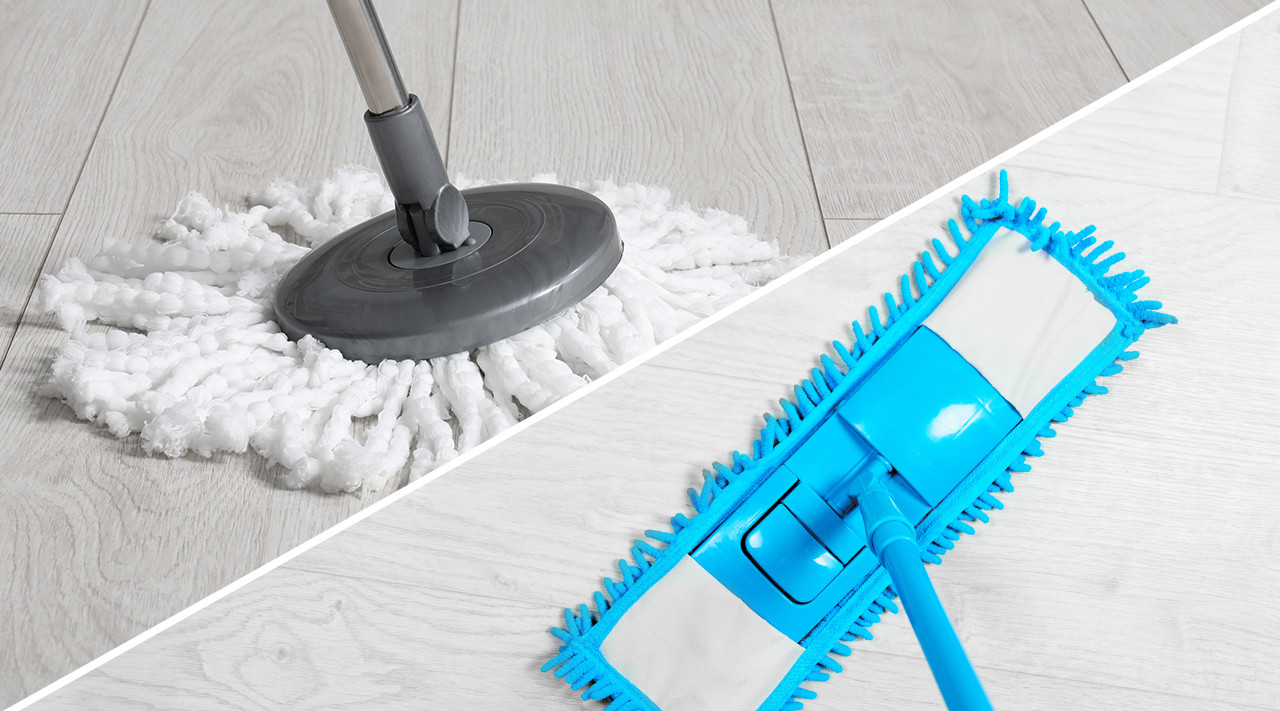
Wet vs Dry Mops: What's the Difference?
Choosing the right mop can make floor cleaning faster, easier, and more effective. But should you use a wet mop or dry mop? The answer depends on your floor type, the kind of dirt you need to remove, and how often the area needs cleaning.
Dry mops are designed mainly for removing dust, hair, and loose debris without water, while wet mops use water or cleaning solutions to remove spills, stains, grime, and heavier soil.
For many homes and commercial facilities, the best approach is not choosing one over the other. Using a dry mop for routine maintenance and a wet mop for deeper cleaning can provide a more complete floor-care routine.
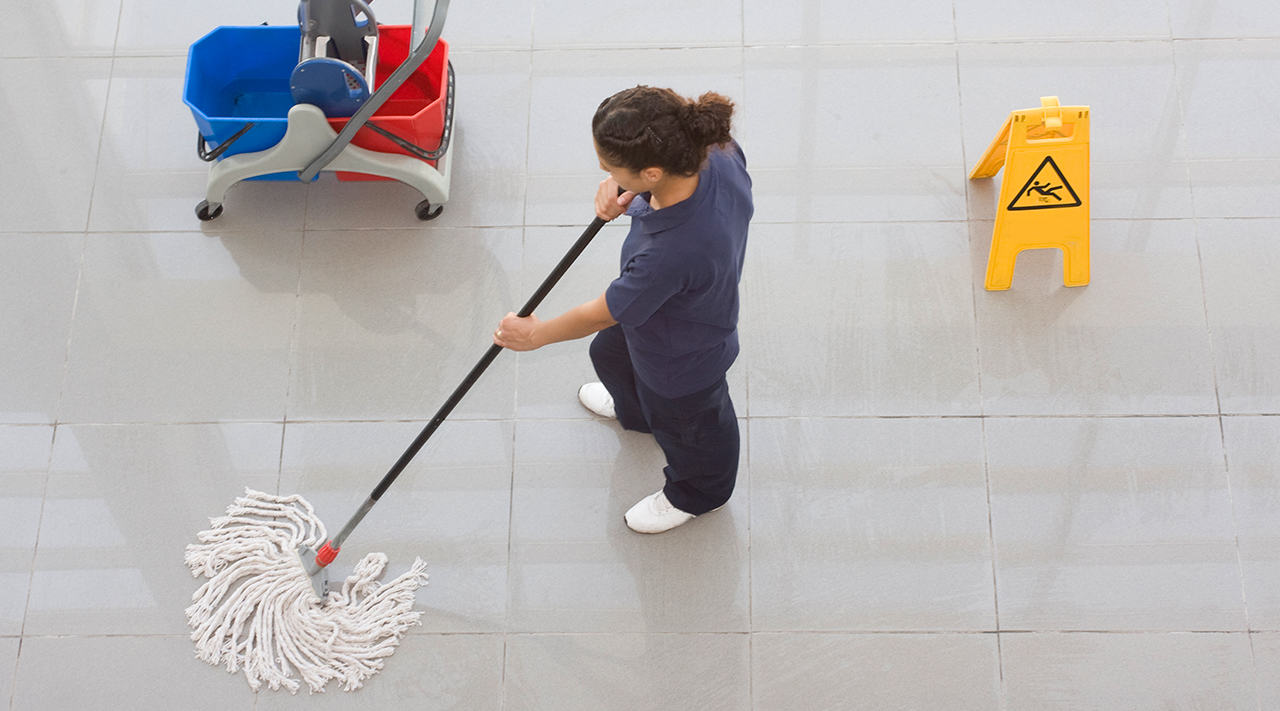
What Is a Wet Mop?
A wet mop uses water or a cleaning solution to loosen and remove dirt, grime, spills, and other buildup from floors. The moisture helps break down stubborn soil, making wet mopping particularly useful when dry dust removal is not enough.
Wet mops are commonly used on water-resistant surfaces such as tile, vinyl, and concrete. They are also useful in areas where spills and heavy soil are common, including kitchens, bathrooms, and other high-traffic spaces.
When Should You Use a Wet Mop?
A wet mop is a good choice for:
- Sticky spills and stubborn stains
- Deep floor cleaning
- High-traffic areas
- Kitchens and bathrooms
- Water-resistant floors
- Areas requiring cleaning with a suitable disinfectant or floor cleaner
Wet mopping does require more preparation than dry mopping. You may need a bucket, water, cleaning solution, and a wringer. Floors also need time to dry after cleaning.
Wet Mop Types
Wet mops are available in several materials and designs.
Cotton string mops are absorbent and commonly used for commercial cleaning. However, they can become considerably heavier when saturated with water.
Microfiber wet mops are lightweight and designed to trap dirt effectively. They can be a practical option for facilities looking for efficient and reusable floor-cleaning tools.
Sponge mops are useful for smooth surfaces and can be easy to wring and maneuver, making them suitable for smaller cleaning areas.
Explore commercial wet mops for different floor-cleaning applications.
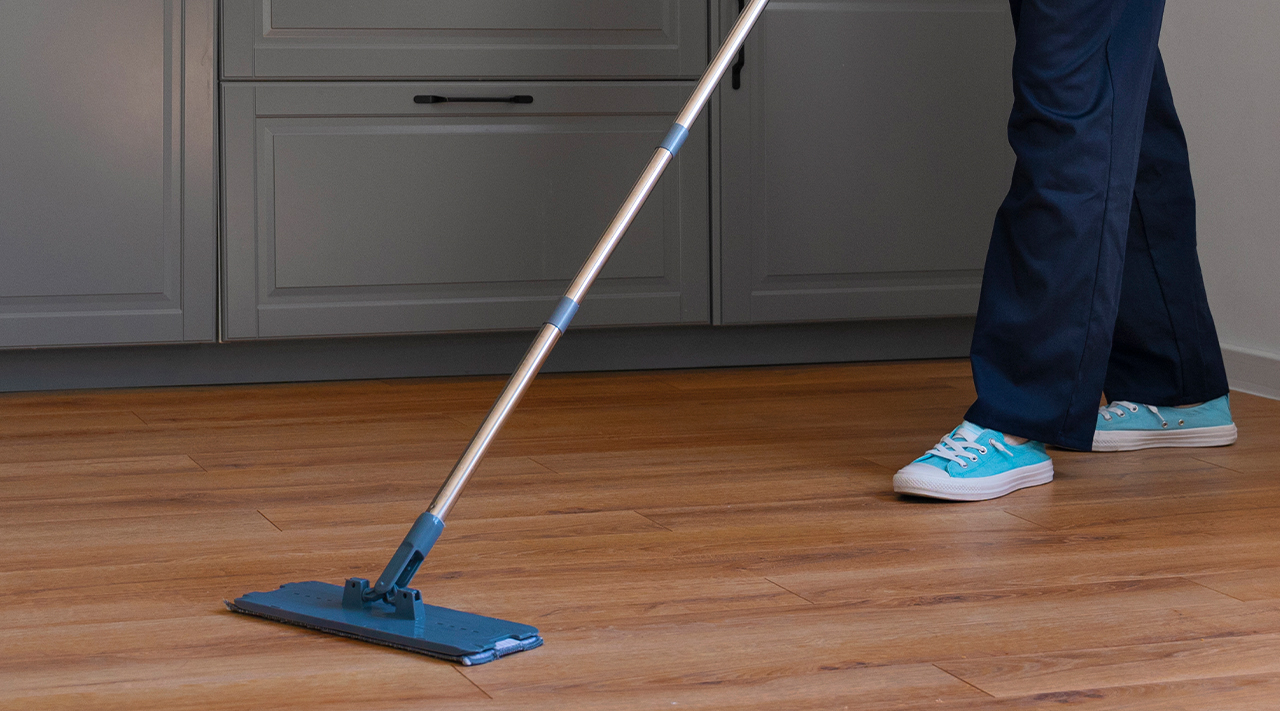
What Is a Dry Mop?
A dry mop, also known as a dust mop, is designed to clean floors without water or cleaning solutions. It typically uses a microfiber or electrostatic pad to attract and collect dust, dirt, hair, and loose debris.
Dry mops are especially useful for daily floor maintenance. Because they do not leave floors wet, they can be used for quick cleaning in areas that need frequent attention.
When Should You Use a Dry Mop?
Dry mops are ideal for:
- Daily dust removal
- Pet hair and loose debris
- Quick touch-ups
- Large open areas
- Hardwood and other moisture-sensitive flooring
- Cleaning before wet mopping
A dry mop is not designed to remove sticky spills or heavy grime. Those jobs generally require a wet cleaning method.
Explore commercial dry mops for daily dust and debris removal.
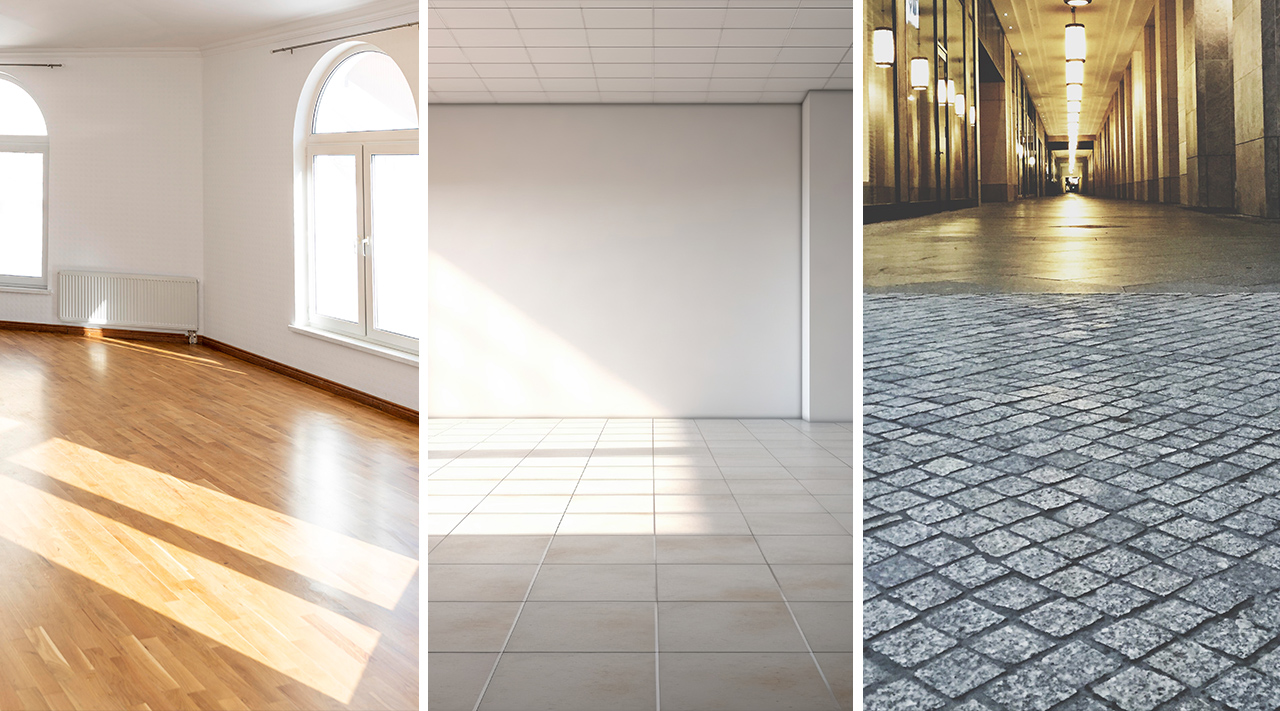
Wet Mop vs Dry Mop: What's the Difference?
The biggest difference is simple: dry mops remove loose dirt without water, while wet mops use moisture to remove heavier soil and spills.
| Feature | Wet Mop | Dry Mop |
|---|---|---|
| Water required | Yes | No |
| Best for | Spills, stains, grime | Dust, hair, loose debris |
| Cleaning depth | Deeper cleaning | Routine maintenance |
| Drying time | Required | None |
| Moisture-sensitive floors | Use caution | Generally better suited |
| Large-area maintenance | Effective but more setup | Quick and convenient |
| Cleaning solution | Often used | Usually not required |
Neither option is automatically better. The right choice depends on the cleaning task and flooring material.
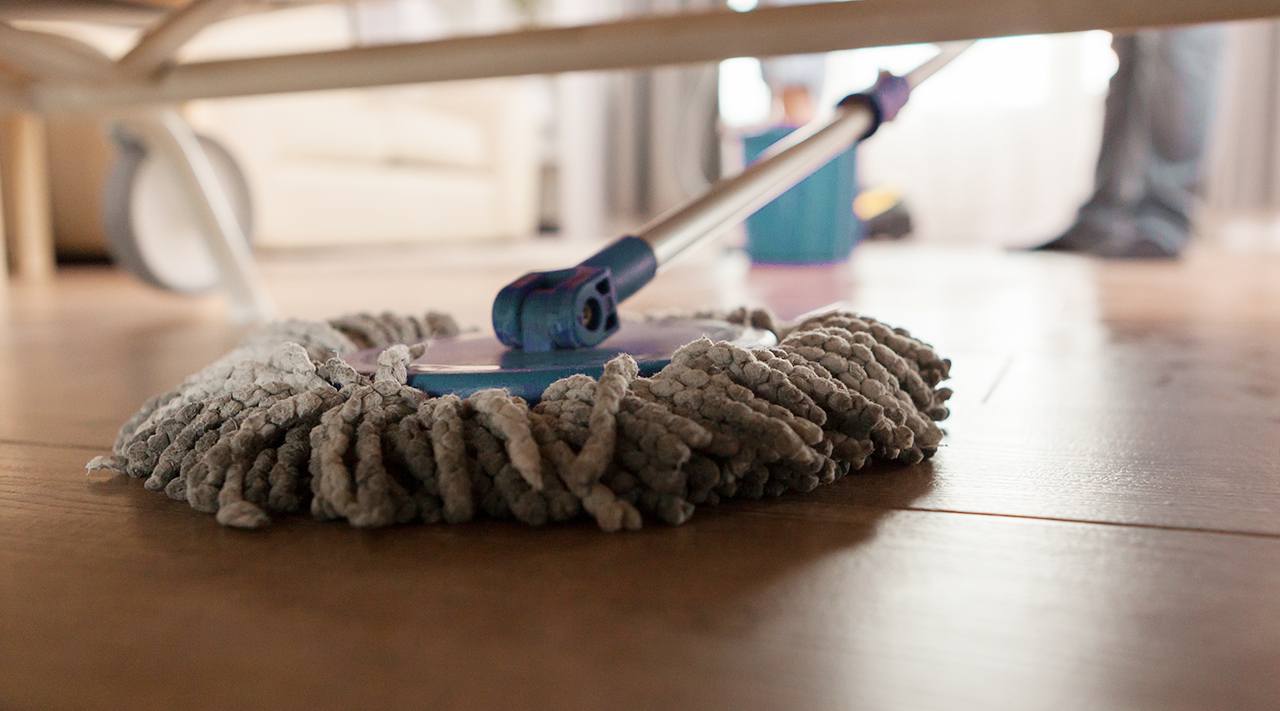
Which Mop Is Best for Different Floor Types?
Floor type should be one of the first factors you consider.
Hardwood and Laminate
Hardwood and laminate can be sensitive to excess moisture. A dry mop is generally a safer choice for routine cleaning. If deeper cleaning is required, use only a cleaning method recommended for the specific flooring and avoid excessive water.
Tile and Vinyl
Both wet and dry mops can work well on tile and vinyl.
Use a dry mop for everyday dust and debris, then use a suitable wet mop and floor-cleaning solution when dealing with stains, spills, or heavier soil.
Concrete
Concrete floors can generally tolerate wet cleaning, making wet mops useful for removing heavier dirt. Dry mopping can still be helpful for daily dust control.
Natural Stone
Natural stone requires more care because different materials can react differently to cleaning products and moisture. Follow the flooring manufacturer's cleaning recommendations and choose a compatible product.
Wet Mop vs Dry Mop for Commercial Cleaning
In commercial environments, both mop types can have an important role.
A dry mop is useful for frequent dust removal in offices, hallways, retail spaces, schools, and other large areas.
A wet mop is better suited to areas where spills, stains, grease, or heavier soil are common, such as kitchens, restrooms, and high-traffic areas.
A combination of both systems can help cleaning teams maintain floors efficiently. Dry mop first to remove loose debris, then wet mop when the floor requires deeper cleaning.
How to Use a Dry Mop Effectively
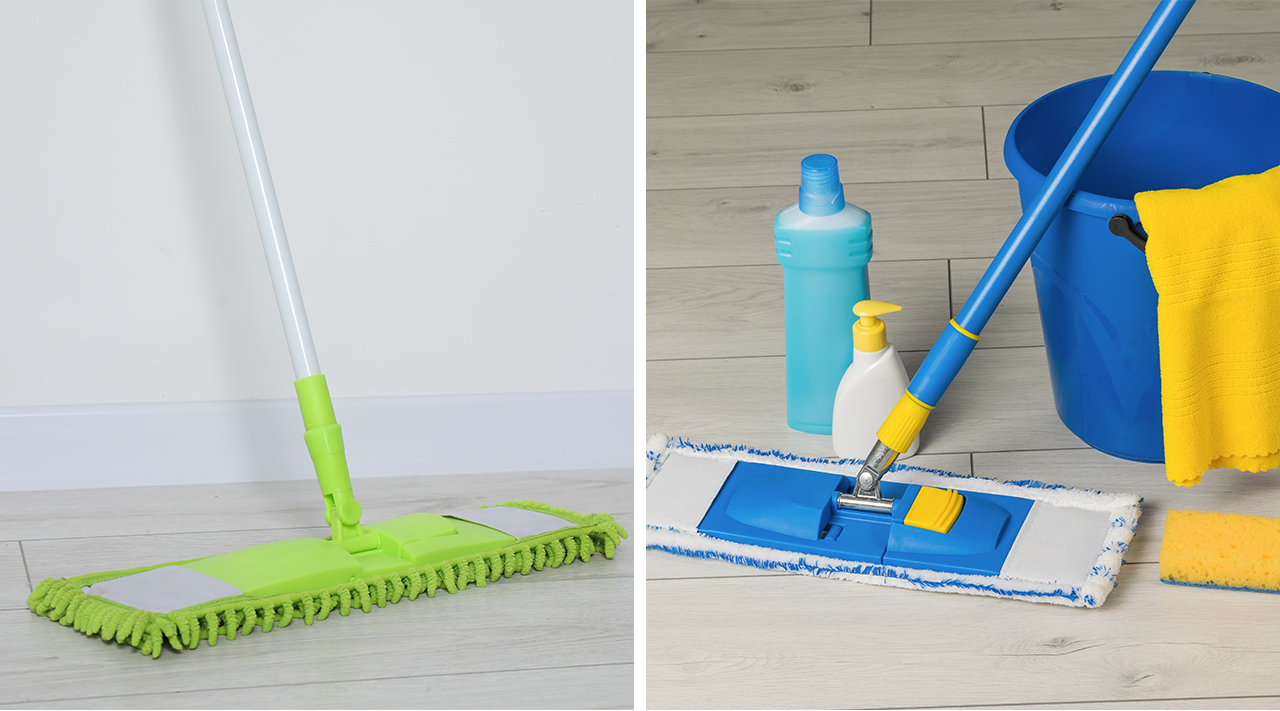
Follow these simple steps for better results:
- Start with a clean, dry mop head.
- Move the mop across the floor using overlapping passes.
- Pay extra attention to corners and edges.
- Shake out or replace the mop head when it becomes loaded with dust.
- Wash reusable mop heads according to the manufacturer's instructions.
- Allow the mop head to dry completely before storing.
Microfiber pads are particularly useful because they are designed to trap dust and debris rather than simply pushing particles across the floor.
How to Use a Wet Mop Effectively
For effective wet mopping:
- Sweep or vacuum the floor first.
- Use the correct cleaning solution for the surface.
- Avoid over-saturating the mop.
- Work in manageable sections.
- Change dirty water when necessary.
- Allow the floor to dry completely.
- Clean and dry the mop head after use.
Using too much water can increase drying time and create slip hazards. It can also damage moisture-sensitive flooring.
For commercial cleaning, a mop bucket and wringer can help control the amount of water left in the mop head.
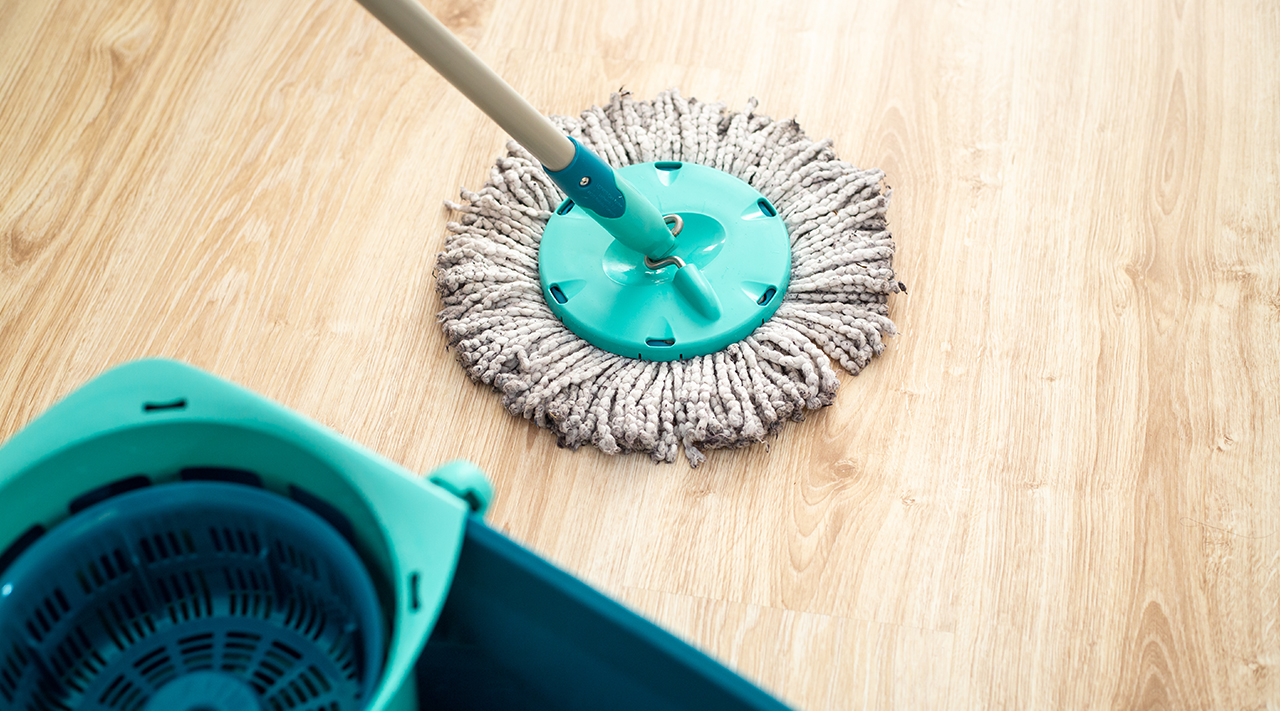
Wet vs Dry Mops: Which Is More Eco-Friendly?
Dry mops generally use less water because they do not require water or cleaning solutions for routine dust removal. This can make them useful for facilities looking to reduce water consumption.
However, the environmental impact also depends on whether mop heads are reusable or disposable. Reusable microfiber or cotton mop heads can reduce the amount of disposable material used over time.
Wet mopping can also be part of a sustainable cleaning program when facilities use appropriate cleaning products, reusable equipment, and controlled amounts of water.
Safety Tips for Mopping
Safety is especially important when wet mopping commercial floors.
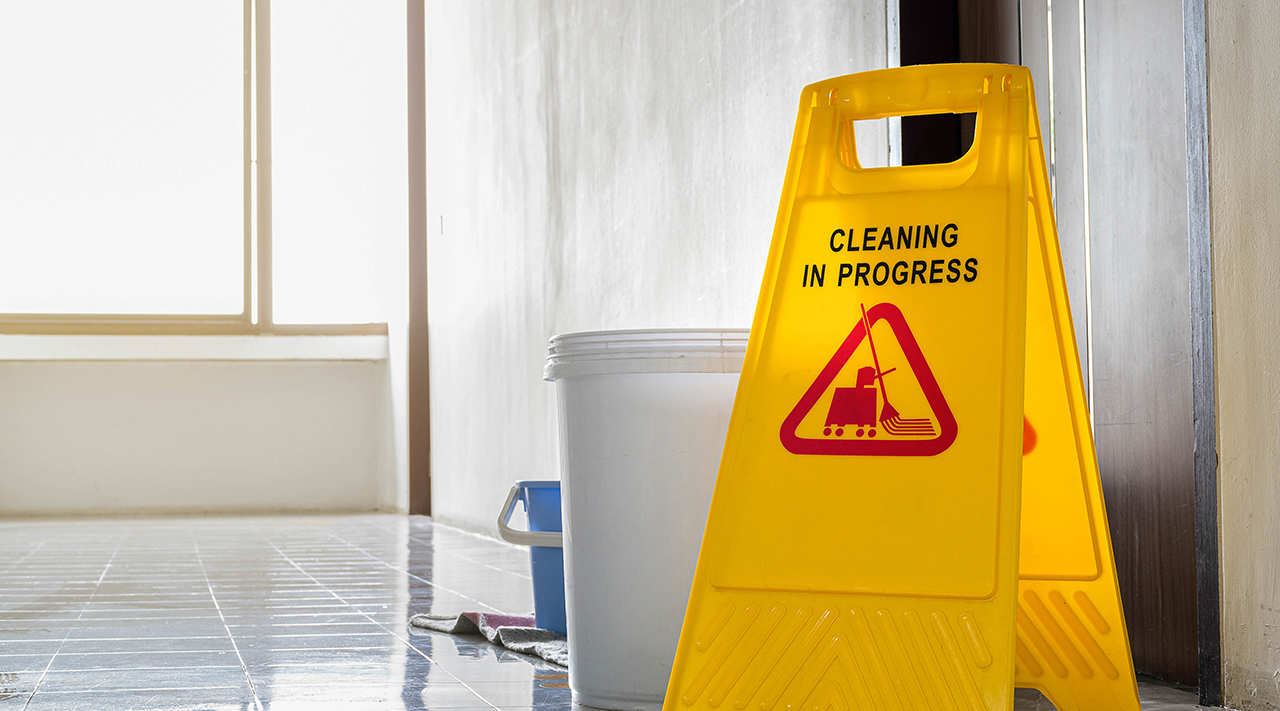
- Place wet-floor signs where people can easily see them.
- Avoid leaving large areas saturated with water.
- Work during lower-traffic periods when possible.
- Use appropriate footwear with good traction.
- Allow floors to dry before reopening the area.
- Clean spills immediately.
- Use cleaning products according to their labels.
Wet floors can create slip hazards, so controlling moisture and clearly marking recently cleaned areas should be part of a safe floor-care routine.
How to Choose Between a Wet Mop and Dry Mop
Ask yourself these questions:
What type of dirt are you removing?
Choose a dry mop for dust and loose debris. Choose a wet mop for spills, stains, and heavier grime.
What type of floor are you cleaning?
Moisture-sensitive floors generally require more careful moisture control, while water-resistant floors can accommodate wet cleaning.
How frequently do you clean?
Dry mopping is convenient for daily maintenance, while wet mopping can be used for deeper or scheduled cleaning.
How large is the area?
Dry mops are convenient for quick maintenance across large areas. Wet mopping may require additional equipment and setup.
What is your cleaning budget?
Consider not only the cost of the mop but also replacement heads, cleaning solutions, water, buckets, and labor.
Which Is Better: Wet Mop or Dry Mop?
There is no single winner because wet and dry mops serve different purposes.
A dry mop is better for daily maintenance, dust control, hair, and loose debris, especially on moisture-sensitive floors.
A wet mop is better for spills, sticky messes, stains, and deeper cleaning on appropriate water-resistant surfaces.
For most homes and commercial facilities, using both provides the most practical approach. Dry mop regularly to control dust and debris, then wet mop when the floor needs a deeper clean.
Frequently Asked Questions
Is a wet mop better than a dry mop?
Neither is universally better. Dry mops are best for dust and daily maintenance, while wet mops are better for spills, stains, and deeper cleaning.
Can I use a wet mop on hardwood floors?
Use caution. Excess moisture can damage hardwood. Follow the flooring manufacturer's recommendations and use only an appropriate amount of moisture.
What is a dry mop used for?
A dry mop is mainly used to collect dust, hair, dirt, and loose debris without water or cleaning solutions.
Can wet and dry mops be used together?
Yes. A common floor-care routine is to dry mop first to remove loose debris and then wet mop when deeper cleaning is required.
Are microfiber mops better than cotton mops?
Microfiber mops are lightweight and effective at trapping dirt and dust, while cotton mops are highly absorbent. The best choice depends on the cleaning task and facility requirements.
How do I maintain a wet mop?
Rinse the mop head after use and allow it to dry completely. Wash reusable mop heads according to the manufacturer's instructions and replace them when they become worn or ineffective.
How often should I dry mop?
Dry mopping can be performed daily or as often as needed based on foot traffic, dust, and debris levels.
Do I need to sweep before wet mopping?
Yes. Removing loose dirt and debris first helps prevent the wet mop from spreading dirt across the floor.
Final Thoughts
Understanding the difference between wet vs dry mops makes it easier to build an effective floor-cleaning routine. Dry mops provide quick daily dust and debris removal, while wet mops are better for spills, stains, grime, and deeper cleaning.
Rather than choosing only one, consider keeping both in your cleaning equipment. Using the right mop for the right floor and cleaning task can improve efficiency, protect flooring, and help maintain cleaner commercial and residential spaces.
Recent Posts
-
 Your facility is on a regular cleaning schedule. The crew shows up, runs the machine, and the floors …Sep 24, 2026
 -
How Dirty Floor Cleaning Machines Cause Streaks and Residue in Commercial Cleaning
A floor scrubber leaving streaks or residue after cleaning is one of the most common complaints in …Sep 22, 2026 -

Why Commercial Floors Feel Sticky After Cleaning (And How to Fix It)
Sticky floors after mopping are a common complaint in commercial facilities. The floor looks clean …Sep 22, 2026