
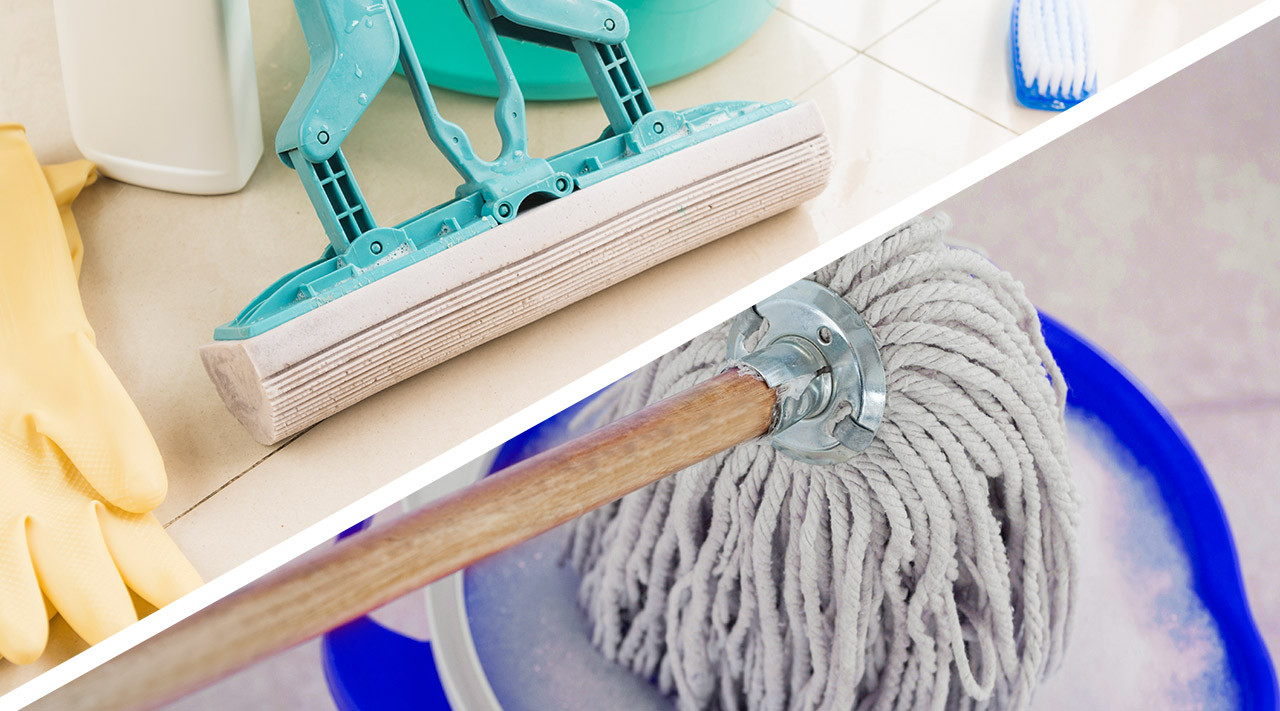
Sponge Mop vs. String Mop: Which is Right for Your Facility?
Short answer: A sponge mop uses an absorbent foam or cellulose head with a built-in lever to wring out water, making it best for smooth surfaces and quick spill cleanup. A regular mop (string, strip, or spin) uses fiber strands to scrub textured floors and handle heavy-duty cleaning.
If your facility has a mix of floor types, the choice comes down to this: sponge mops control moisture better on flat, sealed surfaces, while string mops handle heavier soil loads and rougher floors. That makes the right pick less about the mop itself and more about the surface, the mess, and how often you clean.
Key Takeaway: For smooth vinyl, linoleum, or sealed hardwood, reach for a sponge mop. For grouted tile, concrete, cafeterias, or restrooms with heavy traffic, a string mop is the stronger tool. Many facilities keep both.
This guide covers the core differences, a side-by-side comparison, use-case breakdowns, maintenance tips, and answers to the most common questions facility managers ask before buying.
Sponge Mop vs. Regular Mop: Quick Comparison
Not sure which mop fits your facility? This table covers the key decision points at a glance.
| Feature | Sponge Mop | String/Regular Mop |
|---|---|---|
| Best surfaces | Vinyl, linoleum, smooth tile, sealed hardwood | Grouted tile, concrete, rough or textured floors |
| Water control | Strong, built-in lever wringer | Depends on bucket wringer or spin mechanism |
| Spill cleanup | Fast on light spills | Better for large-volume spills |
| Deep cleaning | Limited on textured surfaces | Strong scrubbing action into grout lines |
| Head material | Foam or cellulose sponge | Cotton, synthetic blend, or microfiber strands |
| Head lifespan | Shorter; replace frequently in commercial use | Loop-end versions last significantly longer |
| Machine washable | No | Yes (loop-end cotton and microfiber) |
| Bacteria risk | Higher; foam retains moisture and bacteria | Lower with proper drying and storage |
| Best for | Light daily maintenance, smooth floors | Heavy-duty, high-traffic, textured floors |
Bottom line: Smooth floor and fast maintenance? Sponge mop. Rough floor, heavy grime, or large area? String mop. Mixed facility? Keep one of each.
Not sure how string mops compare to other wet mop types? Our guide to different types of mops covers flat, spin, steam, and dust mops side by side.
What Is a Sponge Mop?
A sponge mop features a flat foam or cellulose head attached to a handle with a hand-operated mechanical squeezer or lever. You press the lever to compress the sponge and push out excess water, then release it to restore absorbency. No hands touch the mop head during wringing, which keeps the process clean and fast.
How sponge mops work
The sponge head soaks up liquid on contact, then the built-in wringer removes it into the bucket. This cycle repeats across the floor, letting you control exactly how wet the surface gets. That moisture control is the main reason sponge mops work well on water-sensitive floors like sealed hardwood or laminate.
Are sponge mops good for floors?
Yes, for the right floors. Sponge mops are well-suited to:
-
Vinyl and linoleum - smooth, sealed surfaces where the foam head glides without catching
-
Smooth ceramic or porcelain tile - flat grout lines where the sponge makes full contact
-
Sealed hardwood - when used with minimal water and wrung well before each pass
-
Laminate - same principle as hardwood; keep moisture low
-
Light spill cleanup - the foam absorbs fast and the lever removes it quickly
Where sponge mops fall short
-
They struggle on textured tile with deep grout lines; the flat sponge head rides over the surface without reaching into recesses
-
They can push dirty water around on uneven floors rather than absorbing it
-
Foam retains bacteria and debris inside its structure; thorough rinsing doesn't fully clear it
-
In commercial settings, sponge heads should be replaced weekly in high-use areas
Key Takeaway: Sponge mops are a good fit for smooth, sealed floors and quick daily maintenance. They're not the right tool for heavy soil, textured surfaces, or hygiene-critical environments without frequent head replacement.
What Is a Regular Mop (String Mop)?
A regular mop, most commonly a string mop, uses loose strands of cotton, synthetic blend, or microfiber attached to a handle. It pairs with a bucket and a separate wringer or spin basket. The strands spread across the floor, reach into textured surfaces and grout lines, and absorb large volumes of liquid.
String mop heads hold 16 to 24 oz of water per head, significantly more than sponge or flat mop heads. That capacity is what makes them the go-to for high-soil commercial environments.
Two main string mop formats
| Format | Description | Best For |
|---|---|---|
| Cut-end | Individual strands cut at the ends; inexpensive but sheds lint and wears faster (15-30 washes) | Budget-conscious, lower-frequency use |
| Loop-end | Continuous looped strands; resists fraying, lasts longer, machine washable | Commercial daily use, high-traffic facilities |
Pro tip: In commercial facilities, loop-end is almost always the better investment. The longer lifespan and washability offset the higher upfront cost quickly.
Where string mops excel
String mops are the stronger choice for:
-
Grouted or textured tile - the strands reach into gaps that a sponge head rides over
-
Concrete floors - in warehouses, loading docks, and back-of-house areas
-
Cafeterias and commercial kitchens - high soil loads, grease, and large-volume spills
-
Restrooms and locker rooms - heavy traffic with frequent wet cleanup
-
School corridors and gym floors - large surface areas with daily heavy use
Watch out for
-
Too much water on wood or moisture-sensitive floors - a poorly wrung string mop can leave floors wet long enough to cause damage
-
Drying time - dense strands take longer to dry; store heads hanging, never coiled in a bucket, to prevent mildew
-
Cross-contamination - the twisted yarn structure makes full rinsing difficult; string mops should not be used in healthcare patient rooms or regulated hygiene zones
Key Takeaway: String mops are the workhorse of commercial floor cleaning. Higher absorbency, better scrubbing, and longer-lasting heads make them the right call for most heavy-duty facility environments.
Browse commercial mops, buckets, and wringers at The Cleaning Station to find loop-end and cotton options for your facility.
Best Sponge Mop for Hardwood Floors
Hardwood floors are one of the most common use cases for sponge mops, but they're also where the most damage happens when the wrong tool or technique is used.
The short answer: a sponge mop can be safe on sealed hardwood, but only when used correctly.
What to look for in a sponge mop for hardwood
-
Cellulose sponge head over foam - cellulose is denser, wrings out more thoroughly, and leaves less residual moisture on the floor
-
Strong lever wringer - the tighter the wring, the drier the pass; look for a lever mechanism that compresses the head fully
-
Lightweight handle - reduces pressure on the floor surface and makes it easier to control moisture distribution
How to mop hardwood floors safely with a sponge mop
-
Wring the mop head until it is barely damp, not wet
-
Work in the direction of the wood grain
-
Avoid letting water pool or sit on the surface
-
Go over the floor a second time with a dry pass if needed
-
Allow the floor to air dry fully before foot traffic
Avoid: using a sponge mop on unsealed or wax-finished hardwood. Excess moisture seeps into the wood, causes swelling, and lifts the finish over time.
For hardwood floors in commercial settings, a flat microfiber mop is often a better long-term choice. Microfiber pads apply even less moisture, cover larger areas faster, and last 300 to 500 wash cycles before replacement. See the full breakdown in our guide to different types of mops.
Key Takeaway: The best sponge mop for hardwood floors is one with a cellulose head and a strong lever wringer. Always wring until barely damp, work with the grain, and never use on unsealed wood.
Maintenance and Durability
How long a mop lasts depends almost entirely on how it's maintained. Here's what you need to know for each type.
Sponge mop maintenance
Sponge heads are the higher-maintenance option. Foam and cellulose trap bacteria and debris inside the sponge structure, and rinsing alone doesn't fully remove it.
After every use:
-
Rinse the sponge head thoroughly under running water
-
Use the lever to wring it as dry as possible
-
Store the mop with the head up or hanging so air can circulate around it
-
Never store a damp sponge head in a bucket or closet; mold and odor develop quickly
Replacement schedule:
-
In commercial settings with daily use, replace sponge heads weekly
-
In light residential use, every 1 to 3 months is the typical guideline
-
Replace immediately if the head develops a persistent odor, visible discoloration, or the sponge starts to break apart
String mop maintenance
String mops are more durable, especially loop-end versions. Cotton and microfiber loop-end heads are machine washable, which is a significant advantage over sponge heads.
After every use:
-
Rinse the mop head thoroughly
-
Wring out as much water as possible
-
Hang the head to dry completely, never coil it in a bucket
-
A wet mop stored in an enclosed space grows mildew within hours
Replacement schedule:
-
Cut-end cotton heads: every 15 to 30 washes in commercial use
-
Loop-end cotton or microfiber: significantly longer with proper laundering
-
Replace when strands fray, discolor, or the head no longer absorbs properly
Key Takeaway: String mops win on durability and hygiene maintenance. Machine-washable loop-end heads outlast sponge heads in commercial use and carry a lower bacteria risk when properly stored.
For facilities running daily cleaning cycles, pairing a string mop with a commercial mop bucket and wringer helps control moisture and extend solution life between bucket changes.
Cost Comparison: Sponge Mop vs. String Mop
Upfront price rarely tells the full story. The real cost is replacement frequency over time.
| Cost Factor | Sponge Mop | String Mop (Loop-End) |
|---|---|---|
| Initial mop cost | Lower | Slightly higher |
| Head replacement cost | Moderate per head | Lower per head (loop-end) |
| Replacement frequency (commercial) | Weekly | Every 30+ washes |
| Machine washable | No | Yes |
| Annual cost (daily use) | Higher over time | Lower over time |
The math: a sponge head replaced weekly in a commercial facility adds up to 50+ heads per year per mop. A loop-end string mop head, washed regularly, can last a full season or longer. The string mop is the more economical choice for high-frequency commercial use.
For light residential or occasional-use environments, the sponge mop's lower upfront cost and convenience make it a reasonable pick.
Key Takeaway: For facilities cleaning daily, string mop heads are more cost-effective over time. Sponge mops are the better value only in low-frequency or residential settings.
How to Choose the Right Mop for Your Facility
Run through these four questions before you buy.
1. What floor type are you cleaning?
-
Smooth and sealed (vinyl, linoleum, sealed hardwood, smooth tile): sponge mop or flat microfiber mop
-
Textured, grouted, or rough (quarry tile, concrete, uneven surfaces): string mop
-
Mixed floor types: keep both; use the sponge mop for smooth zones and the string mop for heavy-use areas
2. How heavy is the soil load?
-
Light daily maintenance and spill pickup: sponge mop handles it well
-
Heavy grime, grease, or large spills: string mop's absorbency and scrubbing action are the better fit
3. How often do you clean?
-
Daily or multiple times per day: string mop with washable loop-end heads is more cost-effective and hygienic
-
A few times per week or less: sponge mop is a reasonable option with proper drying between uses
4. Are hygiene standards regulated in your facility?
-
Healthcare, food service, or regulated environments: string mops with color-coded systems or disposable heads are the standard; sponge mops are generally not recommended in patient rooms or food prep areas due to bacteria retention
-
General commercial use: either works with proper maintenance protocols
Still not sure? If you manage more than one type of space, the answer is usually both. A sponge mop for quick cleanups in smooth-floor areas, a string mop for restrooms, kitchens, and heavy-traffic corridors. Having both tools means you're not using the wrong one for the job.
Explore floor care cleaners and cleaning tools at The Cleaning Station to round out your facility's floor care setup.
Also worth reading: our guide on how to prevent slippery floors after mopping covers technique, floor type considerations, and product selection to reduce slip hazards after wet mopping.
Frequently Asked Questions
Is a sponge mop better than a regular mop?
It depends on the floor and the task. Sponge mops are better for smooth, sealed surfaces like vinyl, linoleum, and sealed hardwood where moisture control matters. Regular mops (string or loop-end) are better for textured floors, heavy soil, and large commercial areas where absorbency and scrubbing power are the priority. For most commercial facilities, a string mop is the more versatile and durable choice.
Are sponge mops good for tile floors?
Yes, on smooth tile with flat grout lines. On textured tile or tile with deep grout lines, a sponge mop's flat head rides over the surface without reaching into the recesses. For grouted tile in restrooms, kitchens, or high-traffic areas, a string mop with strands that reach into grout lines will clean more thoroughly.
What is the best sponge mop for hardwood floors?
Look for a sponge mop with a cellulose head (denser than foam, wrings out more completely) and a strong lever wringer. The key is using it barely damp, working with the grain, and never letting water sit on the surface. For commercial hardwood floors cleaned daily, a flat microfiber mop is often the safer long-term choice because it applies even less moisture.
How often should you replace a sponge mop head?
In commercial settings with daily use, weekly. In residential settings with light use, every one to three months. Replace sooner if the head develops a persistent odor, visible discoloration, or starts to break apart. A worn sponge head spreads bacteria rather than removing it.
Can string mops be washed in a washing machine?
Yes, loop-end cotton and microfiber string mop heads are machine washable. This is one of the key advantages over sponge mops. Wash in warm water, avoid fabric softener (it reduces microfiber absorbency), and hang to dry completely before storing or reusing.
Do I need a special bucket for a string mop?
A bucket with a wringer is strongly recommended for commercial use. It removes excess water before the mop touches the floor, extends the useful life of each bucket of cleaning solution, and reduces the risk of leaving floors too wet. The Rubbermaid WaveBrake bucket and wringer combo is a widely used commercial standard.
What is the best mopping technique for commercial floors?
Start by dust mopping or sweeping to remove loose debris. Then mop using a figure-eight or S-motion pattern, working from the farthest corner toward the exit. Wring the mop regularly, change the cleaning solution when it becomes visibly dirty, and allow floors to dry completely before reopening to foot traffic. Wet floors are a slip hazard; see our guide on preventing slippery floors after mopping for more detail.
What are the disadvantages of a sponge mop?
-
Foam retains bacteria and requires frequent head replacement in commercial use
-
Not effective on textured tile or deep grout lines
-
Can push dirty water around on uneven surfaces
-
Not suitable for regulated hygiene zones without strict replacement protocols
-
Heads are not machine washable and degrade faster than loop-end string mop heads
Which type of mop is best for a gym or fitness facility?
String mops are the standard choice for gyms. Rubber flooring, textured tile in locker rooms, and high-traffic corridors all favor a mop with strands that can reach into surface texture and handle larger spill volumes. Use a loop-end microfiber or cotton head for best results, paired with a commercial floor cleaner appropriate for rubber or tile surfaces.
Final Verdict
Choose a sponge mop when you need controlled moisture on smooth, sealed floors and fast daily cleanup. It's the right tool for vinyl, linoleum, sealed hardwood, and light-use spaces where you're not dealing with heavy grime or textured surfaces.
Choose a string mop when the floor is rough, grouted, or heavily used. Higher absorbency, better scrubbing, and longer-lasting washable heads make it the practical standard for most commercial facilities.
For most facilities, the answer is both. A sponge mop for smooth-floor zones and quick spills, a string mop for restrooms, kitchens, corridors, and any area that takes a beating daily. Using the right tool for each task means less wasted effort, better results, and longer floor life.
Ready to stock up? Browse commercial mops, buckets, and wringers at The Cleaning Station, or explore our full range of janitorial cleaning supplies to outfit your facility from floor to ceiling.
Recent Posts
-
 Your facility is on a regular cleaning schedule. The crew shows up, runs the machine, and the floors …Sep 24, 2026
 -
How Dirty Floor Cleaning Machines Cause Streaks and Residue in Commercial Cleaning
A floor scrubber leaving streaks or residue after cleaning is one of the most common complaints in …Sep 22, 2026 -

Why Commercial Floors Feel Sticky After Cleaning (And How to Fix It)
Sticky floors after mopping are a common complaint in commercial facilities. The floor looks clean …Sep 22, 2026