
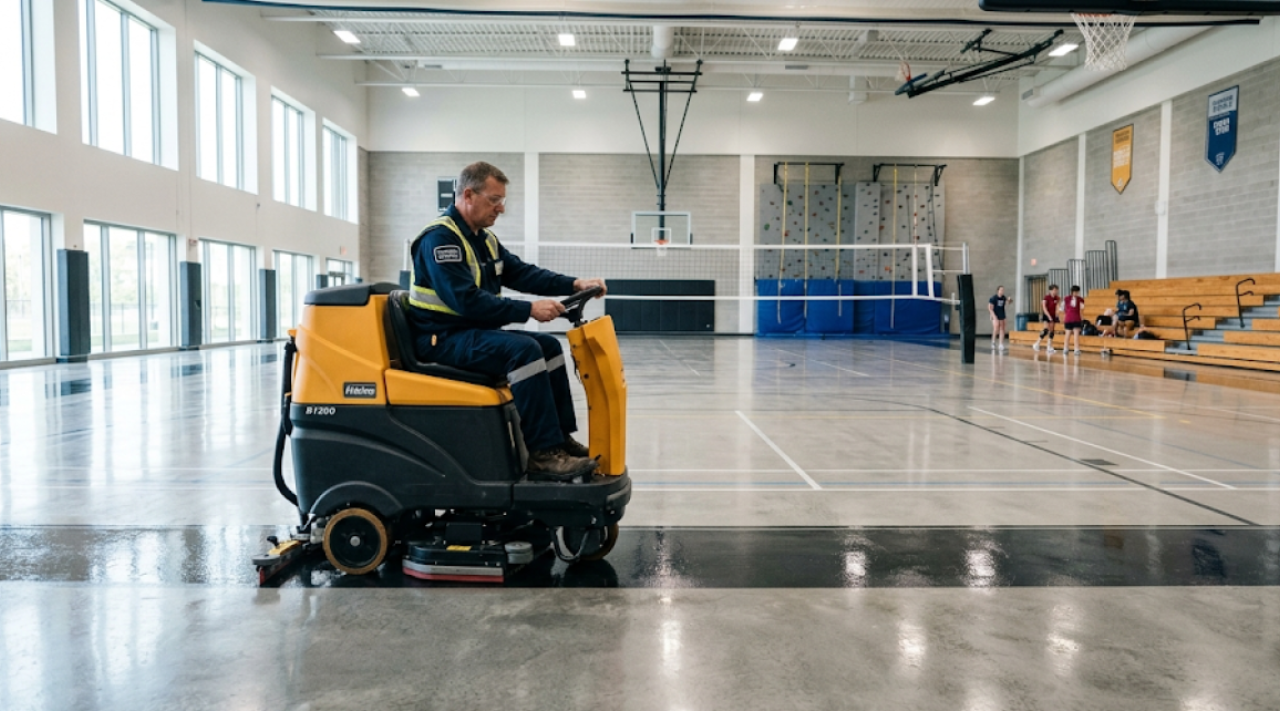
Do You Need to Rinse Floors After Using A Floor Scrubber in Commercial Facilities
Sometimes.
Whether you need to rinse depends on the cleaner you're using, how your equipment is performing, and the amount of soil your facility deals with. In some cases, one pass is enough. In others, skipping a rinse is exactly what causes sticky floors, streaking, and faster re-soiling.
This post covers when to rinse, when you don't need to, and best practices for getting it right.
What does rinsing mean in commercial floor cleaning? Running a second pass with plain water after scrubbing to remove leftover solution and loosened soil. It's used when residue is likely to stay on the surface after the first pass.
When You Should Rinse Floors in Commercial Settings
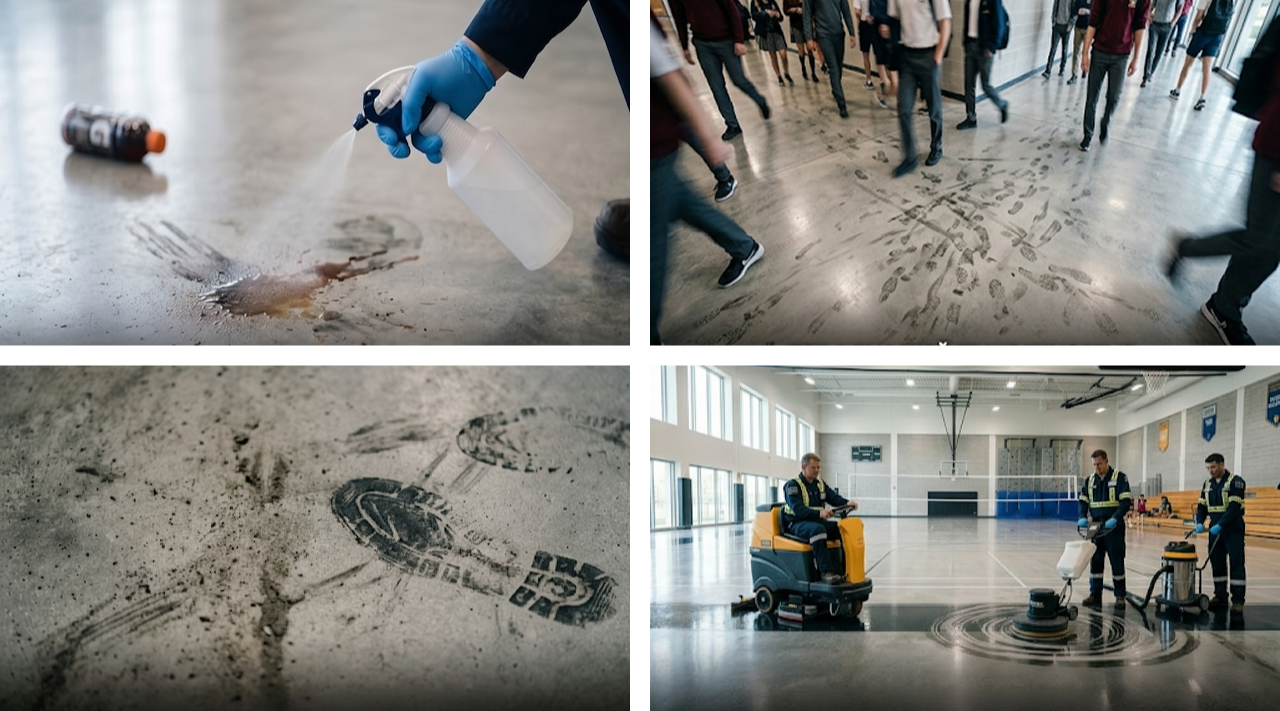
Using concentrated cleaners: Degreasers and concentrated formulas are more likely to leave residue behind. If you're running higher-than-usual dilution ratios, a rinse pass removes what's left before it dries.
High-traffic environments: Gyms, schools, medical offices, and retail spaces build up more soil than a standard office floor. That soil mixes with the cleaning solution and increases the chance of residue remaining after the scrubber passes through.
Visible residue or buildup: If floors look dull, show streaks, or feel slightly sticky after drying, the cause is leftover solution. A rinse pass clears it. In commercial floor care, what stays on the surface after the first pass has more impact on appearance and re-soiling rate than which cleaner you started with; the product can be right, and the floor can still look wrong if the residue isn't removed.
Deep cleaning vs routine cleaning: Day-to-day maintenance cleaning often doesn't need a rinse. Deep cleaning, especially after heavy buildup or missed maintenance, usually does.
When You May Not Need to Rinse Floors
Not every pass with a commercial floor scrubber needs a follow-up.
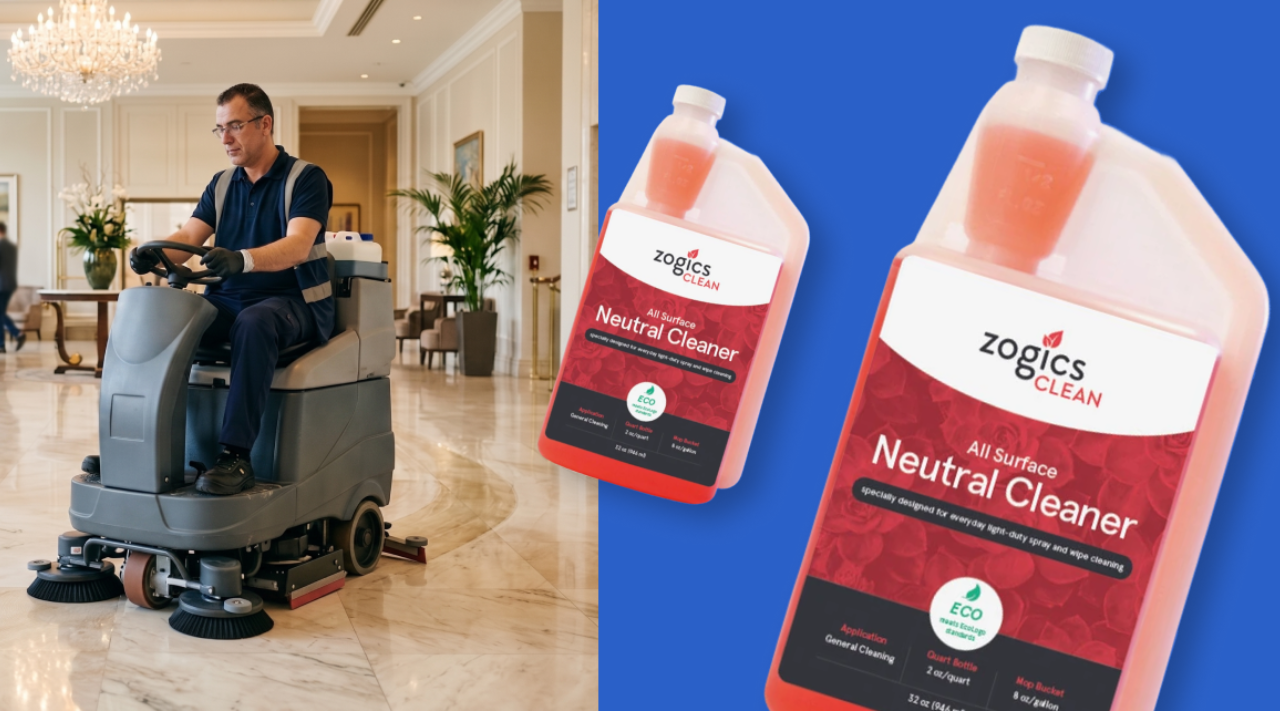
Low-residue or no-rinse cleaners: Neutral floor cleaners are designed to clean without leaving a film when mixed at the correct dilution. The Zogics All Surface Neutral Cleaner is a no-rinse formula when used as directed. It covers VCT, tile, sealed concrete, and similar hard surfaces without leaving residue that requires a follow-up pass. The bottle includes a built-in measuring chamber: 1 oz capacity with a ½ oz mark, so staff can pour the right amount without guessing or measuring separately.
A properly functioning auto scrubber: If your auto scrubber picks up solution effectively and leaves the floor nearly dry, rinsing may not add much. When maintained correctly, residue rarely needs a separate rinse pass.
Light cleaning conditions: Low-traffic areas with minimal soil load often don't need rinsing, especially during routine maintenance cleaning between deep cleans.
One Pass vs Two Pass Floor Cleaning: What's the Difference?
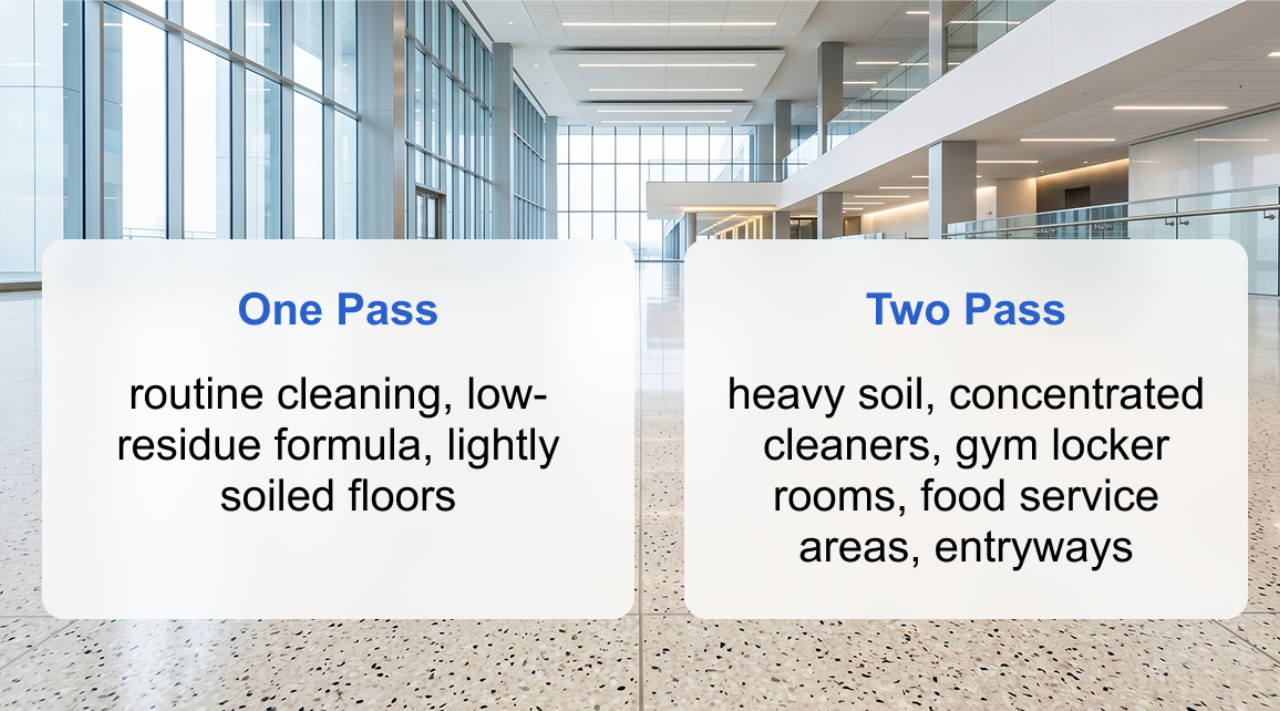
Knowing how to clean commercial floors efficiently starts with understanding when one pass is enough and when a second pass is needed. It comes down to what's on the floor and what your cleaner leaves behind.
One-pass cleaning: The scrubber applies solution, agitates the surface, and picks up the dirty water in a single run. This is how most auto scrubbers are designed to work and what makes them faster than mopping. It works well for routine cleaning with properly diluted, low-residue formulas on lightly soiled floors.
Two-pass cleaning: The first pass applies cleaner and lifts soil. The second pass uses plain water to rinse away any solution left on the surface.
This approach makes sense when:
• Soil levels are higher than normal, such as in gym locker rooms, food service areas, or entryways during wet weather
• Stronger or more concentrated cleaners are used
• Floors have existing buildup from missed cleaning cycles or previous over-concentration
Facilities that add a rinse pass during heavy cycles tend to see fewer complaints about floor feel and appearance.
How Skipping the Rinse Step Leads to Residue Buildup
When rinsing is needed but skipped, the leftover cleaner dries directly on the floor surface. That thin film doesn't stay invisible, and it doesn't stay static either.
It changes how the floor behaves:
• Floors feel sticky underfoot even after drying
• Streaks and haze show under lighting, making clean floors look dirty
• Floors re-soil faster because the residue film attracts dirt from foot traffic
• Appearance degrades over time, which matters in hotels, gyms, and retail spaces where floor condition is part of the occupant experience
The pattern is the same as what's covered in Why Commercial Floors Feel Sticky After Cleaning (And How to Fix It). Dilution and residue buildup are the root cause.
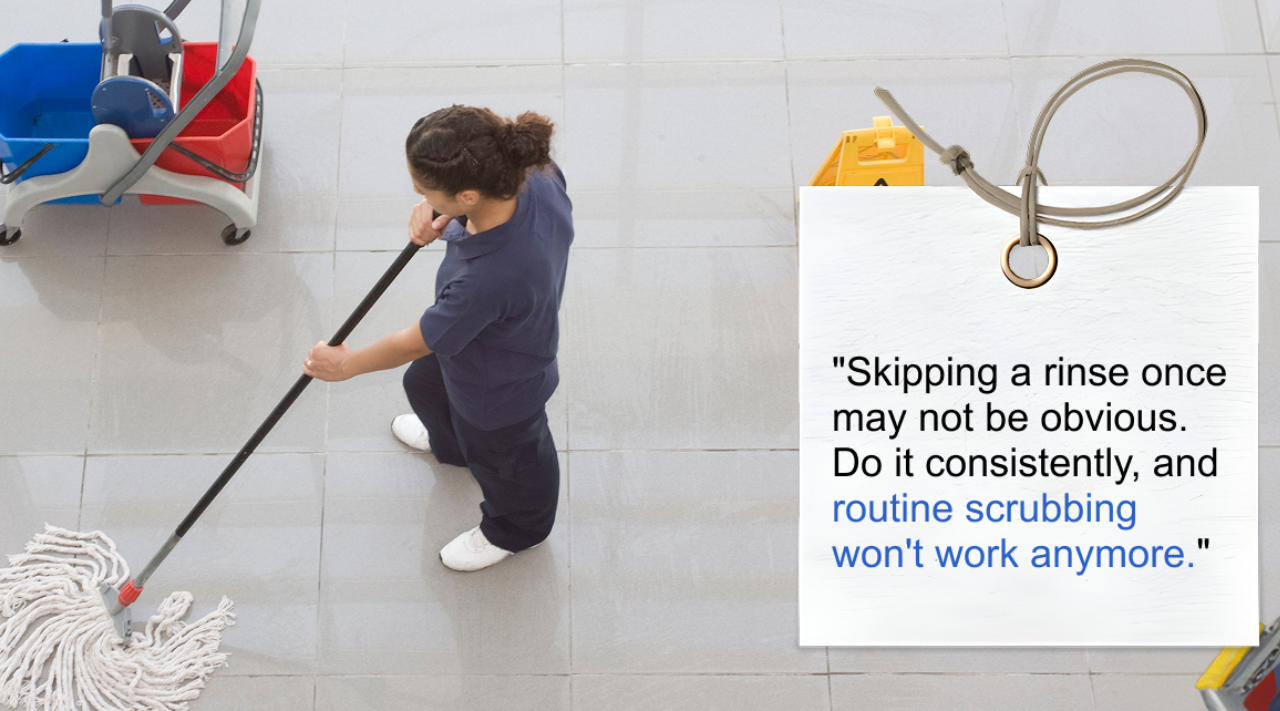
The compound effect matters too. Skipping a rinse once may not be obvious. Do it consistently, and the buildup layer thickens with each cycle until routine scrubbing won't work anymore. A strip and deep clean is what's needed at that point.
Best Practices for Rinsing Floors in Commercial Facilities
Use a rinse step when it adds value, not as a default.
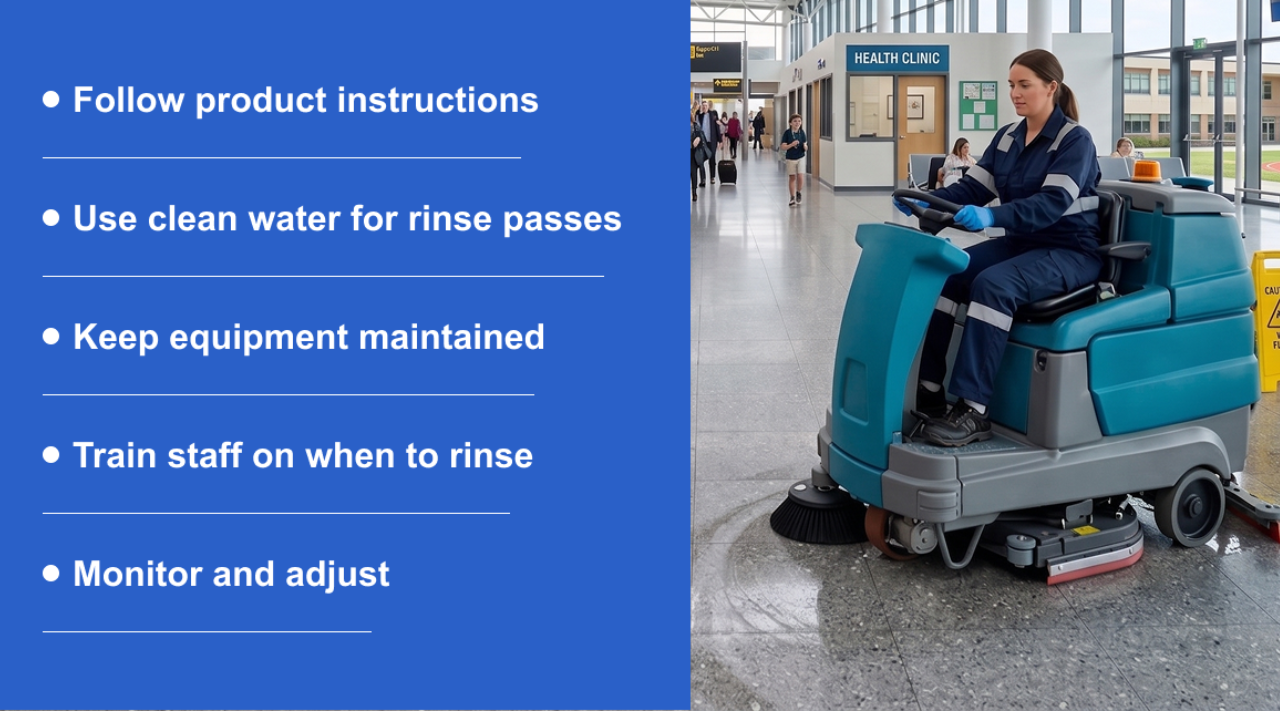
• Follow product instructions. Check whether your cleaner is a no-rinse formula or requires removal after use. With concentrated cleaners or degreasers, assume a rinse is needed unless the label says otherwise.
• Use clean water for rinse passes. Reusing a dirty solution defeats the purpose entirely.
• Maintain your equipment. Poor vacuum pickup means more solution stays on the floor even after a rinse pass. Keep squeegees, recovery tanks, and brushes clean. A scrubber that is poorly maintained undermines the rinse step regardless.
• Train staff on when rinsing is required. Defaulting to a second pass every time adds labor without a return. Staff should know the conditions that call for rinsing: concentrated cleaners, high soil loads, or visible residue after drying.
• Monitor and adjust. Sticky floors or rapid re-soiling after cleaning mean your process needs a rinse step or a dilution correction. See How to Properly Dilute Commercial Floor Cleaners for guidance on the dilution side.
For a full breakdown of preventing residue buildup, see How to Prevent Residue Buildup on Commercial Floors.
Signs Your Facility Should Add a Rinse Step
The floor will usually tell you before the complaints start.
• Floors feel sticky after cleaning and drying, even in areas that look clean
• Visible haze or streaks under overhead lighting
• Occupant or staff complaints about how the floor feels underfoot
• Inconsistent results between shifts, some areas clean and others tacky
• Areas that re-soil noticeably faster than the surrounding zones
• Overall appearance degrades despite regular cleaning
Any one of these can result in residue staying on the surface after cleaning. Adding a rinse step is usually the fastest fix. If rinsing alone doesn't resolve it, the underlying issue is most likely dilution. See Why Commercial Floors Feel Sticky After Cleaning for a full breakdown of causes and corrections.
We carry floor cleaners, auto scrubbers, and janitorial supplies that commercial facilities rely on to keep floors clean shift after shift. Browse our commercial floor care range or contact our team for help building the right setup for your facility.
Shop Janitorial and Cleaning Supplies | Floor Cleaning Machines →
Frequently Asked Questions
Do you always need to rinse floors after cleaning?
No. Rinse when residue is likely to stay on the surface, typically with stronger cleaners, high soil levels, or when floors feel or look off after drying. Neutral cleaners at correct dilution generally don't need a rinse pass.
What happens if you don't rinse commercial floors?
If residue stays on the floor, it dries into a film that makes floors feel sticky, look dull, and attract dirt faster. Left uncorrected over multiple cycles, it builds into a layer that routine scrubbing won't remove.
Do auto scrubbers eliminate the need for floor rinsing?
Not always. Auto scrubbers work well for routine cleaning, but if soil load is high, cleaner concentration is strong, or vacuum pickup is underperforming, a rinse pass may still be needed.
When is rinsing most important in commercial floor cleaning?
During deep cleaning cycles, in high-traffic areas like gyms and school hallways, and when using concentrated or degreaser-type cleaners.
Recent Posts
-
 Your facility is on a regular cleaning schedule. The crew shows up, runs the machine, and the floors …Sep 24, 2026
 -
How Dirty Floor Cleaning Machines Cause Streaks and Residue in Commercial Cleaning
A floor scrubber leaving streaks or residue after cleaning is one of the most common complaints in …Sep 22, 2026 -

Why Commercial Floors Feel Sticky After Cleaning (And How to Fix It)
Sticky floors after mopping are a common complaint in commercial facilities. The floor looks clean …Sep 22, 2026