
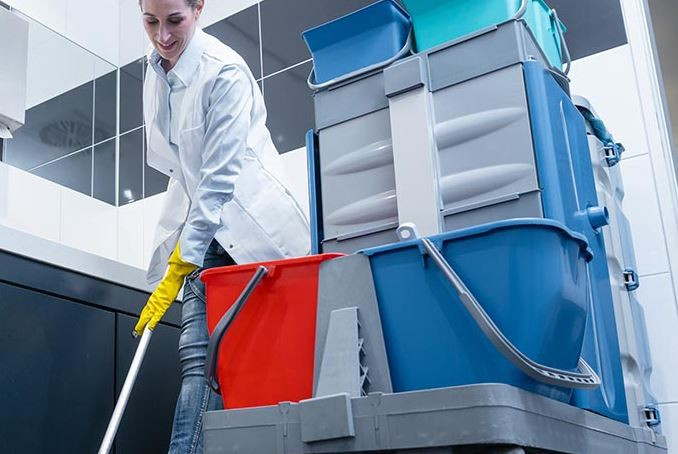
How to Clean a Public Restroom: Step-by-Step Checklist
Public restrooms take a beating. High foot traffic, multiple users, and constant exposure to moisture and pathogens make them among the most challenging spaces to maintain in any commercial facility. Done right, a clean restroom protects your visitors, reduces liability, and reflects directly on your brand. Done wrong, it becomes a source of complaints, health risks, and costly deep cleans.
This guide covers everything your team needs: the right supplies, a safety-first setup, a nine-step cleaning process, a ready-to-use checklist, and answers to the questions facility managers ask most.
What's covered in this guide:
- The supplies and PPE your team needs before starting
- A nine-step cleaning sequence that works in any commercial restroom
- A printable-style checklist for daily, weekly, and monthly tasks
- How often public restrooms should be cleaned based on traffic level
- The most common mistakes that undo good cleaning work
What Is the Best Way to Clean a Public Restroom?
Work top to bottom, clean before you disinfect, and follow a consistent sequence every time.
Cleaning removes visible soil, grease, and buildup; disinfecting kills the pathogens left behind. Both steps are required, and the order matters. Skipping the cleaning step and going straight to a disinfectant is one of the most common errors in commercial restroom maintenance. Organic matter neutralizes disinfectants before they can do their job, so surfaces that look treated often aren't.
The best restroom cleaning process also respects dwell time, which is the amount of time a disinfectant needs to remain wet on a surface to actually kill pathogens. Most commercial disinfectants require anywhere from 30 seconds to 10 minutes of contact time. Wiping a surface dry immediately after application renders the product ineffective.
A repeatable, top-to-bottom sequence protects your team from cross-contamination and ensures nothing gets missed, even during shift changes or high-traffic periods.
Why Public Restroom Cleaning Matters
A poorly maintained restroom is a measurable liability.
A global study commissioned by Excel Dryer and conducted by MetrixLab across more than 4,000 participants in the U.S., Europe, and Asia found that cleanliness and hygiene are the top priorities for restroom users worldwide. Every respondent agreed that a dirty restroom reflects poorly on the establishment, and 80% said they would not, or might not, return to a restaurant after encountering one. In retail, hospitality, and food service settings, that kind of reputational hit is direct and immediate. For schools, healthcare facilities, and gyms, the stakes are higher: restrooms are one of the primary transmission points for pathogens including norovirus, E. coli, Staphylococcus aureus, and influenza.
The real cost of neglected restroom maintenance:
• Health risk: High-touch surfaces like flush handles, door hardware, and faucet knobs harbor bacteria and viruses that transfer easily to hands and then to faces, food, and other surfaces.
• Odor complaints: Ammonia from urine and bacterial growth in drains and grout create persistent odors that no air freshener covers adequately. The only fix is thorough, regular cleaning.
• Damage accumulation: Hard water deposits, soap scum, and mold build up rapidly in restrooms due to constant moisture and use. Deferred cleaning means costlier remediation later.
• Regulatory exposure: OSHA requires employers to maintain sanitary restroom facilities. Facilities open to the public may face additional health code requirements from local authorities.
Consistent cleaning protects the people in your facility and avoids the higher remediation costs that come from letting problems slide.
Public Restroom Cleaning Supplies You Need
Having the right products on hand before you start is what separates a thorough clean from a surface wipe-down. Stock your cart with these categories before entering the restroom.
Cleaning and Disinfecting Products
|
Product |
Purpose |
|---|---|
|
Commercial restroom cleaners |
Remove soap scum, mineral deposits, and organic buildup from fixtures and surfaces |
|
Commercial disinfectants |
Kill bacteria, viruses, and fungi on hard surfaces after cleaning |
|
Glass cleaner |
Streak-free cleaning for mirrors |
|
Toilet bowl cleaner |
Formulated for porcelain; removes stains and mineral rings |
|
Grout and tile cleaner |
Penetrates porous surfaces where standard cleaners don't reach |
Dispensers and Paper Products
Well-stocked dispensers are part of a clean restroom. Keep these on your cart for restocking during every cleaning cycle:
• Paper products and dispensers including toilet tissue dispensers, paper towel dispensers, and soap dispensers
• Bulk toilet paper in the correct size for your dispenser format
• Wholesale paper towels for hand drying stations
• Hand soap refills
• Seat cover refills (where applicable)
Personal Protective Equipment (PPE)
• Nitrile or rubber gloves (heavy-duty, not exam-grade)
• Safety goggles or glasses for chemical application
• Slip-resistant footwear
• Disposable apron or uniform designated for restroom duty
Cleaning Tools
Quality cleaning tools make a significant difference in both efficiency and results:
• Toilet brush and bowl caddy
• Mop and bucket (color-coded to restroom use only)
• Microfiber cloths (separate sets for toilets, sinks, and general surfaces)
• Scrub brush for grout and tile
• Squeegee for floors and mirrors
• Wet floor signs
Color-code everything. Using one color of microfiber cloth for toilets and a different color for sinks and counters prevents cross-contamination between the dirtiest and cleanest surfaces in the room.
Safety Steps Before Cleaning
Before your team touches a single surface, a few non-negotiable safety steps protect both the cleaners and the people who'll use the restroom afterward.
• Post wet floor signs at the entrance before you start. Even if the floor isn't wet yet, the sign signals to incoming users that cleaning is in progress.
• Put on all PPE. Gloves, eye protection, and appropriate footwear go on before any chemicals are opened or applied.
• Ventilate the space. Open any windows if accessible, or prop the door open to improve airflow. Many restroom cleaning chemicals produce fumes that accumulate in enclosed spaces.
• Check chemical compatibility. Never mix bleach-based cleaners with ammonia-based products or acidic cleaners. Mixing can produce toxic gases. If you're switching between product types, rinse surfaces with water first.
• Read dwell times before you start. Know how long each disinfectant needs to remain wet on a surface. Apply products in the right order so dwell time is built into your workflow, not an afterthought.
• Inspect for hazards. Look for broken fixtures, sharps (needles, broken glass), or biohazard situations before beginning. Sharps require a separate disposal protocol and should never be handled with standard cleaning gloves.
How to Clean a Public Restroom Step by Step
Follow this sequence from top to bottom. Each step builds on the last, and the order matters: starting at the highest points and working down means debris and drips fall onto surfaces you haven't cleaned yet, not ones you already have.
Step 1: Remove Trash and Debris
Start by emptying all trash cans and replacing can liners. Don't compress trash with your hands. Tie off full liners, remove them, and replace with a fresh liner before moving on. Check the floor for paper, debris, or discarded items and remove them before mopping.
If trash cans are soiled inside, wipe them down with a disinfectant solution before inserting the new liner. This step is often skipped and is one of the primary sources of restroom odor.
Step 2: Restock Dispensers
Check and refill all paper products and dispensers while the restroom is closed for cleaning. This includes:
• Toilet paper dispensers (check both rolls in dual-roll units)
• Paper towel dispensers or hand dryers
• Soap dispensers (liquid, foam, or bar)
• Seat cover dispensers
• Feminine hygiene product dispensers
Restocking during the cleaning cycle means the restroom is fully stocked when it reopens, not just clean.
Step 3: Disinfect High-Touch Surfaces
Apply commercial disinfectants to all high-contact surfaces and allow them to dwell for the full contact time listed on the product label before wiping. High-touch surfaces in a public restroom include:
• Door handles and push plates (inside and outside)
• Stall door latches and handles
• Flush handles or sensor covers
• Faucet handles
• Paper towel dispenser levers
• Light switches
• Baby changing stations
Apply disinfectant and move on to the next step while it dwells. You'll come back to wipe these surfaces after the required contact time has elapsed.
Step 4: Clean Toilets and Urinals
Apply toilet bowl cleaner inside the bowl, under the rim, and allow it to sit while you clean the exterior. Then work from top to bottom on the exterior:
• Tank lid and top
• Tank sides and flush handle
• Seat (top and underside)
• Bowl exterior
• Base and floor around the base
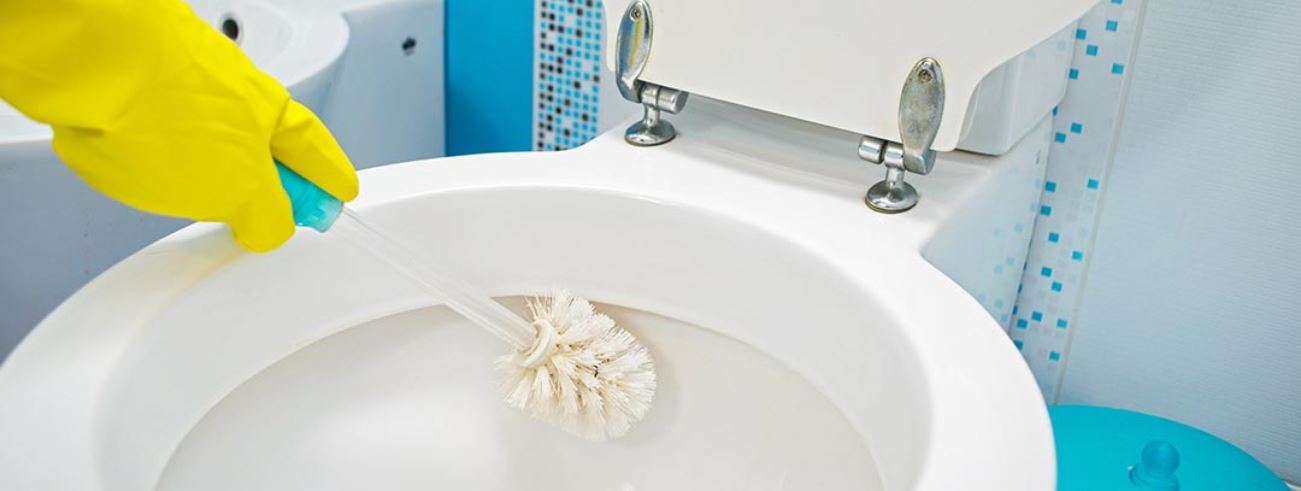
Use a toilet brush to scrub inside the bowl, under the rim, and in the trap. Flush to rinse. For urinals, apply cleaner to the interior surfaces, scrub with a brush, and flush. Wipe the exterior, flush handle, and the wall and floor immediately surrounding the unit.
Use a dedicated cloth or sponge for toilets and urinals only. Never use the same tool on sinks or other surfaces.
If your team is standardizing this step across sites, our walkthrough on how to clean and sanitize commercial toilets covers disinfection contact time and bowl technique in more detail.
Step 5: Clean Sinks, Counters, and Faucets
Apply a restroom cleaner to sink basins, countertops, and faucet hardware. Scrub to remove soap scum, toothpaste residue, and mineral deposits around the drain and faucet base. Rinse thoroughly and wipe dry with a clean microfiber cloth.
Pay particular attention to the area behind the faucet and around the drain, where buildup tends to accumulate and is frequently missed.
Step 6: Clean Mirrors
Spray glass cleaner directly onto a clean microfiber cloth rather than onto the mirror. Wipe in an S-pattern from top to bottom to avoid streaking. Check for toothpaste splatter, hairspray residue, and water spots at eye level, as these are the most visible to users.
If the mirror has a frame, wipe it down separately before cleaning the glass surface.
Step 7: Wipe Walls, Partitions, and Stall Doors
Wipe down stall walls, partition panels, and door surfaces using an all-purpose cleaner or restroom cleaner and a clean cloth. Focus on areas at hand height and around latches where contact is most frequent.
Check for graffiti, mold spots, and any visible soil on the lower panels near the floor. Grout lines on tiled walls should be checked weekly and scrubbed as needed.
Step 8: Sweep and Mop Floors
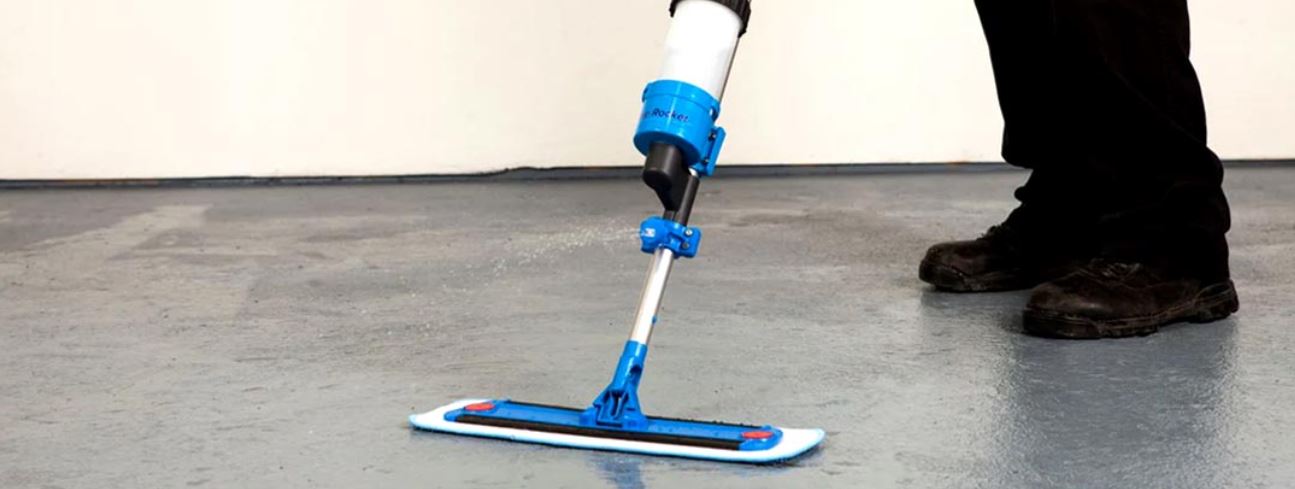
Sweep or dry mop the entire floor first to remove hair, debris, and paper before introducing any liquid. Work from the back of the restroom toward the door.
Apply a floor cleaner appropriate for your tile type and mop in overlapping passes, working from the far wall toward the exit. Pay extra attention to grout lines, corners, and the area around toilet bases and floor drains. These areas accumulate the most soil and are the primary source of restroom odors when neglected.
Allow the floor to dry, or use a squeegee to push excess water toward the drain before mopping with a wrung-out mop for a final pass. That final rinse is also how you prevent residue buildup on commercial floors, the haze in grout and tile that traps oil and dulls the finish over time.
Step 9: Complete a Final Inspection
Before reopening the restroom, walk through with fresh eyes and check:
• All dispensers are stocked and functioning
• No streaks on mirrors or chrome fixtures
• Floors are dry (or nearly dry) and free of debris
• Trash cans have clean liners
• No visible soil on any surface
• Odor control products are in place and active (air fresheners, urinal screens, or deodorizer blocks)
• Wet floor signs are removed once the floor is safe
Sign and date the cleaning log before leaving. A completed log is your record of compliance and a communication tool for the next shift.
Public Restroom Cleaning Checklist
Use this checklist as a daily log, training reference, or template for your facility's cleaning SOPs. Adjust frequency columns based on your traffic volume.
|
Task |
Daily |
Weekly |
Monthly |
|
Empty and reline trash cans |
✓ |
||
|
Restock toilet paper |
✓ |
||
|
Restock paper towels |
✓ |
||
|
Refill soap dispensers |
✓ |
||
|
Disinfect high-touch surfaces (door handles, flush handles, faucets) |
✓ |
||
|
Clean and disinfect toilets (interior and exterior) |
✓ |
||
|
Clean and disinfect urinals |
✓ |
||
|
Clean sinks and counters |
✓ |
||
|
Clean mirrors |
✓ |
||
|
Sweep and mop floors |
✓ |
||
|
Check and replace odor control products |
✓ |
||
|
Wipe stall partitions and doors |
✓ |
||
|
Scrub grout lines on tile surfaces |
✓ |
||
|
Clean floor drains |
✓ |
||
|
Inspect and clean dispenser exteriors |
✓ |
||
|
Deep clean toilet bases and behind fixtures |
✓ |
||
|
Descale faucets and fixtures |
✓ |
||
|
Deep clean floor grout |
✓ |
||
|
Inspect caulking and grout for mold |
✓ |
||
|
Check fixtures for damage or wear |
✓ |
||
|
Sanitize trash can interiors |
✓ |
Pro tip: Post a laminated version of this checklist inside the cleaning closet or on the back of the restroom door for staff reference. A visible checklist reduces missed steps during high-traffic periods.
How Often Should Public Restrooms Be Cleaned?
Frequency depends on traffic volume, facility type, and the number of fixtures. There's no universal answer, but there are clear benchmarks.
By Traffic Level
|
Traffic Level |
Facility Examples |
Recommended Cleaning Frequency |
|
Very high |
Airports, stadiums, transit hubs, large retail |
Every 30-60 minutes during peak hours |
|
High |
Schools, gyms, office buildings, restaurants |
2-3 times per day |
|
Moderate |
Hotels, medical offices, smaller retail |
Once per day minimum |
|
Low |
Small offices, private facilities |
Daily or every other day |
When to Clean More Often
Traffic volume isn't the only variable. Clean more frequently when:
• A restroom has fewer stalls serving more people (longer lines mean more concentrated use)
• Your facility hosts events or experiences seasonal surges
• You've received complaints about cleanliness or odor
• Flu season or other illness outbreaks increase hygiene risk
The Minimum Standard
Regardless of traffic, every public restroom should receive a full cleaning at least once per day, with a midday check for restocking, trash, and visible soil. Facilities that clean only once per day and skip midday checks consistently fail on restocking, which is one of the leading restroom complaints from users.
Common Public Restroom Cleaning Mistakes
Even experienced custodial teams make these errors. Knowing them is the first step to eliminating them.
Skipping the cleaning step before disinfecting. Disinfectants don't work on soiled surfaces. Organic matter (urine, fecal matter, grease) physically blocks active ingredients from reaching pathogens. Always clean first, then disinfect.
Not respecting dwell time. Wiping a disinfectant off immediately after application is the same as not applying it at all. Most EPA-registered disinfectants require 30 seconds to 10 minutes of wet contact time to achieve their labeled kill claims.
Using the same tools across surfaces. A toilet brush used on a sink, or a mop used in both the restroom and the hallway, spreads contamination rather than removing it. Color-coding your tools and enforcing the system is the only reliable fix.
Neglecting the floor around fixtures. The base of toilets, urinals, and floor drains is where urine, moisture, and organic matter accumulate most heavily. It's also the area most often skipped during a rushed clean. Custodians frequently cite this zone as a leading cause of persistent restroom odor.
Ignoring dispenser restocking. A clean restroom with empty soap or paper towel dispensers fails users just as badly as a dirty one. Restocking should be built into every cleaning cycle, not treated as a separate task.
Cleaning in the wrong order. Cleaning floors before wiping surfaces means mopping up the debris that fell from walls and fixtures. Always work top to bottom, from the ceiling level down to the floor.
Using the wrong product for the surface. Acidic cleaners can damage chrome and grout sealant. Bleach-based products can discolor grout over time. Using a general-purpose cleaner on a toilet bowl won't remove mineral rings. Match the product to the surface and the soil type.
Tips to Keep Public Restrooms Cleaner Longer
Cleaning frequency matters, but so does what happens between cleanings. These practices extend the results of each cleaning cycle and reduce the workload on your team.
• Address drain odor at the source. Floor drains and toilet traps harbor bacteria that produce ammonia and sulfur compounds, the primary sources of restroom odor. Enzymatic or bio-active drain treatments break down organic matter rather than masking it. For between-cleaning odor control, urinal screens and deodorizer blocks placed at fixtures provide continuous fragrance and help reduce buildup at the drain. If you are not sure which format fits your fixtures, it helps to understand how urinal cakes and screens actually work before ordering.
• Install no-touch fixtures where possible. Touchless faucets, soap dispensers, and paper towel dispensers reduce the number of surfaces that require frequent disinfection and lower cross-contamination risk.
• Choose the right flooring and grout products. Sealed grout and non-porous floor materials are significantly easier to maintain. If your facility is undergoing renovation, prioritize materials that resist moisture absorption and bacterial growth.
• Run exhaust fans continuously during operating hours. Humidity is the enemy of a clean restroom. Moisture accelerates mold growth, makes floors slippery, and intensifies odors. Exhaust fans running continuously during business hours remove moisture at the source.
• Use continuous-action cleaning products. Some commercial toilet bowl cleaners and in-tank treatments are marketed as providing residual antimicrobial action between cleanings. Check the EPA label claims before relying on them. They're not a substitute for regular cleaning, but they may slow the rate of soil and bacteria buildup.
• Build reporting into the cleaning routine. Custodial staff is the first to notice a leaking fixture, a broken dispenser, or a developing mold problem. When staff are expected to flag maintenance issues as part of their shift, small problems get addressed before they become expensive ones.
• Schedule midday restocking checks. A five-minute walk-through at midday to check paper products, soap, and trash levels keeps the restroom functional between full cleanings and dramatically reduces complaints.
Recommended Restroom Cleaning Supplies
The right products make the process faster, more effective, and easier to standardize across your team. Here's a quick-reference breakdown of what to stock.
|
Category |
What to Look For |
Shop |
|---|---|---|
|
Restroom cleaners |
Formulas that tackle soap scum, mineral deposits, and organic buildup; safe for porcelain, chrome, and tile |
|
|
Disinfectants |
EPA-registered products with kill claims for bacteria and viruses; check dwell time requirements |
|
|
Paper products |
Bulk case quantities that fit your existing dispensers; single-ply or two-ply based on dispenser type |
|
|
Toilet paper |
High-capacity rolls for commercial dispensers; look for standard or jumbo roll formats |
|
|
Paper towels |
Multifold, C-fold, or roll format depending on your dispenser; case quantities for cost efficiency |
|
|
Odor control |
Urinal screens, deodorizer blocks, metered aerosol dispensers, and air fresheners |
|
|
Trash cans and liners |
Can liners matched to container size; high-density liners for heavy-use restrooms |
|
|
Cleaning tools |
Microfiber cloths (color-coded by zone), toilet brushes, mop systems, scrub brushes |
Buying in case quantities reduces per-unit cost and ensures your team never runs short mid-shift, which is one of the most common causes of skipped restocking steps.
Getting restrooms right comes down to following the same sequence every time and keeping enough product on hand to avoid mid-shift gaps. The Cleaning Station supplies facility and custodial teams with the janitorial cleaning supplies and dispensers to keep restrooms stocked and sanitary across single- and multi-site accounts.
Frequently Asked Questions
What is the correct order to clean a public restroom?
Work from top to bottom and from the cleanest surfaces to the dirtiest. Start by posting cleaning signage, removing trash, and restocking dispensers. Next, clean and disinfect high-touch surfaces, toilets, urinals, sinks, mirrors, walls, and partitions. Finish by sweeping and mopping the floor. Always clean surfaces before disinfecting them.
What disinfectant is best for public restrooms?
Use an EPA-registered disinfectant labeled for common restroom pathogens. Quaternary ammonium, or quat-based, disinfectants are commonly used in commercial restrooms because they provide broad-spectrum effectiveness and are compatible with many hard surfaces. Always follow the product label, including dilution instructions and the required dwell time.
How do you get rid of restroom odor?
Persistent restroom odors are often caused by organic buildup in floor drains, grout, urinals, and areas around toilet bases. Clean these areas thoroughly and use an enzymatic or bio-active drain treatment when appropriate to help break down odor-producing material. Urinal screens and air fresheners can help manage odors between cleanings, but they should not replace regular cleaning.
How long does it take to clean a public restroom?
A small public restroom with one or two stalls may take approximately 15 to 30 minutes to clean properly. Larger multi-stall restrooms may take 45 minutes or longer, depending on their condition, traffic level, and required disinfectant dwell times.
Do you need special training to clean public restrooms?
Formal certification is not always required, but proper staff training is essential. Cleaning personnel should understand chemical safety, product compatibility, disinfectant dwell times, cross-contamination prevention, proper tool use, and procedures for handling blood or other bodily fluids.
What is the difference between cleaning and disinfecting?
Cleaning removes visible dirt, residue, and organic matter from a surface. Disinfecting uses an appropriate chemical product to kill or inactivate specified pathogens on a previously cleaned surface. For effective restroom sanitation, surfaces should generally be cleaned before disinfectant is applied.
What is the best way to clean public toilets?
Remove visible debris before applying an appropriate toilet bowl cleaner or disinfectant to the bowl, seat, lid, flush handle, and exterior surfaces. Allow the product to remain wet for the required dwell time, scrub thoroughly, and rinse or wipe as directed on the label. Use separate, color-coded tools for toilet areas to help prevent cross-contamination.
What is the cleaning procedure for public restrooms?
A proper public restroom cleaning procedure includes posting signage, removing trash, restocking supplies, cleaning high-touch surfaces, cleaning and disinfecting toilets and urinals, wiping sinks and mirrors, sweeping and mopping floors, and completing a final inspection. Following a commercial restroom cleaning checklist helps improve consistency.
What should you do if a public toilet is dirty?
Restrict access to the affected area when necessary and address the problem promptly. Remove visible waste or debris, clean the affected surfaces, apply an appropriate disinfectant for the required dwell time, scrub or wipe as directed, and replace any missing supplies before reopening the area.
Recent Posts
-
 Your facility is on a regular cleaning schedule. The crew shows up, runs the machine, and the floors …Sep 24, 2026
 -
How Dirty Floor Cleaning Machines Cause Streaks and Residue in Commercial Cleaning
A floor scrubber leaving streaks or residue after cleaning is one of the most common complaints in …Sep 22, 2026 -
Why Commercial Floors Feel Sticky After Cleaning (And How to Fix It)
Sticky floors after mopping are a common complaint in commercial facilities. The floor looks clean …Sep 22, 2026