
How to Properly Dilute Commercial Floor Cleaners
Wrong dilution is one of the fastest ways to waste product, create residue, and end up with floors that look worse after cleaning than before. In hotels, gyms, schools, and office buildings, small mistakes in how much product goes into the bucket show up quickly as streaky floors, sticky surfaces, inconsistent results between shifts, and custodians who spend more time re-cleaning than they should.
Most floor issues blamed on the product aren't product problems. They're mixing problems.
What does proper dilution mean? Mixing a concentrated floor cleaner with the exact amount of water the label specifies so it performs as intended. Too strong leaves residue. Too weak doesn't clean. Getting it right keeps results consistent and prevents re-cleaning.
Why Proper Dilution Matters in Commercial Cleaning Operations
Getting the mix right affects more than how the floor looks after one cleaning.
Cleaning effectiveness comes down to concentration. A cleaner mixed too weakly doesn't have enough active ingredient to break down soil. It moves dirt around rather than lifting it. This shows up fastest in high-traffic areas like gym floors, locker rooms, and building entryways where body oils and tracked-in debris accumulate between cleanings.
Residue prevention depends on not using too much. Excess cleaner doesn't rinse away on its own. It dries on the surface and leaves a film that attracts more dirt. In practice, the amount of cleaner you use has a greater impact on results than the choice of cleaner, provided the product is suited to the floor type. Custodians often find that switching products doesn't fix sticky floors when the underlying issue is over-dilution.
Cost control is the third reason. Over-pouring concentrate increases chemical spend without improving results. Across a hotel, gym chain, or school district, that adds up.
Facilities that standardize mixing tend to see fewer complaints, fewer re-cleans, and more consistent results.
Step-by-Step Guide to Diluting Commercial Floor Cleaners
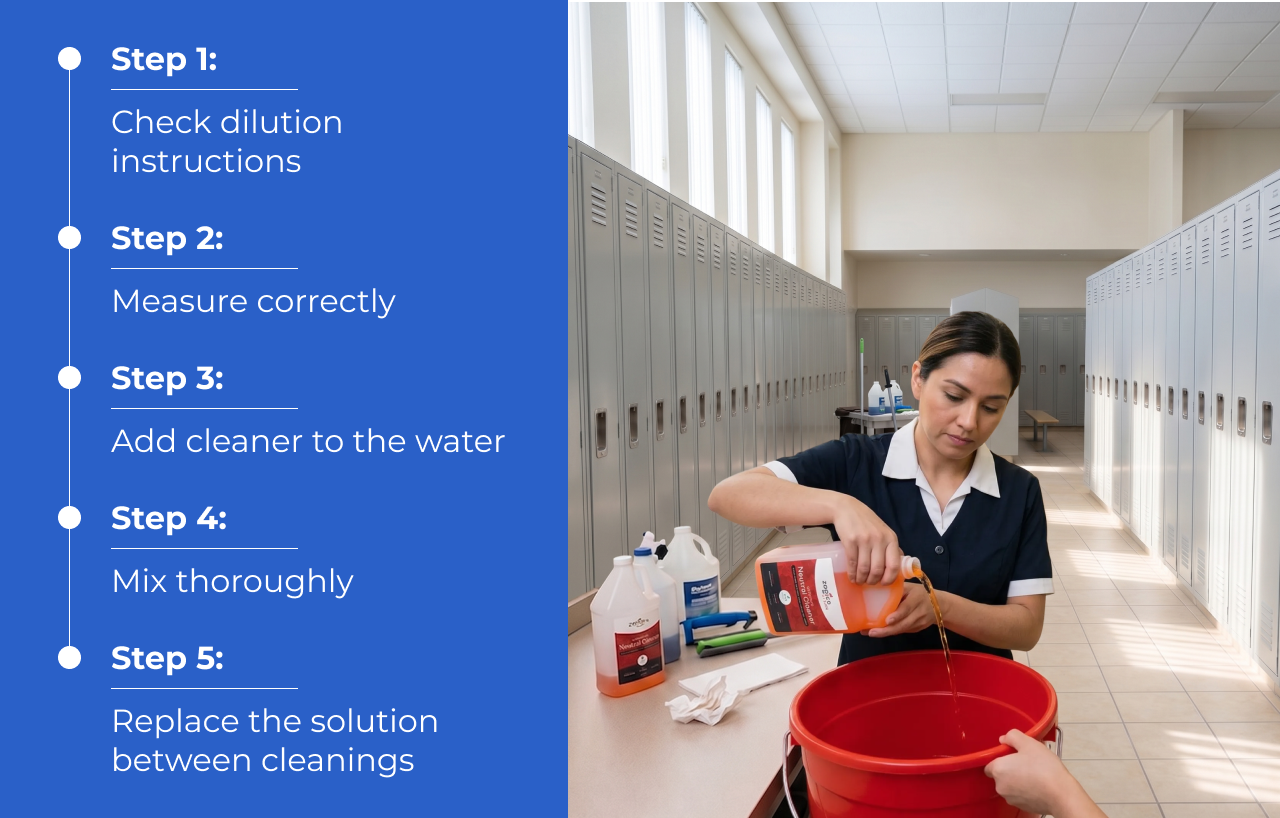
1. Review the Manufacturer's Dilution Instructions
Every cleaner is different. A neutral cleaner, a degreaser, and an enzyme formula all require different amounts per gallon. Read the label before mixing, not after something goes wrong.
2. Measure the Correct Amount of Cleaner
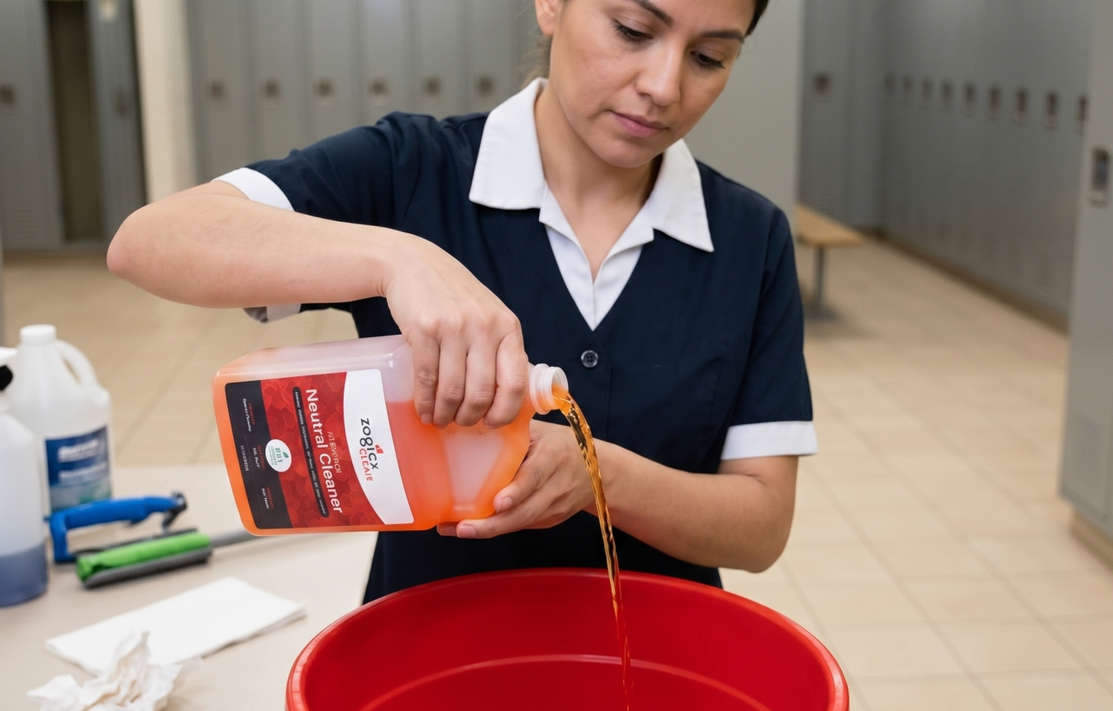
Eyeballing it is how most over-dilution happens. Use a measuring cup, a marked bottle, or a dosing cap. If your facility uses multiple cleaners, label each container with the correct amount per gallon.
The Zogics All Surface Neutral Cleaner has an easy pour chamber with a 1 oz measurement marked at ½ oz, so staff can squeeze to the right level and pour directly into the bucket. No guessing, no separate measuring tools. Using more than the label calls for doesn't improve results. It leaves a film that attracts more dirt.
3. Add Cleaner to Water, Not Water to Cleaner
Adding concentrate to a full bucket of water helps it disperse evenly and reduces foam. Reversing the order can leave pockets of undiluted product in the solution.
4. Mix the Solution Thoroughly
A partially blended solution cleans unevenly. Give it a moment before applying to the floor.
5. Use the Solution Within the Recommended Timeframe
Diluted cleaners lose effectiveness as they sit, and reused solution spreads soil from the last pass instead of removing it. Mix a new batch for each cleaning cycle, and rinse mop heads and scrubber tanks before they go back in service.
Recommended Dilution Ratios for Commercial Floor Cleaners
Most concentrated floor cleaners fall into these general ranges, though always follow the specific product label first:
• Light cleaning or maintenance: 1–2 oz per gallon
• Moderate soil: 2–4 oz per gallon
• Heavy soil or deep cleaning: 4+ oz per gallon
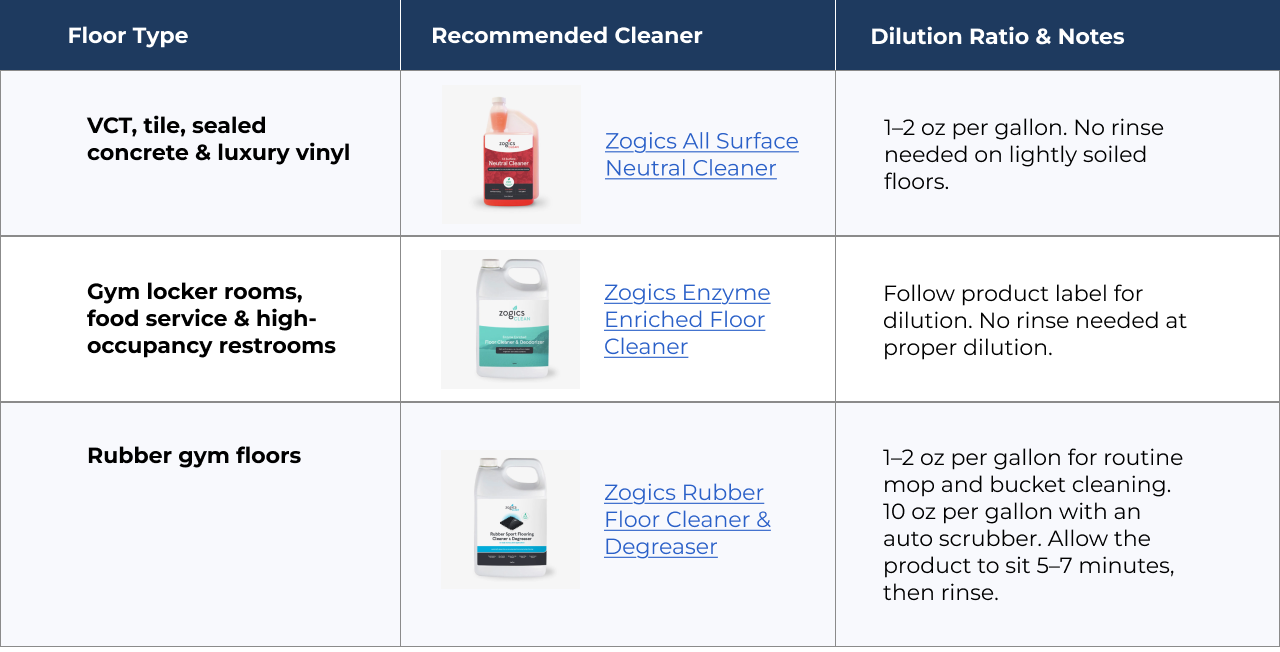
Floor type matters too. For general hard surfaces, including VCT, tile, sealed concrete, and luxury vinyl, a neutral pH cleaner at the correct dilution leaves no film and requires no rinse on lightly soiled floors.
For areas with heavier organic buildup, like gym locker rooms, food service back-of-house, or high-occupancy restrooms, an enzyme-based cleaner works differently. It uses biological action to break down grease and organic residue at the source and keeps working between cleanings, and it doesn't require a rinse pass when used at proper dilution.
For rubber gym floors, use a gym floor cleaner with a concentrated neutral pH formula that removes chalk, sweat, and grease without degrading rubber compounds. It dilutes at 1–2 oz per gallon for routine mopping or 10 oz per gallon with an auto scrubber, and requires a rinse after 5–7 minutes, which matters for rubber since residue on porous surfaces builds up faster than on hard tile or concrete.
If floors are still sticky after cleaning at the correct dilution, the issue may be residue that's already built up. See Why Commercial Floors Feel Sticky After Cleaning (And How to Fix It) for a full breakdown of causes and fixes.
Common Dilution Mistakes in Facilities
Overuse of Cleaner
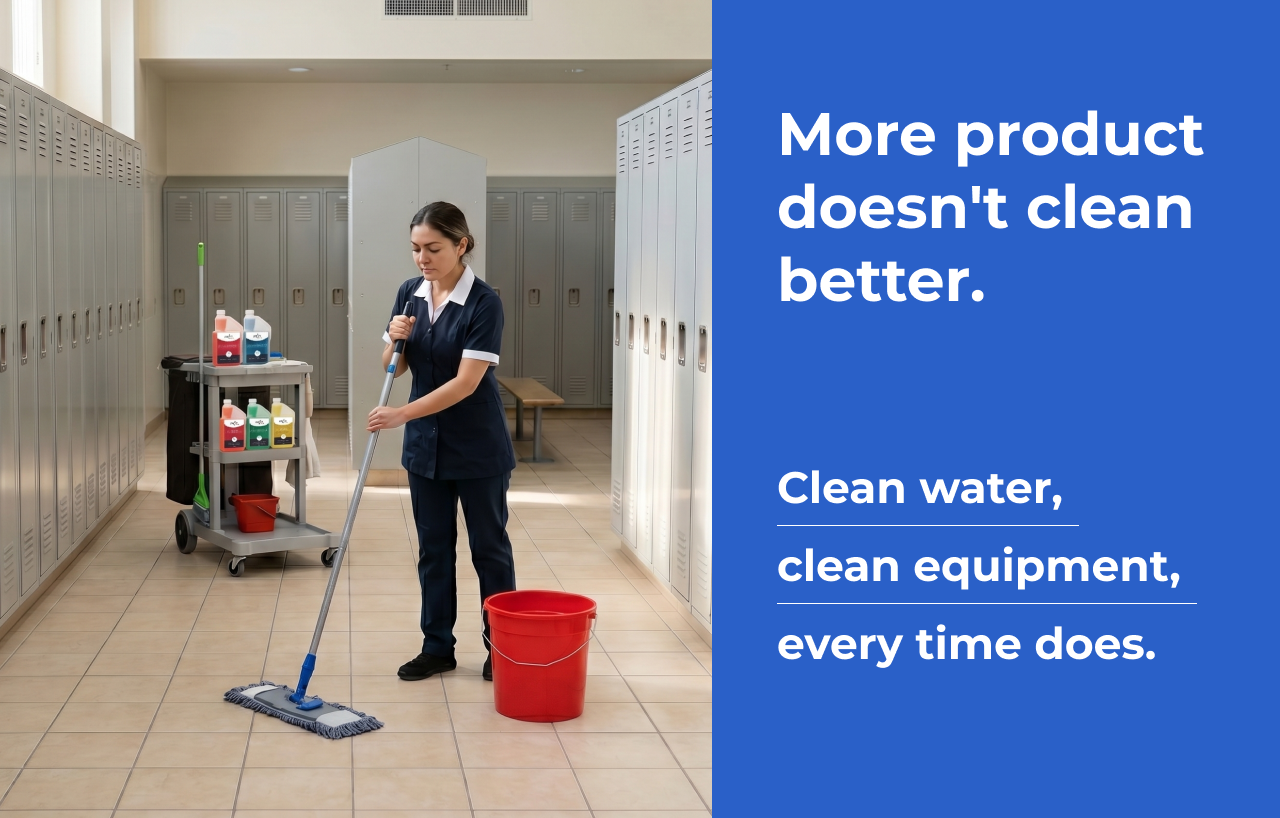
More product doesn't clean better. It leaves behind excess detergent that dries into a film, attracts soil, and makes floors sticky faster than if you'd used less. This is the most common cause of residue buildup in commercial settings.
Inconsistent Mixing Between Staff
When different people pour different amounts, or when there's no measuring system in place, results vary from shift to shift and area to area. One custodian's floors look clean; another's feel sticky by mid-morning. The product is the same. The amount isn't.
Guessing Instead of Measuring
Free-pouring from a gallon jug into a bucket creates variation every single time. Over weeks and months, that variation turns into buildup on the floor surface, higher chemical costs, and no reliable way to troubleshoot when something goes wrong.
Reusing Old Solution
Reused solution from a previous cleaning spreads soil rather than removing it. The same risk applies to mop heads and scrubber tanks that are returned to service without rinsing; they reintroduce contamination on the next pass.
How Improper Dilution Leads to Residue and Re-Soiling
When too much cleaner is used, or floors aren't rinsed after cleaning, the excess product dries into a thin film on the surface. That film changes how the floor behaves. It's hydrophilic, meaning it actively pulls moisture and particles from foot traffic back onto the floor. The result: floors re-soil faster than a floor cleaned with the correct amount of product, or no product at all.
The visible signs are sticky floors, streaking or haze after drying, and areas that look clean right after mopping but attract dirt faster than the surrounding areas.
The cause is dilution, not the product. The same cleaner at the right amount produces a different result.

Best Practices for Consistent Dilution Across Cleaning Teams
Standardize the Process With Written SOPs
A card at every cleaning station showing the correct amount per gallon for each product removes the guesswork. When staff can see it rather than remember it, consistency improves without extra training.
Train Staff on Cleaning Protocols
Staff who understand why over-pouring creates sticky floors follow dilution instructions more consistently than those who are only told what to do. See How to Build a Cleaning Training Program That Works for a practical framework.
Use a Dilution Control System
Proportioning dispensers remove the human variable entirely. The PrecisionFlo Q Chemical Dilution System handles up to four products and dispenses at preset ratios, so every bucket is mixed the same way regardless of who's cleaning. Choose the PrecisionFlo S Single Button Chemical Dispenser for single-product stations.
Align With Your Residue Prevention Program
Dilution is one part of a larger picture. Equipment condition, rinsing practices, and cleaning frequency all affect whether residue builds up over time. For a full breakdown of how residue forms and how to prevent it across your facility, see How to Prevent Residue Buildup on Commercial Floors.
Get the Right Floor Cleaners for Your Facility
We carry commercial floor cleaning supplies for facilities of all sizes, from single-location gyms to multi-site accounts. Browse the full range of commercial floor cleaning products and find what works for your floors and your budget. If you're not sure where to start, contact our team directly, and we'll help you figure it out.
Frequently Asked Questions
Do all commercial floor cleaners require dilution?
No. Some ready-to-use products come pre-mixed and go straight onto the floor. Most commercial floor cleaners, however, are concentrated and need to be diluted before use. The label will specify. Using a concentrated product at full strength is one of the most common causes of sticky floors and residue buildup.
What happens if you don't dilute floor cleaner properly?
Too strong: excess product dries on the surface, leaving a film that attracts more dirt and causes sticky or streaky floors. Too weak: the solution doesn't break down soil effectively, meaning you're moving dirt around rather than removing it. Either way, floors don't stay clean as long and staff end up re-cleaning more often.
Can you use too much floor cleaner?
Yes, and it's more common than using too little. Over-pouring is the most widespread dilution mistake in commercial facilities. More product doesn't mean better cleaning. It means more residue, faster re-soiling, and higher chemical costs with no improvement in results.
How much floor cleaner should you use per gallon?
Follow the product label. Most concentrated floor cleaners fall between 1–4 oz per gallon, depending on soil level and floor type. Light maintenance cleaning typically uses 1–2 oz; heavier soil requires more. When in doubt, start at the lower end. You can always increase if the floor isn't cleaned as expected.
Does improper dilution affect floor safety?
Yes. Residue left from an over-concentrated solution makes floors sticky, which increases slip risk, especially when the floor is slightly damp. Proper dilution, combined with rinsing when needed, keeps the surface clean without leaving behind a coating that affects traction.
What's the best way to keep dilution consistent across multiple staff or locations?
A combination of written instructions posted at every station, measured mixing tools or dosing caps, and a proportioning dispenser where volume justifies it. The PrecisionFlo Q Chemical Dilution System handles up to four products at preset ratios and removes the human variable entirely.
Recent Posts
-
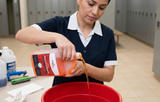 Wrong dilution is one of the fastest ways to waste product, create residue, and end up with floors t …May 15, 2026
 -
 For most commercial fitness facilities, Zogics Antibacterial Disinfecting Wipes are the strongest al …May 14, 2026
 -
 The best mop for hardwood floors is a flat microfiber mop. Microfiber traps particles below 0.3 micr …May 14, 2026