
Best Hardwood Floor Mops of 2026 (Tested & Trusted)
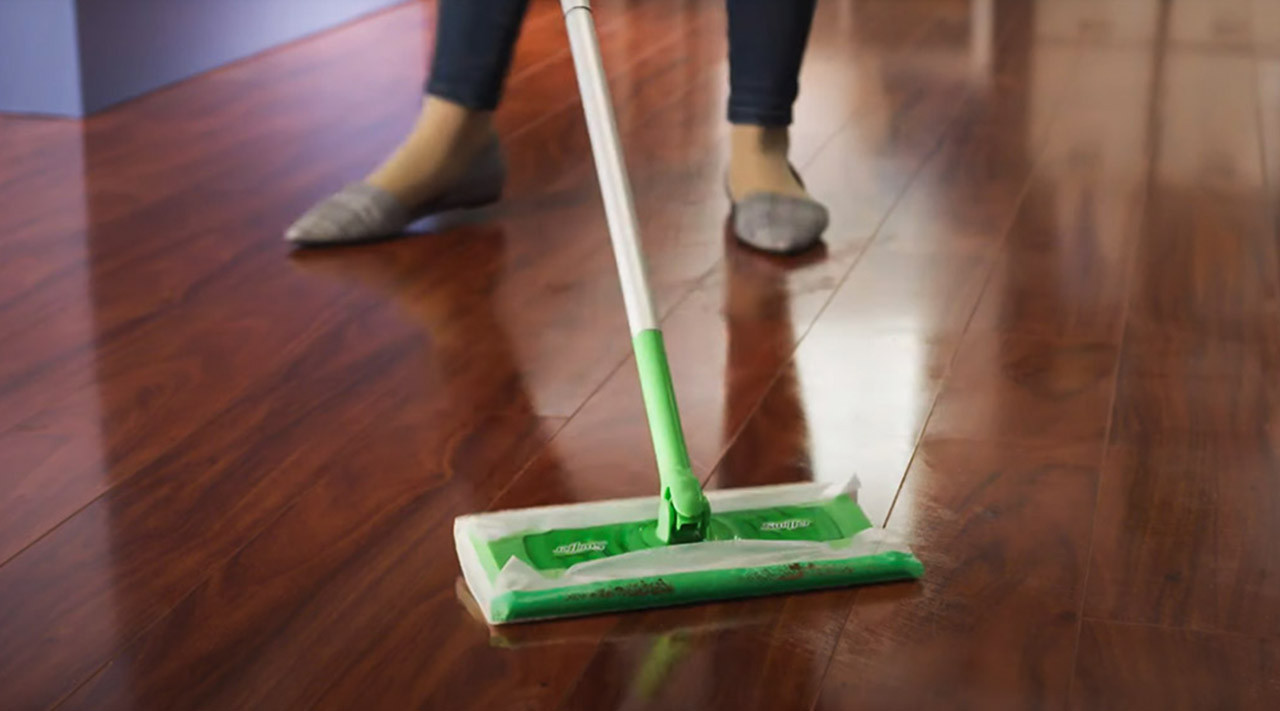
The best mop for hardwood floors is a flat microfiber mop. Microfiber traps particles below 0.3 microns without abrasion, uses minimal moisture to protect sealed wood from warping, and endures 150–200 machine washes compared to cotton's 15–30 wash lifespan. For hardwood specifically, the material difference is not cosmetic — cotton string mop fibers retain grit between uses that causes micro-scratches on polyurethane-finished floors over time.
At The Cleaning Station, we supply floor care tools and cleaning equipment to schools, gyms, healthcare facilities, and commercial buildings. For this guide, we evaluated three mop formats against five criteria used by facility managers: floor-finish compatibility, moisture output, pad washability, coverage efficiency, and cost per use. Our top commercial pick is the Boardwalk Microfiber Mopping Kit. For deep cleaning with disinfection, the Bottle Rocket Spray Mop with Vital Oxide. For daily lightweight maintenance, the Swiffer Sweeper.
Quick picks: best mop for hardwood floors by use case
Best overall (commercial & home): Boardwalk Microfiber Mopping Kit — 18" aluminum frame, machine-washable pads, telescoping handle 35–60", color-coded for zone systems
Best for deep cleaning & high-traffic areas: Bottle Rocket Mop + Vital Oxide — integrated pressurized spray tank, hospital-grade Vital Oxide disinfectant, no bucket needed
Best for daily maintenance & quick touch-ups: Swiffer Sweeper (Green) — 360° swivel head, compatible with dry and wet pads, slim profile for under-furniture reach
What Kind of Mop Is Best for Hardwood Floors?
A flat microfiber mop is the best mop for hardwood floors. Here is why the material choice matters — not just in marketing language, but in measurable performance terms.
Microfiber vs cotton: Microfiber removes 95% of microbes with detergent alone, compared to cotton's 68% removal rate. Microfiber pads endure 150–200 machine washes versus cotton's 15–30 washes — a lifespan difference of roughly 6–10x. For hardwood specifically, cotton string mop fibers retain abrasive particles between cleaning cycles that cause micro-scratches on polyurethane-finished floors; microfiber fibers trap those particles and hold them until rinsed.
Flat vs string: A flat mop head lies flush against the floor surface, maximizing contact area and minimizing the pooling that occurs at the leading edge of a string mop. For hardwood, pooled moisture is the primary damage risk — water penetrating floor joints causes planks to swell, cup, or warp. A flat mop with a lightly dampened pad reduces this risk significantly.
Damp vs wet: Hardwood floors should always be mopped damp, never wet. The mop head should be wrung until no water drips when the pad is squeezed — the surface should dry within 30–60 seconds after mopping. Any moisture that sits longer than 60 seconds on hardwood is too much.
For a full breakdown of mop types and how they perform across different floor materials, see our guide on different types of mops explained.
Sealed vs Unsealed Hardwood: The Most Important Distinction Before You Mop
Every mop recommendation on this page — and any other hardwood mop guide — assumes your floors are sealed. Sealed hardwood has a protective topcoat (polyurethane, aluminum oxide, or hardwax oil) that creates a moisture barrier between the mop and the wood grain. Unsealed, unfinished, or wax-finished hardwood has no such barrier, and water applied directly damages the wood fibers immediately.
Polyurethane-finished hardwood (most common): Can be damp-mopped safely with a microfiber pad and pH-neutral cleaner. Avoid excess moisture, steam, and alkaline cleaners.
Wax-finished hardwood: Cannot be wet-mopped. Water dissolves wax finishes, leaving white spots and finish damage. Use a dry dust mop only, or a wax-specific cleaner applied sparingly with a barely-damp cloth.
Oil-finished hardwood: Can be lightly damp-mopped with a cleaner specifically formulated for oil-finished wood. Standard pH-neutral floor cleaners strip oil finishes over time.
Unsealed/unfinished hardwood: Never wet-mop. Use a dry dust mop only. Any moisture penetrates directly into the wood grain and causes immediate swelling.
If you are unsure of your floor's finish, apply one drop of water to an inconspicuous area. If the water beads up, the floor is sealed. If it absorbs immediately, the floor is unsealed or the finish has degraded and should not be wet-mopped.
1. Boardwalk Microfiber Mopping Kit — Best for Eco-Friendly Everyday Cleaning
Best for: Schools, gyms, commercial buildings, and homes with sealed hardwood or laminate flooring
Mop type: Flat microfiber | Head width: 18" aluminum frame | Handle: Telescoping 35–60"
Pad material: Microfiber | Pads washable: Yes — machine washable, up to 150–200 washes | Moisture level: Damp (user-controlled)
Color-coded systems: Available in multiple pad colors | Backing: Hook-and-loop
Why we recommend it: The Boardwalk Microfiber Mopping Kit is the strongest commercial-grade option for sealed hardwood in high-volume settings. The 18" aluminum frame covers significantly more floor per pass than a standard 12–14" residential mop head — reducing cleaning time by approximately 30% on open floor areas like school hallways, gym floors, and large commercial spaces. The hook-and-loop pad attachment system makes pad swaps fast during high-volume cleaning shifts, and the microfiber pads support color-coded zone systems that prevent cross-contamination between floor areas.
The reusable pad system drastically reduces per-use cost compared to disposable mop formats like Swiffer. A set of microfiber pads at commercial volumes costs a fraction of ongoing disposable pad purchases over a year of regular use, making the Boardwalk kit the most cost-effective option for any facility cleaning hardwood floors more than twice per week.
Pros: 18" head maximizes coverage efficiency; machine-washable pads reduce long-term cost significantly; color-coded pad system supports zone cleaning protocols; telescoping handle accommodates multiple user heights; aluminum frame is lightweight and durable.
Worth knowing: The Boardwalk kit requires a separate bucket and wringer for wet cleaning — it is not a self-contained spray system. For facility managers who need to move quickly between rooms without a bucket setup, the Bottle Rocket spray mop is the more operationally efficient alternative. The Boardwalk kit is the better choice where thorough washable-pad hygiene and cost-per-use matter more than speed of deployment.
Shop Boardwalk Microfiber Mopping Kit →
2. Bottle Rocket Mop with Pressurized Spray Tank + Vital Oxide Disinfectant — Best for Deep Cleaning & High-Traffic Areas
Best for: High-traffic sealed hardwood in gyms, healthcare facilities, schools, and commercial spaces requiring verified disinfection
Mop type: Flat spray mop with integrated pressurized tank | Cleaning solution: Vital Oxide disinfectant (included)
Vital Oxide active ingredient: Chlorine dioxide (stabilized) | Kill claim: Hospital-grade broad-spectrum disinfection, EPA-registered
Bucket required: No | Moisture level: Controlled fine mist (spray-on-demand)
Why we recommend it: The Bottle Rocket solves the two main operational friction points of traditional mop-and-bucket systems: the bucket itself, and inconsistent solution application. The integrated pressurized spray tank delivers a controlled fine mist directly ahead of the mop head — eliminating pooling and ensuring even solution coverage across the entire floor pass. For facility managers cleaning large hardwood floor areas, this translates to faster throughput and less risk of over-wetting the surface.
The inclusion of Vital Oxide disinfectant elevates this beyond a standard mop. Vital Oxide is an EPA-registered, hospital-grade chlorine dioxide formula effective against SARS-CoV-2, MRSA, norovirus, and a broad pathogen spectrum — making this combination the appropriate choice for any sealed hardwood floor environment where documented disinfection is required, including gym floors, healthcare waiting areas, and school hallways.
Pros: No bucket needed — faster room-to-room deployment; Vital Oxide provides verified EPA-registered disinfection; pressurized tank delivers consistent, controlled moisture application; lightweight for extended use.
Worth knowing: Vital Oxide is formulated for sealed hard surfaces — confirm your hardwood floors are fully sealed before use. This system is optimized for disinfection efficiency, not for heavy soil removal. For floors with significant dirt or debris buildup, a dry dust pass with the Boardwalk or Swiffer before deploying the Bottle Rocket will produce better results than spraying directly onto heavily soiled surfaces.
Shop Bottle Rocket Mop + Vital Oxide →
3. Swiffer Sweeper Mop (Green) — Best for Quick Daily Maintenance
Best for: Light daily dust and debris removal, quick spill response, homes and classrooms with sealed hardwood
Mop type: Flat swivel mop | Head width: 10" | Swivel: 360°
Pad type: Dry electrostatic or wet disposable (compatible with both) | Pads washable: No — disposable only
Floor compatibility: Sealed hardwood, laminate, tile | Color: Green (zone identification)
Why we recommend it: The Swiffer Sweeper is the right tool for daily maintenance between deeper cleans — not a replacement for the Boardwalk or Bottle Rocket, but a complement to them. The dry electrostatic pads trap dust, pet hair, and fine debris more effectively than a traditional dry mop on sealed hardwood, because the electrostatic charge holds particles in the pad rather than redistributing them. The 360° swivel head reaches under furniture, into corners, and along baseboards where debris accumulates between weekly mop sessions.
The slim 10" profile and no-bucket, no-wringing format makes the Swiffer the practical choice for quick touch-ups — spilled coffee, tracked-in dust, pet hair — in any space where pulling out a commercial mop system is operationally disproportionate to the task. The green color option supports zone-coded cleaning systems.
Pros: 360° swivel head reaches under furniture; no setup or bucket needed; dry pads outperform traditional dust mops on fine debris; 10" profile handles tight spaces; green color for zone identification.
Worth knowing: The Swiffer uses disposable pads exclusively — there is no reusable microfiber pad option for this format. At high-volume commercial use, ongoing pad costs add up significantly compared to the washable systems above. The Swiffer is best positioned as a daily light-duty tool in a multi-mop system, not as the sole floor care solution for any facility. Use the Swiffer daily, the Boardwalk weekly, and the Bottle Rocket for deep cleans and disinfection protocols.
Shop Swiffer Sweeper Mop (Green) →
How to Choose the Best Mop for Hardwood Floors: 5 Criteria
When evaluating mops for sealed hardwood — whether for a single-family home or a commercial facility — these five criteria determine fit more reliably than brand recognition or price.
1. Mop head material
Microfiber is the correct material for sealed hardwood. It removes 95% of microbes with detergent versus cotton's 68%, traps particles without abrasive contact with the floor surface, and dries faster than cotton — reducing post-mop moisture exposure. Cotton string mops retain grit between washes and are not recommended for finished hardwood. Sponge mops apply excessive moisture for hardwood use unless extremely well-wrung. For a full material comparison, see our flat mop vs spin mop guide.
2. Moisture output
The mop should leave the floor damp enough to clean but dry enough to be visibly dry within 30–60 seconds. Flat microfiber mops with a manual wring-out and spray mops with controlled nozzle output both achieve this. String mops, sponge mops, and steam mops applied to hardwood consistently over-wet the surface. Steam mops in particular introduce both heat and moisture — a combination that degrades adhesive in engineered hardwood and causes cupping in solid wood planks over repeated use.
3. Pad washability
Reusable, machine-washable microfiber pads are the correct choice for any facility cleaning hardwood more than twice per week. The long-term cost difference versus disposable pads is significant. The Boardwalk kit's pads survive 150–200 washes; the Swiffer's disposable pads cost roughly $0.25–0.40 per use at standard retail pricing. For a facility cleaning 5 days per week, the annual pad cost difference between a washable system and a disposable system is substantial. Disposable formats like the Swiffer are appropriate only for light daily maintenance where volume is low.
4. Coverage width
An 18" mop head (Boardwalk) covers approximately 50% more floor per pass than a standard 12" head, reducing cleaning time proportionally in open-floor environments like hallways, gym floors, and classrooms. For small residential rooms, a 10–12" head is more maneuverable. Match head width to the primary cleaning environment, not to the largest space you occasionally clean.
5. Floor finish compatibility
Stick to microfiber or soft pad mop heads for sealed, polyurethane-finished hardwood. Avoid abrasive scrubber pads, steel wool attachments, and steam mops. Verify the cleaning solution's pH is neutral (pH 6.5–7.5) — alkaline cleaners above pH 8 strip polyurethane finish over repeated use, and acidic cleaners below pH 6 etch the wood surface.
What to Avoid on Hardwood Floors
The cleaning mistakes that cause the most long-term hardwood floor damage are not dramatic — they are routine errors repeated over months or years.
Steam mops on sealed hardwood: The combination of high-temperature steam (typically 200–220°F) and moisture degrades polyurethane finish adhesion over time and causes planks to cup or warp in engineered hardwood. Most hardwood floor manufacturers and warranty terms explicitly prohibit steam mopping. On unsealed or wax-finished hardwood, a single steam mop use can cause irreversible damage.
Excess moisture from any source: Water that pools on hardwood for more than 60 seconds penetrates floor joints, causing swelling and eventual warping. Always wring mop pads until no water drips freely before applying to the floor.
Bleach-based and ammonia-based cleaners: Both degrade polyurethane finish on a molecular level with repeated use. The floor will still look clean after each application — the damage is cumulative and becomes visible as dullness and finish erosion over 6–18 months of regular use.
Oil soap on polyurethane-finished floors: Murphy's Oil Soap is formulated for bare, unfinished, or oil-finished wood — not polyurethane-finished hardwood. On polyurethane floors it leaves a residue film that builds up over time, creating a hazy, dull appearance that is difficult to remove without professional refinishing.
Abrasive scrubber pads: Any pad material rougher than microfiber — nylon scrubbers, steel wool attachments, or rough-weave cotton — will create fine scratches on polyurethane finish that accumulate into visible surface dullness over time.
Best Floor Cleaner for Hardwood Floors
The best floor cleaner for hardwood floors is a pH-neutral, residue-free formula specifically developed for sealed wood surfaces. The pH requirement is the most important specification — not the brand name or marketing language on the label.
pH-neutral means pH 6.5–7.5. Cleaners in this range clean effectively without chemically interacting with polyurethane finish. Most consumer "floor cleaners" are slightly alkaline (pH 8–10) — effective for tile and vinyl, destructive to hardwood finish over time.
Residue-free formulation: Cleaners that leave a film residue on hardwood create a buildup layer that traps dirt, dulls the finish, and eventually requires professional stripping to remove. Check the product description for "residue-free" or "streak-free" claims, and verify with a test in an inconspicuous area.
Recommended: Zogics Enzyme-Enriched Floor Cleaner is a pH-neutral, enzyme-based formula that breaks down organic matter — sweat, tracked-in soil, food residue — without leaving residue or harming polyurethane finish. It is the appropriate pairing for both the Boardwalk and Bottle Rocket systems on sealed hardwood.
Avoid: Murphy's Oil Soap on polyurethane-finished floors (causes residue buildup), bleach-based cleaners (degrade finish), ammonia-based cleaners (strip finish over time), and undiluted vinegar (pH of ~2.5 — highly acidic, etches polyurethane finish). Browse our full range of pH-neutral floor care cleaners for options compatible with sealed hardwood.
How to Choose the Right Hardwood Floor Mop: Cleaning Frequency Guide
Match your mop to your cleaning frequency and floor use level. The three-tier system below is the framework used by commercial facility managers — it works equally well for residential and institutional hardwood floors.
Daily: dry dust pass
Use the Swiffer Sweeper (dry electrostatic pad) or a microfiber dust mop to remove loose dust, pet hair, and fine debris. This prevents grit accumulation that causes micro-scratches during wet mopping. Daily dry mopping is the single most effective maintenance step for preserving hardwood finish long-term. Takes 2–5 minutes for a standard residential floor.
Weekly: damp microfiber clean
Use the Boardwalk Microfiber Kit with a pH-neutral cleaner (Zogics Enzyme-Enriched Floor Cleaner or equivalent) dampened — not wet — pad. For high-traffic commercial areas (school hallways, gym floors, retail), this should be done 2–3 times per week rather than once. For lightly used residential rooms, biweekly is sufficient.
Monthly: deep clean and residue removal
Use the Bottle Rocket Mop with Vital Oxide for a deep disinfecting clean. Machine-wash Boardwalk pads to remove any built-up cleaning solution residue that accumulates over weekly use. Inspect the floor finish for areas of visible dullness or damage — early finish deterioration is easier to address than advanced deterioration.
Environmental impact
Reusable microfiber systems like the Boardwalk Kit reduce consumable waste dramatically compared to disposable mop formats. A single set of microfiber pads used at commercial frequency replaces hundreds of disposable pads annually. All three mops recommended here use minimal water per cleaning cycle — critical for protecting wood grain from moisture damage as well as for water conservation in large-scale cleaning operations.
Our verdict: best mop for hardwood floors by use case
For commercial facilities and high-volume cleaning, the Boardwalk Microfiber Mopping Kit is the strongest combination of coverage efficiency, washable pad economics, and microfiber performance on sealed hardwood. For deep cleaning and verified disinfection, the Bottle Rocket + Vital Oxide delivers EPA-registered hospital-grade disinfection with no bucket needed. For daily lightweight maintenance, the Swiffer Sweeper is the fastest tool for daily dust and debris removal between deeper cleans.
All three are available now at The Cleaning Station. Explore the full floor mop and bucket range here.
Frequently Asked Questions
What kind of mop is best for hardwood floors?
A flat microfiber mop is the best mop for hardwood floors. Microfiber removes 95% of microbes with detergent alone (compared to cotton's 68% removal rate), traps particles below 0.3 microns without abrasive contact with the floor surface, and endures 150–200 machine washes versus cotton's 15–30 washes. For sealed hardwood specifically, a flat pad format is preferred over string or sponge mops because it minimizes moisture application and eliminates the pooling risk that causes wood planks to swell or warp. The Boardwalk Microfiber Mopping Kit is the strongest commercial-grade option. For daily light maintenance, the Swiffer Sweeper with dry electrostatic pads is the most practical format.
Can you use a steam mop on hardwood floors?
Steam mops are not recommended for hardwood floors. The combination of high-temperature steam (typically 200–220°F) and moisture degrades polyurethane finish adhesion over time and causes planks to cup or warp — particularly in engineered hardwood where the adhesive layers are vulnerable to heat. Most hardwood floor manufacturers and product warranties explicitly prohibit steam mop use. On unsealed, wax-finished, or oil-finished hardwood, a single steam mop application can cause irreversible surface damage. Use a flat microfiber mop with a pH-neutral cleaner on a lightly dampened pad instead.
Can I use a Swiffer on hardwood floors?
Yes, on sealed hardwood. Swiffer dry electrostatic pads are safe and effective for daily dust and debris removal on polyurethane-finished hardwood floors. Swiffer wet pads can be used on sealed hardwood for light surface cleaning, but should not be used on unsealed, wax-finished, or oil-finished hardwood — the moisture in the wet pads will penetrate the wood grain directly. The Swiffer Sweeper is best positioned as a daily maintenance tool between weekly microfiber wet mop sessions, not as the sole floor cleaning system for any space with significant foot traffic.
How often should hardwood floors be mopped?
Hardwood floors should be dry dust-mopped daily to prevent grit accumulation, damp-mopped weekly in high-traffic areas (school hallways, gym floors, retail spaces, busy residential rooms), and deep-cleaned monthly with a residue-removing formula. For lightly used residential rooms, biweekly damp mopping is sufficient. The daily dry mop pass is the most important maintenance step — it removes the abrasive particles that cause micro-scratches during wet mopping. Skipping daily dry passes and mopping directly with a wet mop is the most common cause of accelerated finish dullness on hardwood floors.
Do microfiber mops scratch hardwood floors?
No. Microfiber mop pads do not scratch sealed hardwood floors. Microfiber fibers are engineered to trap particles within the pad structure rather than dragging them across the floor surface — which is the mechanism that causes scratching with cotton string mops and abrasive scrubber pads. The critical requirement is that the pad be clean before use: a microfiber pad that has not been laundered and contains embedded grit from a previous cleaning session can cause scratching. Machine-wash microfiber pads regularly and replace them when fibers begin to break down or mat.
What is the best floor cleaner for hardwood floors?
The best floor cleaner for hardwood floors is a pH-neutral (pH 6.5–7.5), residue-free formula specifically developed for sealed wood surfaces. Zogics Enzyme-Enriched Floor Cleaner and Bona Hardwood Floor Cleaner are both appropriate choices. Avoid Murphy's Oil Soap on polyurethane-finished hardwood (it causes residue buildup and finish hazing over time), bleach-based cleaners (degrade polyurethane finish), ammonia-based cleaners (strip finish with repeated use), and undiluted vinegar (pH of approximately 2.5, which etches polyurethane finish). Browse pH-neutral floor cleaners for hardwood at The Cleaning Station.
Recent Posts
-
 Wrong dilution is one of the fastest ways to waste product, create residue, and end up with floors t …May 15, 2026
 -
 The best mop for hardwood floors is a flat microfiber mop. Microfiber traps particles below 0.3 micr …May 14, 2026
 -
 The best gym disinfectant wipes are EPA-registered, safe on vinyl, rubber, and metal surfaces, and h …May 14, 2026