
The Right Way to Clean and Sanitize Commercial Toilets
Here's a mistake that happens in restrooms everywhere: a custodian cleans inside the toilet bowl, then uses the same tool to wipe down the seat and flush handle. It feels efficient, but it's actually spreading bacteria from the dirtiest surface in the room directly onto everything people touch.
If you're managing restrooms in a hotel, school, gym, or medical office—especially facilities with dozens of toilets to clean daily—this kind of shortcut leads to odor complaints, failed inspections, and sick occupants. The fix isn't complicated, but it does require the right process.
What Does It Mean to Clean and Sanitize Commercial Toilets?
Cleaning gets rid of visible dirt, mineral deposits, and organic matter. Sanitizing or disinfecting kills the germs you can't see—but only if you use an EPA-registered product and give it enough contact time to work.
The key distinction for commercial toilets: bowl interiors and exterior surfaces are two completely different cleaning zones. Mix them up, and you defeat the purpose of disinfecting in the first place.
The Cross-Contamination Problem in Commercial Restroom Cleaning
Research published in Scientific Reports found that commercial toilet flushing can propel aerosol plumes up to 5 feet above the toilet bowl, with particles traveling at speeds exceeding 6 feet per second. Bowl interiors carry the highest microbial load in any restroom. When staff use a single tool to clean both the bowl and exterior surfaces, they're essentially wiping E. coli and norovirus directly onto the flush handle, seat, and hinges—surfaces that occupants touch repeatedly throughout the day.
Facilities that skip proper tool separation tend to see the same problems over and over: odor complaints that won't go away, surprise inspection failures, and increased illness among building occupants.
How to Clean and Sanitize Commercial Toilets
Step 1: Separate Tools by Zone
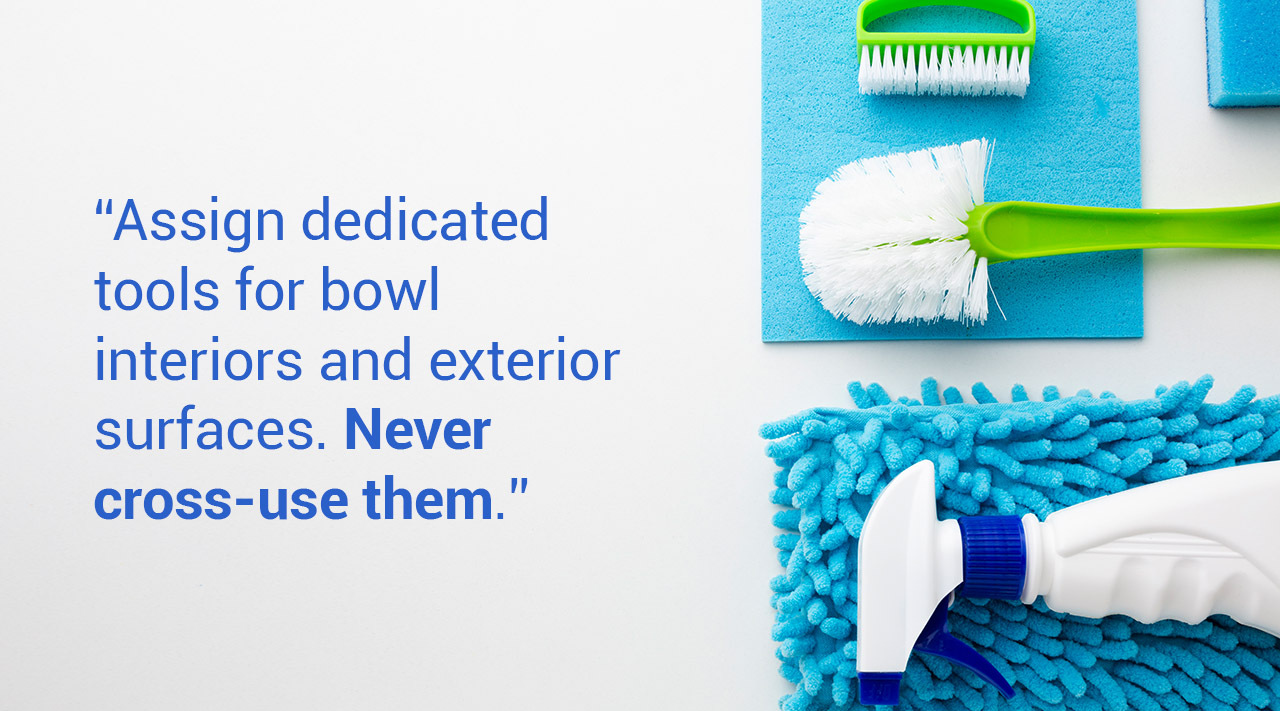
Assign dedicated tools for bowl interiors and exterior surfaces. Never cross-use them.
Bowl interior tools: Toilet bowl brushes stay inside the bowl only. Never use them on exterior surfaces. Use brush holders to keep them sanitary between uses.
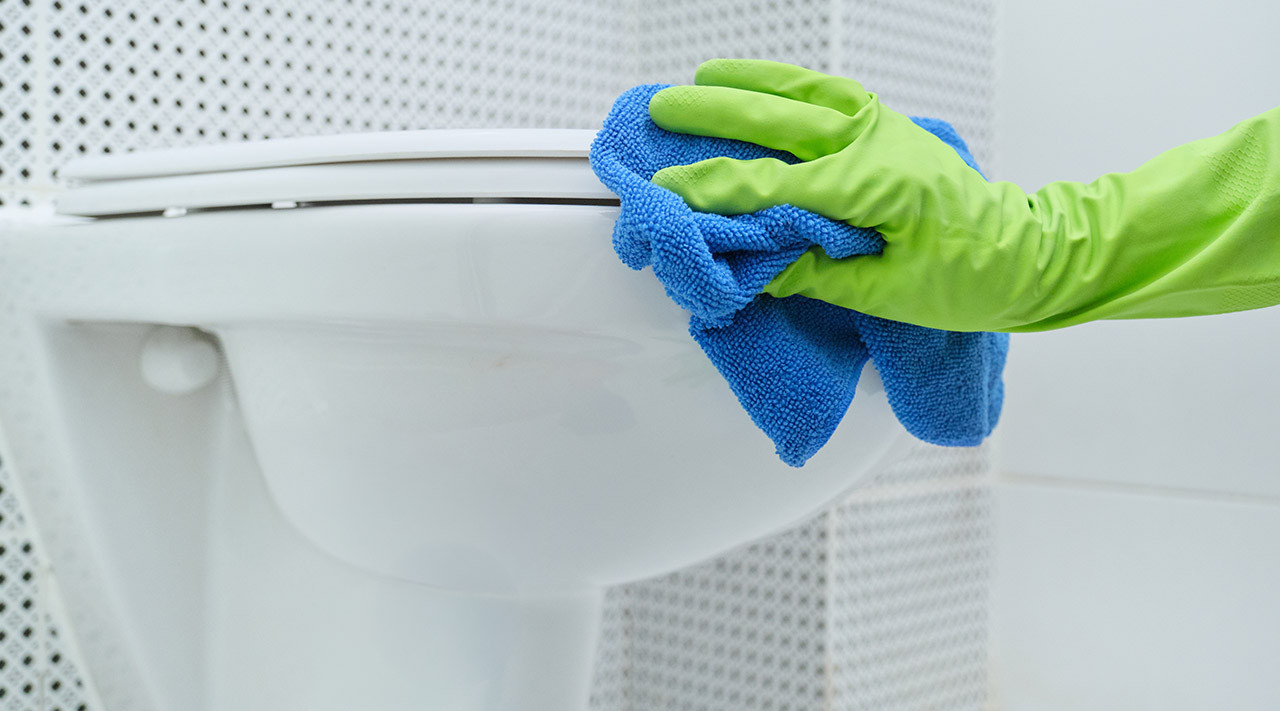
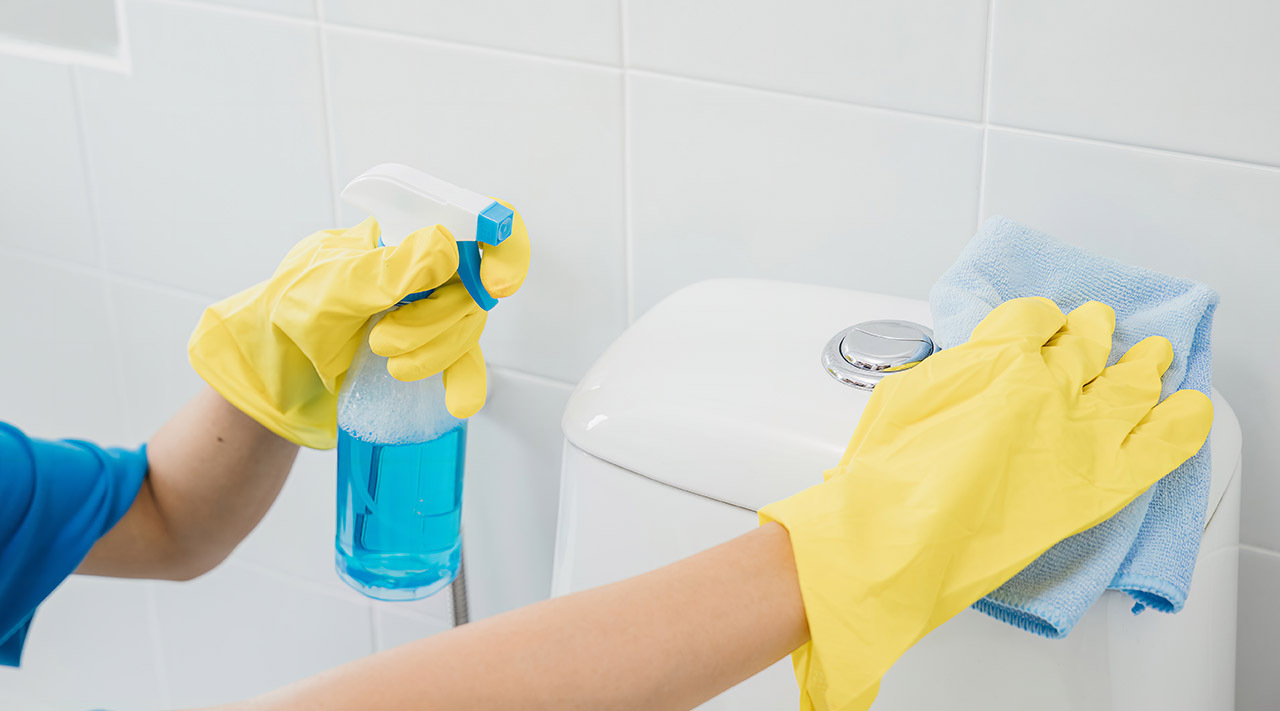
Exterior surface tools: Use color-coded microfiber cloths dedicated to toilet exteriors—seats, flush handles, hinges, and bases. Standardize color assignments across all properties so there's no guesswork: purple for toilet exteriors, blue for sinks, yellow for general surfaces. When everyone follows the same system, training gets simpler, and mistakes drop.
Floor and base cleaning: Use a dedicated mop head for restroom floors and toilet bases—one that never touches bowl interiors or exterior fixtures. Pair with a mop bucket system to complete your floor setup.
Shop Commercial-Grade Floor Mops →
Step 2: Clean the Bowl Interior First
Put on disposable gloves before starting. Apply acid-based bowl cleaner under the rim and let it sit for the time listed on the product label—most commercial formulas need 5–10 minutes to dissolve buildup effectively.
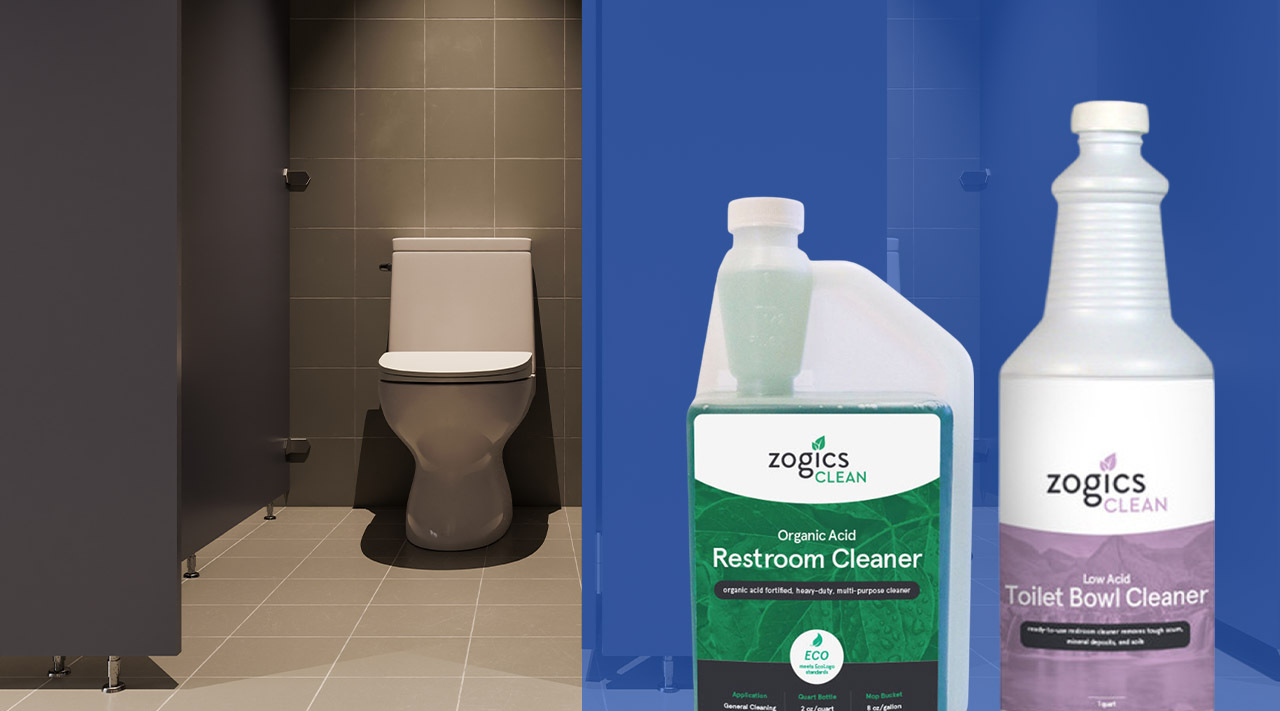
For toilets with heavy mineral deposits, hard water stains, or rust, Zogics Low Acid Toilet Bowl Cleaner has a stronger formula designed to cut through lime scale and uric acid. For routine daily cleaning without severe scale, Zogics Organic Acid Restroom Cleaner provides effective results with a milder formula that's safe for frequent use.
Scrub with a dedicated bowl brush, focusing on the waterline and under-rim areas where bacteria and scale build up. Flush to rinse.
One rule that matters: don't dip the bowl brush into any shared solution bucket. That brush stays with the toilet.
If mineral buildup keeps coming back despite proper cleaning, you might have a plumbing issue. See Best Industrial Strength Drain Unblocker for Stubborn Clogs to diagnose whether it's a drain problem.
Step 3: Disinfect Exterior Surfaces Separately
Grab a fresh microfiber cloth and EPA-registered disinfectant. Clean these surfaces in order:
• Toilet seat (top and underside)
• Seat hinges
• Flush handle or button
• Tank exterior
• Base and floor contact points
Apply the disinfectant and keep surfaces visibly wet for the full contact time listed on the label—typically 2–10 minutes depending on what pathogens the product claims to kill. If you wipe it dry too soon, you've wasted your effort.
Zogics Hypochlorous Acid Disinfectant provides hospital-grade pathogen kill with no harsh fumes or toxic residue, making it safe for occupied facilities.
After the full contact time, let surfaces air-dry or wipe with a clean cloth if the toilet needs to be used immediately. Change cloths between fixtures—don't return a used cloth to your mop bucket.
Step 4: Verify Your Work
Surfaces need to stay wet for the entire contact time. Wiping them dry early doesn't just reduce effectiveness—it eliminates it entirely while creating false confidence that the job is done.
For broader infection control standards across your facility, reference the High-Touch Surface Cleaning Checklist & Guide for Facilities to align restroom protocols with other high-touch areas.
FREE DOWNLOAD: Quick Reference for Commercial Restroom Cleaning Checklist
Shop Professional-Grade Cleaning Tools →
Why Chemical Selection Matters for Commercial Restroom Cleaning
Not all disinfectants work the same way on restroom surfaces.
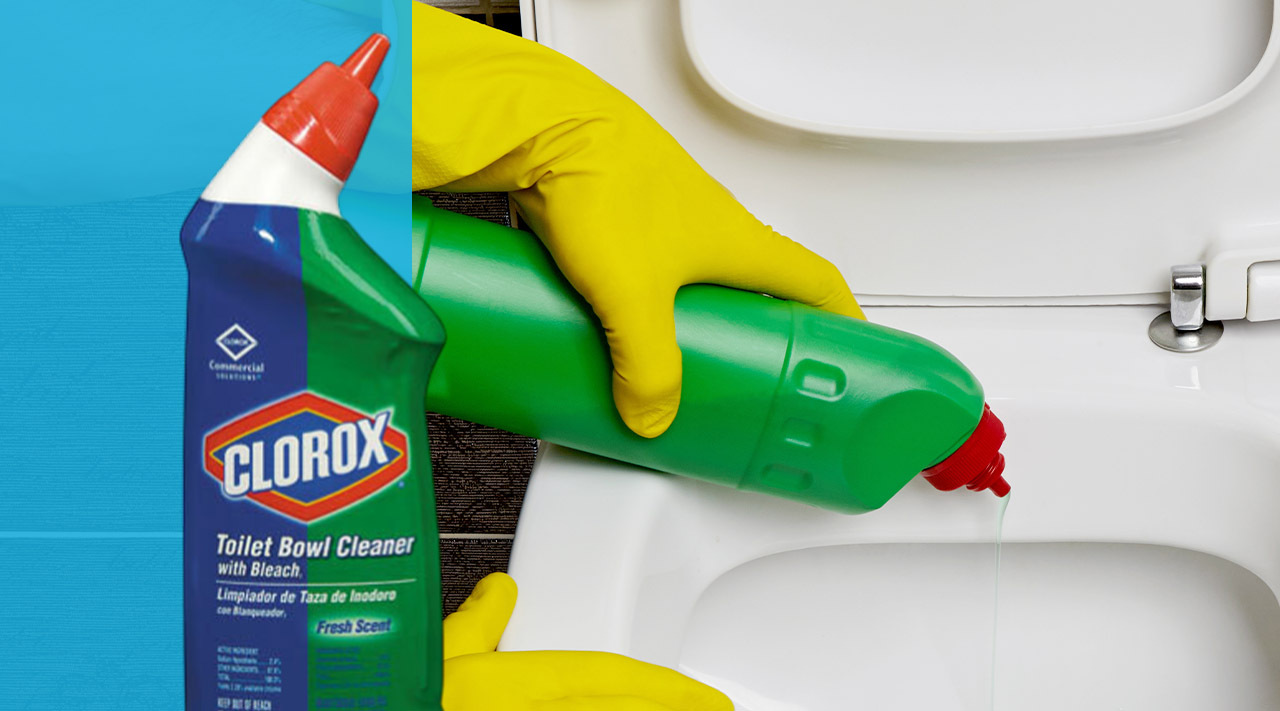
Bleach-based products provide broad-spectrum germ kill but can damage fixtures, irritate occupants, and create compliance issues in spaces where people are present. For guidance on when bleach makes sense, see Germicidal Bleach vs. Regular Bleach: A Deep Dive into their Differences and Uses.
Quaternary ammonium (quat) disinfectants offer better surface compatibility and lower odor, but they require proper dilution and full contact time to deliver on their label claims.
Hydrogen peroxide and botanical disinfectants provide effective germ reduction with less health and environmental impact—especially important in schools, clinics, and buildings where occupants have chemical sensitivities.
Choose products based on your facility type, how busy restrooms get, what surfaces you're cleaning, and any regulatory requirements you need to meet. Hotels prioritize fast-acting, low-odor solutions that support quick room turnover. Schools balance efficacy with safety for children. Medical offices need hospital-grade pathogen claims and documentation they can show inspectors.
How Often Should Commercial Toilets Be Cleaned?
Clean and disinfect all toilets at least once daily in standard-traffic facilities.
When traffic picks up, adjust accordingly:
• Hotels: After each guest checkout, plus evening maintenance rounds
• Schools: Mid-day sanitation during lunch periods, full evening cleaning
• Gyms: Every 1-2 hours during peak times (morning and evening rush), every 3-4 hours during off-peak
• Event venues: Hourly checks during events, full clean between sessions
Base your schedule on actual usage, not arbitrary timing. Facilities with 200+ daily restroom visits need multiple sanitation cycles to maintain both hygiene standards and the perception of cleanliness that occupants expect.
Training Staff on Commercial Restroom Cleaning Procedures
The most detailed protocol fails if staff don't know how to execute it. Custodians need hands-on demonstration, written SOPs in appropriate languages, and regular check-ins to verify they're following the process correctly.
Training should cover:
• Why tool separation matters (and what happens when it's skipped)
• Why can't contact time be shortened
• How the color-coding system works and how to maintain it
• PPE requirements and when to replace gloves
• When to escalate maintenance issues vs. attempting fixes themselves
Video-based training supports consistency across multiple sites and reduces the variation that happens when different supervisors train differently. For facilities standardizing products across properties, the Zogics Restroom Cleaners Sampler Case includes bowl cleaner, restroom cleaner, and glass cleaner with labeled spray bottles—helpful for training staff on consistent application.
For facilities building out cleaning teams or dealing with high turnover, structured onboarding prevents standards from slipping over time. See How to Build a Cleaning Training Program That Works for implementation guidance.
Final Takeaway
Proper toilet cleaning comes down to three things: keep bowl tools separate from exterior tools, give disinfectants enough contact time to actually work, and document what you do so you can prove it.
Follow these steps consistently, and restroom sanitation becomes something you can measure—not just something you hope is happening.
The Cleaning Station carries commercial-grade equipment, cleaning chemicals, and bulk supply programs to support these protocols across any facility type.
Frequently Asked Questions
What is the proper way to clean and sanitize commercial toilets?
Use separate tools for bowl interiors and exterior surfaces. Apply acid-based cleaner inside the bowl, let it sit for the recommended time, and scrub with a dedicated brush. Clean exterior surfaces—seat, handle, hinges, tank, base—with fresh microfiber cloths and EPA-registered disinfectant, keeping surfaces wet for the full contact time listed on the label.
Can you use the same tool to clean inside and outside a toilet?
No. Using the same tool transfers bacteria from the bowl directly onto surfaces people touch. Bowl brushes stay inside the bowl only. Exterior surfaces get separate cloths that are changed between fixtures.
What is a restroom cleaning checklist for commercial facilities?
A commercial restroom cleaning checklist covers pre-clean supply verification, bowl interior cleaning with proper contact time, exterior surface disinfection with dedicated tools, and final inspection with documented completion time.
What equipment is needed for commercial restroom cleaning?
Essential commercial restroom cleaning equipment includes dedicated toilet bowl brushes, color-coded microfiber cloths, separate solution buckets, EPA-registered disinfectants, acid-based bowl cleaners, spray bottles, and PPE including gloves and eye protection.
How often should commercial toilets be cleaned?
At minimum, once daily. High-traffic facilities like hotels, schools, and gyms need multiple cleaning cycles based on how busy restrooms actually get throughout the day.
What disinfectant should be used for commercial restroom cleaning?
Use EPA-registered disinfectants with pathogen claims appropriate for your facility. Options include quaternary ammonium compounds, hydrogen peroxide-based products, and botanical disinfectants. Choose based on surface compatibility, how the space is used, and any regulatory requirements.
What commercial restroom supplies are essential for daily cleaning?
Essentials include toilet bowl cleaner, EPA-registered disinfectant, color-coded microfiber cloths, dedicated bowl brushes, spray bottles, gloves, and properly diluted cleaning solutions. Buying in bulk reduces cost-per-use for multi-location operators.
Recent Posts
-
 Here's a mistake that happens in restrooms everywhere: a custodian cleans inside the toilet bowl, th …Mar 27, 2026
 -
What are Urinal Cakes & Urinal Screens and How Do They Work?
Persistent restroom odor in commercial facilities is rarely caused by one missed cleaning step. In h …Mar 20, 2026 -
 Commercial dust mops are designed to capture dirt, not redistribute it. When laundered incorrectly, …Mar 13, 2026