
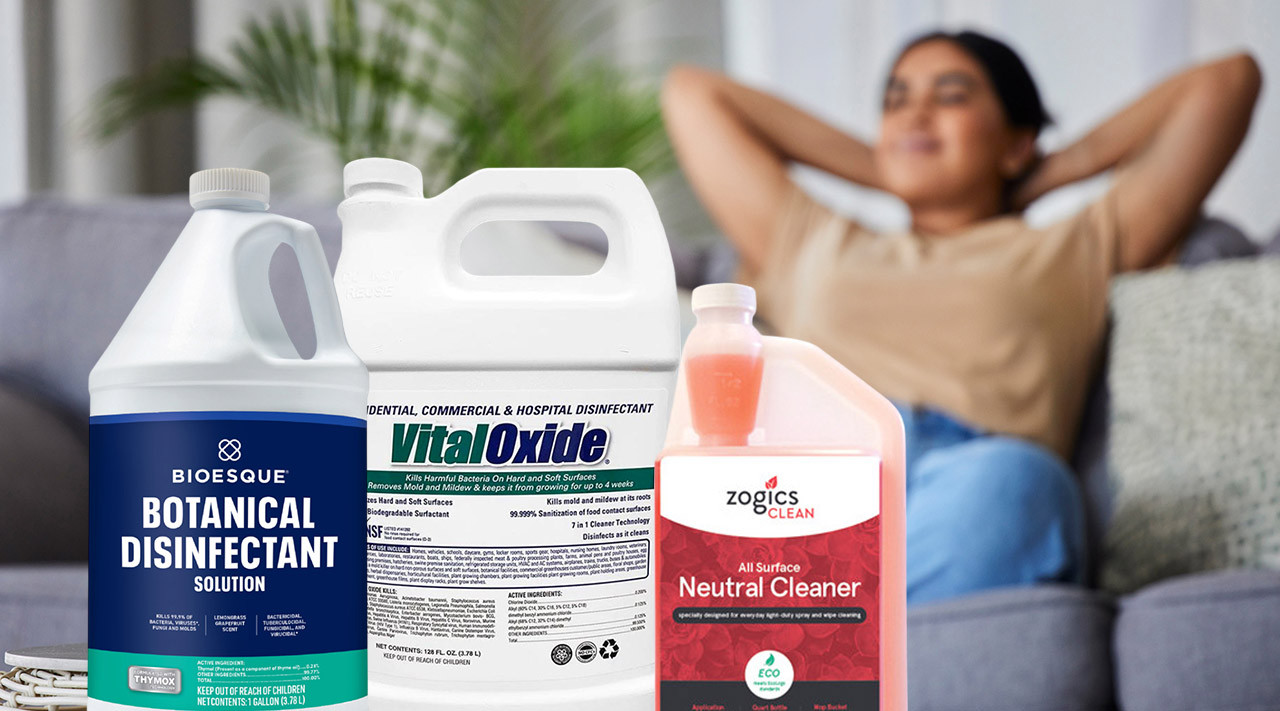
Fragrance-Free vs Scented: Build an Allergy-Safe Cleaning Program that Still Works
When "Clean" Becomes a Complaint
You know the scene: your custodial team disinfects the office overnight. They follow every protocol. By morning, the space is spotless—but the complaints are already waiting.
"The smell is too strong." "My eyes are burning." "Can you stop using that cleaner?"
It's not that the cleaning was done poorly. It's that for an increasing number of people, strong fragrance equals a strong reaction. Headaches. Respiratory irritation. Skin sensitivity. The very products meant to create a healthy environment are making people sick.
Facility managers and custodial supervisors across offices, gyms, healthcare facilities, and schools face the same impossible dilemma: scented cleaners trigger complaints, while fragrance-free cleaning products are often perceived as less effective—or worse, not cleaning at all.
According to the Asthma and Allergy Foundation of America, strong odors and cleaning product fragrances can trigger rhinitis and asthma symptoms such as nasal congestion, cough, and chest tightness in sensitive individuals.
The scope of this problem is larger than most realize. A national survey published in Air Quality, Atmosphere & Health found that 34.7% of U.S. adults reported health problems—such as migraine headaches and breathing difficulties—when exposed to fragranced consumer products. That's more than one in three people.
The challenge isn't whether scent belongs in cleaning—it's how to design a scent-free cleaning program that protects indoor air quality while maintaining professional-grade sanitation. This guide shows you how to build an allergy-safe cleaning program that actually works, reduces complaints, and keeps your facility genuinely clean.
Why Fragrance Sensitivity Is Real (and Growing)
Fragrance sensitivity isn't a personality quirk or a preference issue—it's a physiological response to chemical compounds found in most commercial cleaning products and air-care products.
The Chemistry Behind the Complaints
Synthetic musks, terpenes, phthalates, and other volatile organic compounds (VOCs) evaporate into the air during and after cleaning. These aren't just "smells"—they're airborne chemicals that interact with your body's respiratory system, nervous system, and immune response.
Indoors, these VOCs can combine with ozone or other pollutants to form secondary irritants that affect eyes, skin, and the respiratory tract. The U.S. Environmental Protection Agency notes that indoor VOC levels are typically 2-5 times higher than outdoors, and sometimes up to 10 times higher, especially in spaces where cleaners, disinfectants, or air fresheners are heavily used.
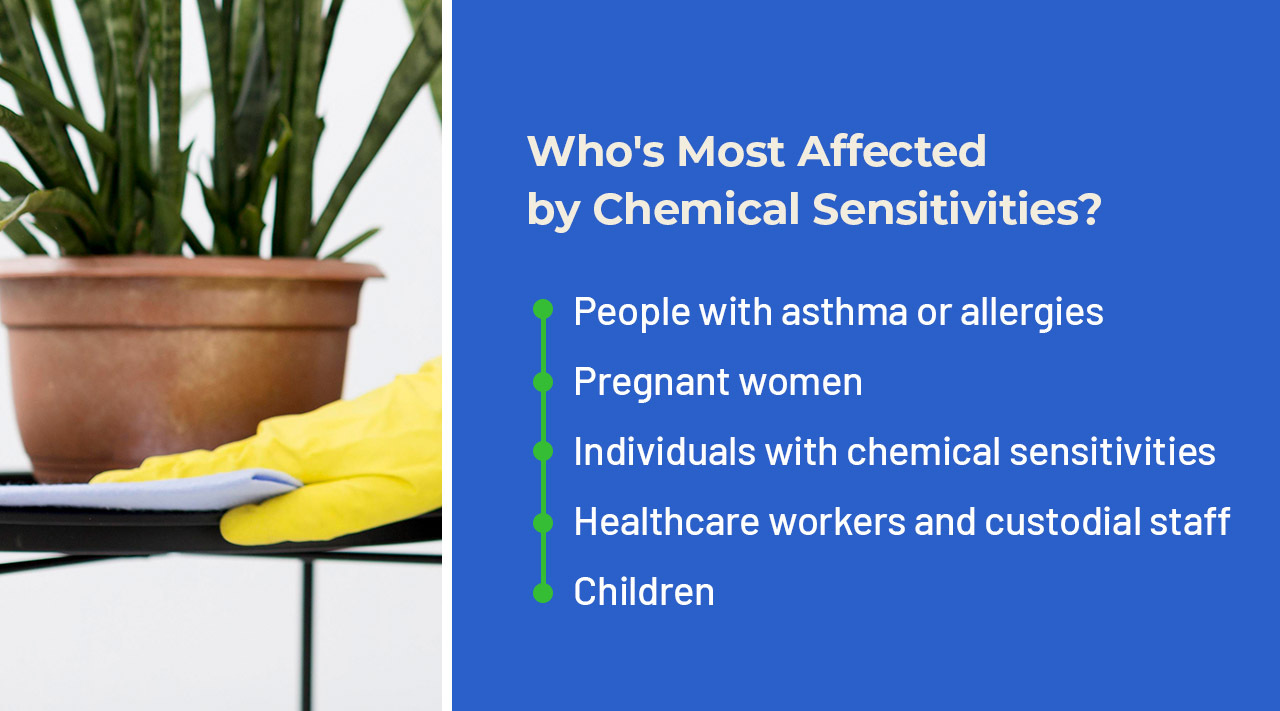
Who's Most Affected by Chemical Sensitivities?
While anyone can experience fragrance sensitivity, certain groups face a higher risk:
- People with asthma or allergies: Fragrance compounds can trigger bronchospasm and inflammatory responses
- Pregnant women: Heightened sensitivity to odors is common during pregnancy
- Individuals with chemical sensitivities or multiple chemical sensitivity (MCS): Even trace amounts can cause severe reactions
- Healthcare workers and custodial staff: Occupational exposure increases cumulative risk
- Children: Developing respiratory systems are more vulnerable to irritants
That's why healthcare facilities, schools, and corporate offices increasingly adopt fragrance-free cleaning policies—not as a courtesy, but as a health and safety measure.
The Legal and Compliance Angle
Fragrance sensitivity isn't just a comfort issue—it's becoming a compliance concern. Under the Americans with Disabilities Act (ADA), employers may be required to provide reasonable accommodations for employees with documented chemical sensitivities. This can include switching to unscented cleaning products in specific work areas.
Healthcare facilities seeking LEED certification or participating in programs like Practice Greenhealth must demonstrate low-VOC cleaning practices. Schools pursuing Green Cleaning certifications face similar requirements.
Ignoring fragrance complaints isn't just bad for morale—it can create legal exposure and prevent facilities from achieving sustainability goals.
The Misconception: Fragrance-Free Means Weak
There's a persistent belief that if a cleaner doesn't smell like bleach, pine, or lemon, it's not doing much. This misconception drives facilities to stick with heavily scented products even when complaints pile up.
But the truth is simple:
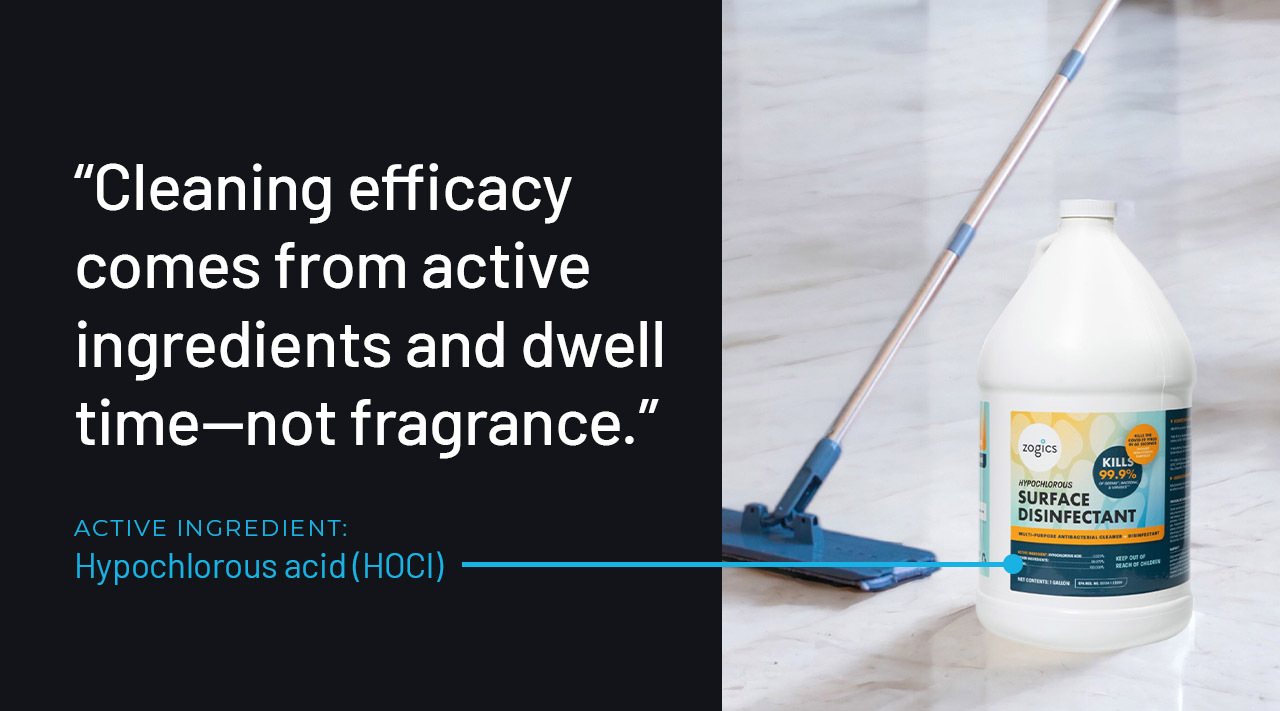
Cleaning efficacy comes from active ingredients and dwell time—not fragrance.
Fragrance is a marketing tool, not a functional ingredient. It's added to create a perception of cleanliness, not to actually clean or disinfect. In fact, the chemicals used to create "fresh scent" or "mountain breeze" serve zero cleaning purpose—they're purely cosmetic.
What Actually Kills Germs in Fragrance-Free Disinfectants
Fragrance-free formulations rely on the same proven chemistry as scented versions—minus the perfume compounds. Effective hypoallergenic cleaning products use:
Hypochlorous acid (HOCl): A powerful, nature-identical disinfectant that kills 99.9% of bacteria and viruses without scent or residue. HOCl is the same compound your immune system produces to fight infection—it's gentle on humans but lethal to pathogens.
Quaternary ammonium compounds (Quats): When formulated without added fragrance, quat-based disinfectants deliver the same broad-spectrum disinfection they're known for, minus the headache-inducing perfume.
Hydrogen peroxide: Breaks down into water and oxygen after disinfection, leaving no chemical residue or lingering odor. Hydrogen peroxide cleaners are excellent, non-toxic cleaning products.
Surfactant and enzyme systems: Break down fats, proteins, and organic soils effectively, then rinse away clean—no "fresh scent" required.
Neutral-pH cleaners: Remove soil while preserving finishes on floors and fixtures, without artificial fragrance.
The Science Is Clear
When two disinfectants share the same active ingredient, concentration, and contact time, their germicidal efficacy is identical—whether or not fragrance is added.
The EPA doesn't require disinfectants to smell like anything specific to earn registration. The kill claims on the label matter—and they're based on laboratory testing of the disinfectant's active chemistry, not its perfume.
What About the "Smell of Clean"?
Many people associate certain scents with cleanliness because of decades of marketing and conditioning. Bleach smells like disinfection. Pine smells like floor polish. Lemon smells like kitchen cleaning.
But these associations are learned, not innate. A truly clean surface has no smell at all—because there's no dirt, no bacteria, and no chemical residue left behind.
The challenge for facilities transitioning to fragrance-free cleaning is re-educating occupants about what "clean" actually means. Visual cues (sparkling floors, streak-free glass, dust-free surfaces) matter more than olfactory ones.
When Fragrance Still Has a Purpose
Not every facility needs to be entirely scent-free. In certain environments, lightly scented products can enhance the perceived sense of cleanliness and contribute to a positive experience—as long as they're used thoughtfully.
Where Light Scent Makes Sense
Hospitality: Hotels, resorts, and event venues often use signature scents as part of their brand experience. Light, pleasant fragrances in lobbies and public areas can create a sense of ambiance.
Fitness Centers: Gyms and yoga studios battle body odor and equipment smells. Low-VOC, plant-derived citrus or eucalyptus scents can neutralize odors without overwhelming members.
Retail Spaces: Stores use scent strategically to create atmosphere and influence purchasing behavior. When used in well-ventilated public areas, this poses minimal risk to most shoppers.
Restrooms: Subtle, natural scents can mask unavoidable bathroom odors without the overpowering artificial perfumes of traditional air fresheners.
The Right Way to Use Scented Products
If you choose to use scented cleaning products in any area, follow these guidelines:
Choose low-VOC, plant-derived scents rather than heavy synthetic perfumes. Natural essential oils and botanical extracts are generally better tolerated than synthetic musks and aldehydes.
Pair with adequate ventilation. A 2020 review of indoor air chemistry found that common terpenes (like limonene in citrus-based fragrances) are generally not a major toxic concern at typical indoor concentrations, but their reaction products with ozone can contribute to airway irritation and secondary particle formation when poorly ventilated (Wolkoff 2020, PubMed).
Use in open, well-ventilated public areas only. Small amounts in lobbies or corridors with good airflow are fine for most people. Heavy scents in confined offices, classrooms, or patient rooms are not.
Never use air fresheners or fragranced sprays in occupied spaces. These products don't clean—they just add more VOCs to the air.
Avoid fragrance in high-sensitivity areas entirely. This includes healthcare patient rooms, school classrooms, daycare centers, office suites, and anywhere people spend extended time in enclosed spaces.
The Hybrid Approach: Fragrance-Free vs Scented Cleaning
Many facilities successfully implement a hybrid strategy for their commercial cleaning program:
- Fragrance-free in occupied workspaces: Offices, conference rooms, classrooms, patient areas
- Low-scent in high-ventilation public zones: Lobbies, corridors, restrooms
- Fragrance-free in all high-touch disinfection: Door handles, desks, equipment—anywhere hands touch frequently
This approach respects fragrance-sensitive individuals while maintaining a pleasant environment in areas where scent is less likely to cause problems.
Recommended Products for Fragrance-Sensitive Facilities
Fragrance-Free Disinfectants
Zogics Hypochlorous Acid Disinfectant
- EPA-registered, FDA-approved hospital-grade fragrance-free disinfectant
- Sanitizes in 60 seconds, disinfects and deodorizes in 10 minutes
- Kills 99% of germs, bacteria, and viruses
- Rinse-free formula that's non-irritating and safe for skin contact
- No fragrance, no residue, no VOCs, and environmentally-friendly
- Ideal for high-touch surfaces in offices, healthcare, and schools
Bioesque Botanical Disinfectant Solution
- EPA-registered against bacteria, viruses, and fungi
- Plant-derived active ingredient (thymol)
- Non-toxic, non-corrosive, non-flammable, biodegradable, and VOC-free
- Hypoallergenic and gentle on surfaces
- Effective against common pathogens, including norovirus and flu
- Perfect for facilities prioritizing green cleaning
Force of Nature Cleaner and Disinfectant
- EPA-registered hypochlorous acid disinfectant and sanitizer
- Electrolyzed water technology (HOCl)
- Light, clean scent with no added fragrances
- Kills 99.9% of germs when used as directed
- Neutralizes odors naturally without perfumes
- Excellent for kitchens, food prep areas, and healthcare
- Includes electrolyzer appliance, 85 activator capsules, and 3 reusable spray bottles
Vital Oxide Commercial Surface Disinfectant
- EPA-approved broad-spectrum surface disinfectant and germicidal detergent
- NSF-registered as a "no rinse on food-contact surfaces" sanitizer
- Hospital-grade quaternary ammonium chloride base formulation
- No VOC's, chemical irritants or noxious fumes
- Kills 99.999% of bacteria and viruses
- Perfect for use in commercial, hospital, or residential settings

Fragrance-Free All-Purpose Cleaners
Zogics All Surface Neutral Cleaner Concentrate
- pH-balanced fragrance-free all-purpose cleaner
- Non-toxic, non-VOC, and biodegradable
- No residue—ideal for glass, stainless steel, and countertops
- Economical concentrate with a 1:16 to 1:256 dilution ratio
- Daily-use cleaner for offices, gyms, and schools
Zogics Peroxide Powered Cleaner Degreaser
- Low toxicity, low VOC, readily biodegradable, hydrogen peroxide fortified
- Destroys odors and stains with color-safe bleaching action
- Cleans most surfaces such as windows, walls, floors, and washroom fixtures
- No-rinse required
Fragrance-Free Floor and Surface Care
Zogics Rubber Flooring Cleaner
- Specifically designed for rubber gym flooring
- Fragrance-free, low-VOC, biodegradable
- Green Seal certified for environmental standards
- Removes chalk, sweat, and grease without damaging rubber
- 32 oz concentrate makes up to 32 gallons of ready-to-use cleaner
Zogics Multi-Purpose Organic Acid Restroom Cleaner
- Organic acid fortified, heavy-duty, multi-purpose bathroom cleaner
- Can be used to clean surfaces such as floors, windows, walls, and washroom fixtures
- Especially effective in removing stains from ceramic tile, floors, and grout
Zogics Non-Ammoniated Glass Cleaner
- Meets Green Seal's environmental standard for industrial and institutional cleaners
- Ammonia-free, non-streaking, non-smearing, and quick drying
- Cleans and shines glass, mirrors, sinks, countertops, stainless steel, and other washable surfaces
Fragrance-Free Hand Hygiene
Zogics Alcohol Gel Hand Sanitizer (Fragrance-Free)
- 95% bio-based formula with 60% ethyl alcohol
- Kills 99.9% of germs in seconds
- Non-irritating glycerin for frequent use
- Clear, fast-acting fragrance-free hand sanitizer
Avant Fragrance-Free Hand Sanitizer
- Free from harsh preservatives and artificial fragrances
- Moisturizing formula prevents dry hands
- Available in 8.5 oz, 64 oz, and 128 oz sizes
- Ideal for those with allergies or scent sensitivities
- Bulk options for high-traffic facilities

Low-Scent or Naturally Derived Options
For facilities that want a light, pleasant scent in well-ventilated public areas without overwhelming synthetic fragrances:
- EPA-registered, DfE criteria met
- Minimal natural scent from plant-based ingredients
- Low VOC formula, alcohol-free, dye-free, and non-toxic
- Kills 99.9% of germs and bacteria
- Biodegradable substrate
- Convenient for spot cleaning and high-touch areas
- Dual-action cleaning and disinfecting in one step
- Ideal for lobbies, restrooms, and public spaces with good airflow
- Clean, fresh scent (light and not overpowering)
- 1,150 wipes per roll, 4 rolls per case
- Suitable for gyms, fitness centers, and recreation areas
- Best used in well-ventilated spaces
- pH-Balanced, low-foam, no-rinse formula
- Tough on dirt, grime, and grease
- Deodorizes and leaves a fresh scent
Zogics Enzyme Enriched Floor Cleaner and Deodorizer
- High-performance, enzyme-enriched formula
- No-rinse formula with a comfortable pH level of 8.5 - 9.5
- Refreshing spruce scent
Zogics Smoke and Odor Eliminator
- EcoLogo Certified for eco-friendly assurance
- Advanced Molecular Technology ensures complete odor neutralization
- Refreshing and light floral scent
- Concentrated Formula offers 21 gallons of solution from a single bottle
- Cost-Efficient Dilution with a 1:32 ratio for lasting use
- Optimal pH Level at 6 - 8, making it gentle for diverse materials and surfaces
- Powerful odor eliminator
- Advanced molecular technology to eliminate odors
- Water-based formula with light, floral scent
Zogics General Purpose Cleaner
- Very low toxicity and VOCs
- Environmentally responsible general-purpose cleaner
- Removes heavy grease and soil
- Moderate foam formula leaves a clean, film-free surface
- Light, clean, and fresh scent
- Harnesses the cleansing power of natural oils
- Specially formulated with coconut and plant-derived cleaning ingredients
- Safely cleans and enhances the natural shine and richness of wooden floors and surfaces
- Moisturizes wood to prevent drying and cracking
- Versatile use, from light dusting to tackling stubborn grime
- Pleasant citronella scent
- Streak-free formula ensures spotless glass surfaces
- Ammonia-free for safe and effective cleaning
- Removes smudges, fingerprints, and dirt with ease
- Ideal for windows, mirrors, and other glass surfaces
- Leaves behind a light, clean, and fresh scent
Laundry Products (Fragrance-Free)
Arm & Hammer HE Compatible Liquid Laundry Detergent, Free & Clear Unscented
- Unscented formula, perfect for sensitive skin
- Low-sudsing detergent that rinses clean
- Works with both standard and high-efficiency (HE) washing machines
- Phosphate-free and eco-friendly formula
- Provides up to 640 loads of laundry per 5-gallon jug
All Free Clear Dryer Sheets (Fragrance-Free)
- Reduces static cling without perfumes or dyes
- 100 boxes per case, 2 sheets per box
- Convenient packaging for vending in laundromats
- Safe for sensitive skin
- Leaves clothes soft without a chemical scent
Common Challenges and How to Solve Them
Challenge: "It doesn't smell clean"
Solution: Re-educate occupants. Create posters or digital displays explaining that clean has no smell. Highlight visual indicators of cleanliness—sparkling floors, streak-free glass, dust-free surfaces—instead of relying on scent cues.
Challenge: Staff think products aren't working
Solution: Demonstrate efficacy. Use ATP testing to show microbial reduction before and after cleaning. Share EPA registration numbers and kill claims. Emphasize that dwell time, not fragrance, determines disinfection.
Challenge: Products cost more
Solution: Calculate true cost per use, not per bottle. Many fragrance-free concentrates have higher dilution ratios, offsetting the initial price. Also factor in reduced complaints, fewer sick days from fragrance-triggered migraines, and potential legal/compliance benefits.
Challenge: Existing inventory of scented products
Solution: Use up remaining scented products in low-sensitivity areas (mechanical rooms, storage areas, exterior spaces) while immediately switching occupied workspaces to fragrance-free. Don't let inventory concerns delay improvements in high-exposure zones.
Challenge: Mixed feedback
Solution: Segment your facility. Keep fragrance-free protocols in offices, classrooms, and patient areas while allowing lightly scented products in well-ventilated public lobbies or restrooms. Clearly mark zones so occupants know what to expect.
Challenge: Vendor resistance
Solution: Be specific about your requirements. Request fragrance-free alternatives by name. If your current vendor can't supply them, find one who can—many distributors now stock extensive lines of fragrance-free, low-VOC products specifically because demand is growing.
Before You Go Fragrance-Free
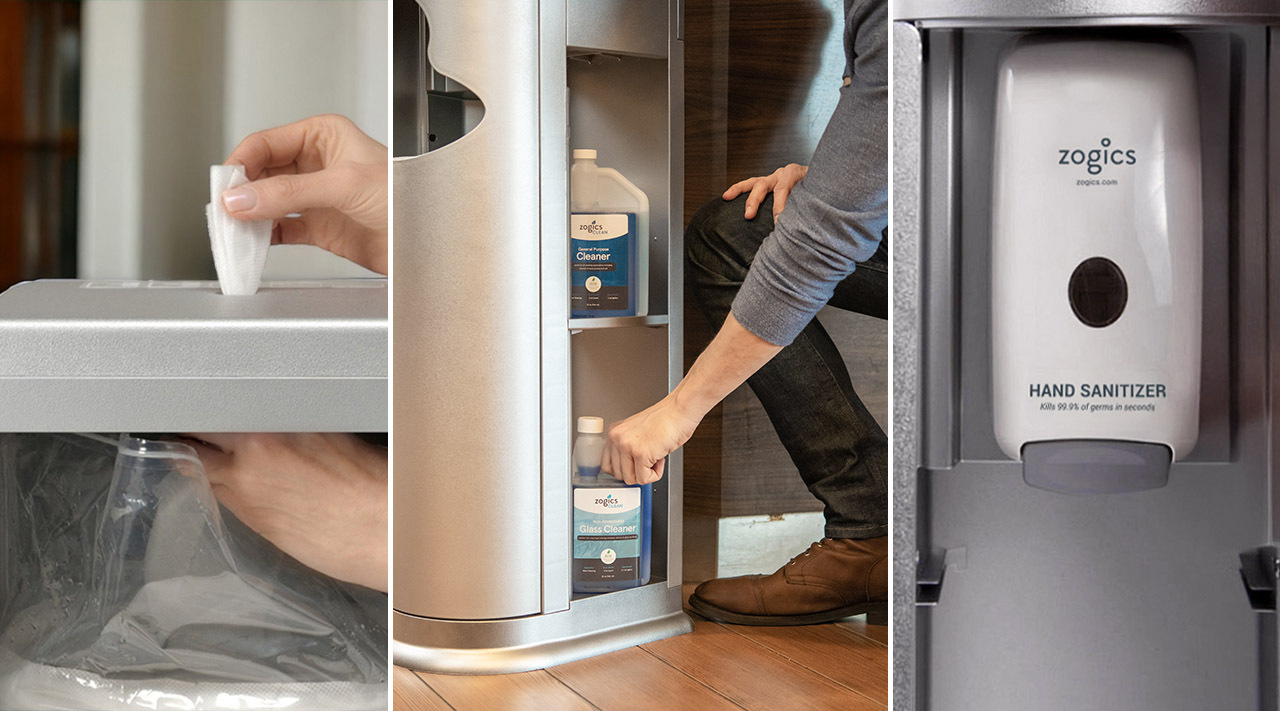
If your team is ready to build a safer, scent-conscious cleaning program, start with a system that makes training and consistency simple.
The Cleaning Station offers professional-grade fragrance-free disinfectant wipes, all-purpose wipes, and refill systems designed for high-traffic facilities. They’re compatible with a wide range of surfaces—from gym equipment to office desktops and home furniture—making them ideal for maintaining a healthy, fragrance-free environment without compromising cleaning performance.
The Future Is Fragrance-Conscious
The trend toward fragrance-free and low-VOC cleaning isn't a passing fad—it's a permanent shift driven by health research, legal requirements, and changing occupant expectations.
Facilities that adopt fragrance-conscious cleaning programs today position themselves as leaders in indoor air quality, occupant health, and environmental responsibility. These aren't just "nice to have" benefits—they're increasingly essential for attracting tenants, meeting regulatory requirements, and protecting staff and occupants.
A clean facility shouldn't leave behind headaches or lingering perfume. Fragrance-free cleaning isn't weaker—it's smarter. It supports wellness, protects indoor air quality, and reduces complaints while keeping your spaces truly clean.
When your allergy-safe cleaning program works for scent-sensitive individuals, everyone breathes easier.
Frequently Asked Questions
Why do some people react to fragranced cleaning products?
Fragranced cleaners release VOCs and other compounds that can irritate the airways, especially in people with asthma or allergies. The Asthma and Allergy Foundation of America notes that strong odors can trigger nasal congestion, coughing, and wheezing. A Steinemann (2016) study found that roughly one-third of adults reported health effects from fragranced indoor products. These reactions are physiological responses to chemical exposure.
Are fragrance-free disinfectants as effective as scented ones?
Yes. Disinfection efficacy depends on the active ingredient, concentration, and contact time—not fragrance. Products with the same active ingredients deliver identical microbial reduction. The EPA evaluates performance based on chemistry, not scent.
Can essential oils or “natural” scents trigger reactions too?
Yes. Essential oils release terpenes and other VOCs that may affect sensitive individuals. A 2020 review found that while terpenes themselves are not highly toxic indoors, their reaction byproducts can irritate airways when ventilation is poor. “Natural” does not always mean non-irritating.
Do scented cleaners affect indoor air quality?
Yes. The EPA reports indoor VOC levels are often 2–5 times higher than outdoor levels, and fragranced products contribute to this load. Using fragrance-free, low-VOC products and improving ventilation helps reduce exposure.
What certifications indicate low-VOC or fragrance-conscious products?
Look for third-party certifications such as:
- EPA Safer Choice: Ingredient safety and performance standards
- Green Seal: Environmental and VOC limits
- UL ECOLOGO: Multi-attribute sustainability certification
- Safer Choice Fragrance-Free: No added fragrance designation
Is “unscented” the same as “fragrance-free”?
No. Unscented products may contain masking fragrances. Fragrance-free means no added fragrance chemicals. Always verify through ingredient labels or SDS documentation.
How can I transition to fragrance-free cleaning without pushback?
Start with a pilot area and communicate the benefits clearly. Share health and air quality improvements, gather feedback, and expand gradually once results are validated.
Will fragrance-free products cost more?
While upfront costs may be higher, overall program costs often decrease due to higher dilution ratios, fewer complaints, and improved occupant satisfaction.
What about facilities that want some scent?
A hybrid approach works best: fragrance-free products in occupied spaces and low-VOC options in well-ventilated public areas. Prioritize health over preference.
Recent Posts
-
 Here's a mistake that happens in restrooms everywhere: a custodian cleans inside the toilet bowl, th …Mar 27, 2026
 -
What are Urinal Cakes & Urinal Screens and How Do They Work?
Persistent restroom odor in commercial facilities is rarely caused by one missed cleaning step. In h …Mar 20, 2026 -
 Commercial dust mops are designed to capture dirt, not redistribute it. When laundered incorrectly, …Mar 13, 2026